FG, Nestlé Seal Landmark Deal to Boost Dairy Production with New Skills Centre
By Onwe Wisdom, Pan Afric Reporters
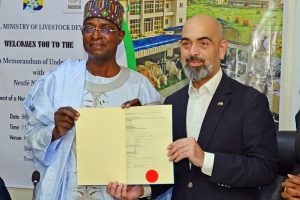
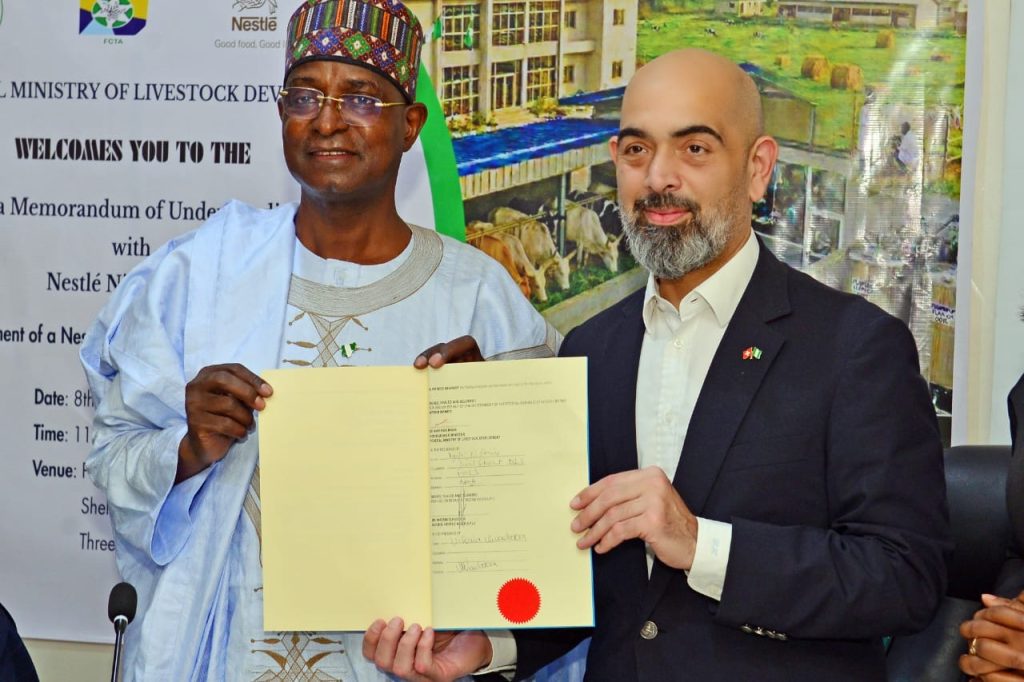
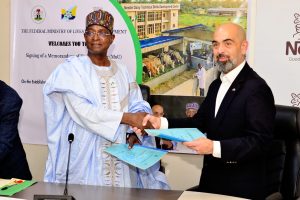
In a major push to transform Nigeria’s underperforming dairy sector, the Federal Government has signed a Memorandum of Understanding (MoU) with Nestle Nigeria Plc to establish a Dairy Technical Skills Development Centre in Abuja, aimed at bridging critical capacity gaps and boosting local production.
The development was disclosed in a press statement issued by Henrietta Okokon, Deputy Director, Press and Public Relations at the Federal Ministry of Livestock Development.
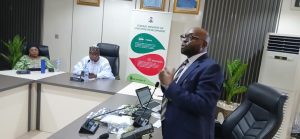
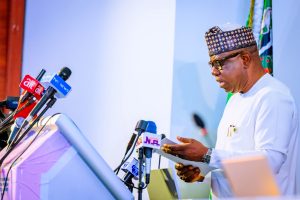
Speaking at the signing ceremony, the Minister of Livestock Development, Idi Mukhtar Maiha, described the initiative as a strategic intervention to tackle longstanding challenges in the dairy value chain.
“This partnership is not just a ceremonial agreement, but a bold and decisive intervention designed to address one of the most critical bottlenecks hindering the growth of the dairy industry in Nigeria,” he said.
Maiha noted that despite Nigeria’s vast livestock population, productivity remains low due to outdated practices and lack of technical expertise.
“Our traditional pastoral systems currently yield an average of merely one to two litres of milk per cow daily,” he said, attributing the challenge to “deficits in modern husbandry practices, inadequate feed formulation, lack of clean water, and limited expertise in areas such as artificial insemination and herd health management.”
He added that the situation has contributed to Nigeria’s heavy reliance on imports.
“The combined impact of these challenges is a huge import bill of about 1.5 billion dollars annually for dairy products,” the minister stated.
According to him, the proposed centre will serve as a practical knowledge hub, combining hands-on training with classroom instruction to modernise dairy farming.
“The curriculum will be structured to deliver 70 percent practical farm experience and 30 percent theoretical learning to ensure trainees gain real-life skills,” he explained.
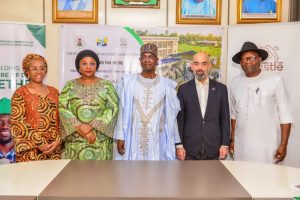
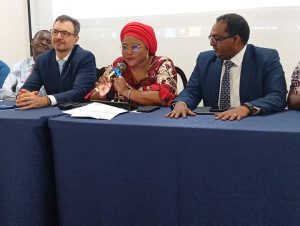
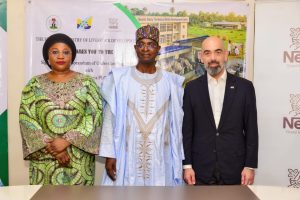
Also speaking, the Permanent Secretary of the Ministry, Chinyere Ijeoma Akujobi emphasized that the success of the initiative would be measured by its direct impact on farmers and communities.
“The success of this partnership will be measured in farms that thrive, in children who are well-nourished, and in households that earn more,” she said.
On his part, the Managing Director and Chief Executive Officer of Nestlé Nigeria Plc, Wassim Ethusseini said the agreement aligns with national goals to strengthen the dairy sector and ensure long-term sustainability.
“This MoU formalises a practical step towards improving productivity and quality in Nigeria’s dairy sector,” he said.
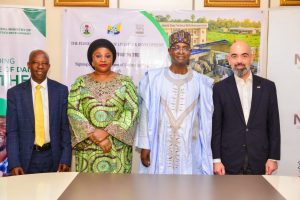
Elhusseini disclosed that Nestlé has already invested over ₦1.8 billion in dairy development initiatives, with measurable gains recorded among local producers.
“Participating milk producers have increased their monthly incomes from ₦70,000 to ₦250,000 between 2021 and 2024,” he revealed.
He added that the company has established more than 83 dairy cooperatives, trained over 2,000 pastoralists, and vaccinated over 36,000 cattle as part of efforts to strengthen the value chain.
“We have also invested in infrastructure such as boreholes, milk collection and cooling systems to support productivity and quality,” he noted.
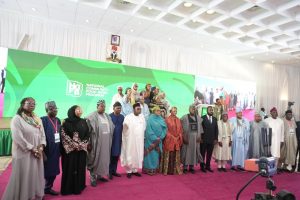
Stakeholders at the event, including representatives of the Commercial Dairy Ranchers Association of Nigeria, highlighted capacity building as a key challenge in the sector, expressing optimism that the initiative would address existing gaps.
Analysts say the partnership signals a shift toward public-private collaboration in agriculture, with the potential to reduce import dependence, create jobs, and enhance food security if effectively implemented.