FG Unveils Unified Poverty Response System to Lift 50 Million Nigerians Out of Poverty

By Onwe Wisdom, Pan Afric Reporters
In a bold move to tackle Nigeria’s deepening poverty crisis, the Federal Government has launched a comprehensive national framework “the One Humanitarian,One Poverty Response System (OHOPRS)” aimed at lifting 50 million Nigerians out of poverty through coordinated, data-driven interventions and institutional alignment.
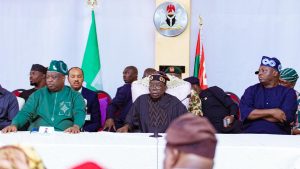
The Honourable Minister of Humanitarian Affairs and Poverty Reduction, Dr. Bernard M. Doro, on Tuesday formally presented the new initiative at the OHOPRS Technical Workshop High-Level Flag-Off held at the UN House in Abuja.
The system, described as a “unified national architecture,” is designed to harmonize humanitarian relief, social protection, and long-term development efforts under a single coordinated platform.
Doro highlighted the scale of Nigeria’s poverty challenge, noting that over 63 percent of Nigerians face multidimensional poverty. He identified fragmentation across ministries, departments and agencies (MDAs), states, and local governments as a major impediment to effective intervention.
“The key challenge is not the absence of interventions, but the absence of systems,” he said, pointing to gaps in coordination, data visibility, and accountability.
He added, “We have been managing poverty, not ending it. It is time for a paradigm shift.”
The minister explained that OHOPRS will function as a centralized system integrating data, funding, and program delivery, ensuring that interventions reach the right beneficiaries efficiently while eliminating duplication and waste.
According to him, the initiative aligns with the President’s directive to “lift 50 million Nigerians out of poverty,” emphasizing real-time digital accountability and a unified national approach.
At the core of the system is a “Single Source of Truth” data backbone, featuring a unified beneficiary register that tracks individuals from vulnerability through support and eventual economic self-reliance.
Doro described the framework as operating on the principle of “One System, One Register, One Pathway,” ensuring transparency and preventing exclusion or duplication of beneficiaries.
He further explained that the system introduces a structured “Poverty Exit Pathway,” which maps out a measurable journey for citizens—from identification and support to skills acquisition, livelihood development, and sustained economic growth.
The minister stressed the urgency of the reform, citing rising climate shocks, displacement, economic pressures, and shrinking global aid.
“If we do not unify now, we are choosing failure,” he warned.
Doro also outlined the expected impact of the initiative, including the creation of a real-time national poverty dashboard, improved coordination among stakeholders, and optimized use of public and donor funds.
He emphasized that the success of the system would depend on a whole-of-government and multi-stakeholder approach, involving federal and state governments, development partners, NGOs, and the private sector.
In his concluding remarks, the minister described OHOPRS as a transformative national agenda.
“OHOPRS is more than a reform—it is Nigeria’s blueprint for lifting our people from poverty to prosperity,” he said.
He added, “Yesterday, we managed the challenge. Today, we architect the end.”