NCoS Boss Pledges Zero Tolerance for Abuse, Unveils Reform Drive After Panel Report
By Onwe Wisdom, Pan Afric Reporters
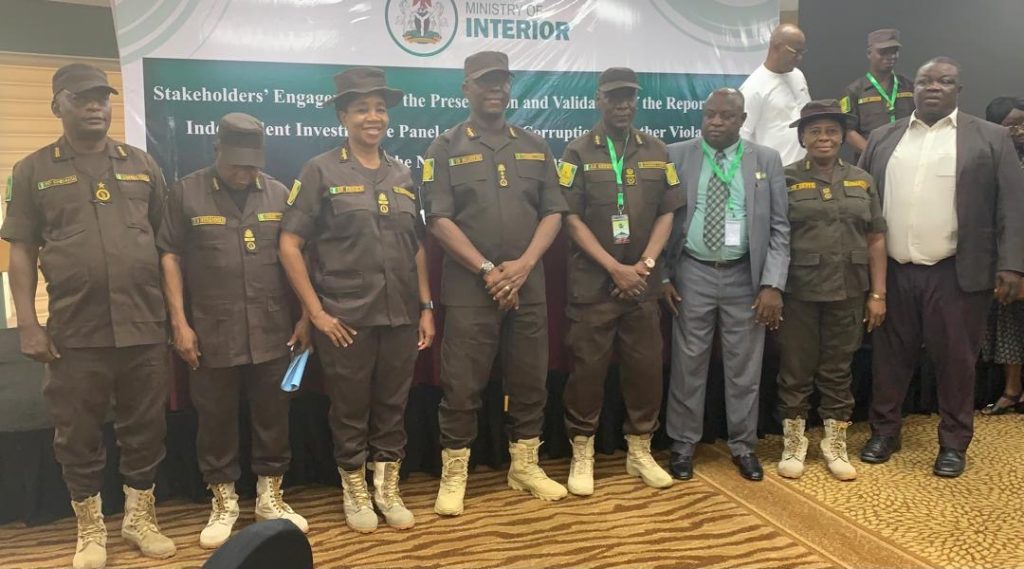
The Controller-General of the Nigerian Correctional Service (NCoS), Sylvester Ndidi Nwakuche has reaffirmed the Service’s commitment to sweeping reforms, accountability, and transparency following the report of an Independent Investigative Panel, declaring zero tolerance for misconduct and abuse within correctional facilities.
Speaking at a high-level stakeholders’ engagement on the panel’s findings, Nwakuche described the exercise as both “necessary and constructive,” noting that it reflects the Service’s openness to scrutiny and its resolve to strengthen institutional integrity.
He commended the chairperson and members of the panel for their diligence and professionalism, emphasizing that the process underscored a commitment to improving service delivery and public trust.
According to the Controller-General, the panel’s findings addressed critical concerns, including allegations of misconduct, misuse of authority, poor custodial conditions, treatment of inmates, and broader systemic challenges.
“These issues are serious and demand attention, as they touch on the core principles of justice, human dignity, and public trust,” he stated.
While acknowledging the gravity of the findings, Nwakuche highlighted the operational realities confronting the Service, including rising inmate populations, infrastructural deficits, and resource constraints across the criminal justice system.
He noted that although these challenges provide context, they do not excuse wrongdoing or diminish the need for accountability.
“The Service maintains zero tolerance for misconduct, abuse, or violations of the rights of persons in custody. All substantiated cases will be addressed in line with established laws and due process,” he said.
The NCoS boss, however, praised the majority of correctional officers for their professionalism and dedication, noting that they continue to perform their duties responsibly under difficult conditions.
Outlining the way forward, Nwakuche said the panel’s recommendations fall into three key categories, beginning with immediate measures such as strengthening internal disciplinary systems, improving complaints and reporting mechanisms, and enhancing monitoring and supervision.
He added that medium- to long-term reforms would focus on infrastructure development, decongestion of custodial centres, technological upgrades, staff capacity building, and improved welfare.
“These reforms will require adequate funding, inter-agency collaboration, and sustained implementation efforts,” he noted.
The Controller-General further explained that some recommendations extend beyond the Service’s direct mandate, particularly those relating to pre-trial detention, sentencing policies, and non-custodial measures, which require coordinated action across the justice sector.
“As we move from review to implementation, our focus will be structured, measurable, and aligned with national priorities,” he said.
He disclosed that the Service would prioritise strengthening accountability systems, enhancing staff training and welfare, improving custodial conditions within available resources, and leveraging technology to promote transparency.
Nwakuche stressed that correctional reform is a shared responsibility involving government institutions, the judiciary, civil society organisations, and development partners, calling for sustained collaboration.
Describing the engagement as a major milestone, he said it marks the beginning of a new phase of structured and coordinated reform within the Nigerian Correctional Service.
“We remain committed to strengthening institutional integrity, upholding human dignity, and reinforcing public confidence in the system,” he affirmed.
He assured stakeholders that the Service would implement the panel’s recommendations with “seriousness, responsibility, and a clear sense of purpose.”