Doro Pushes Bold Poverty Exit Agenda, Seeks Strategic Funding to Lift 100 Million Nigerians
By Onwe Wisdom, Pan Afric Reporters
The Federal Government has intensified efforts to tackle poverty, with the Minister of Humanitarian Affairs and Poverty Reduction, Bernard Doro calling for increased funding and strategic partnerships to lift millions of Nigerians out of poverty and make them economically self-reliant.
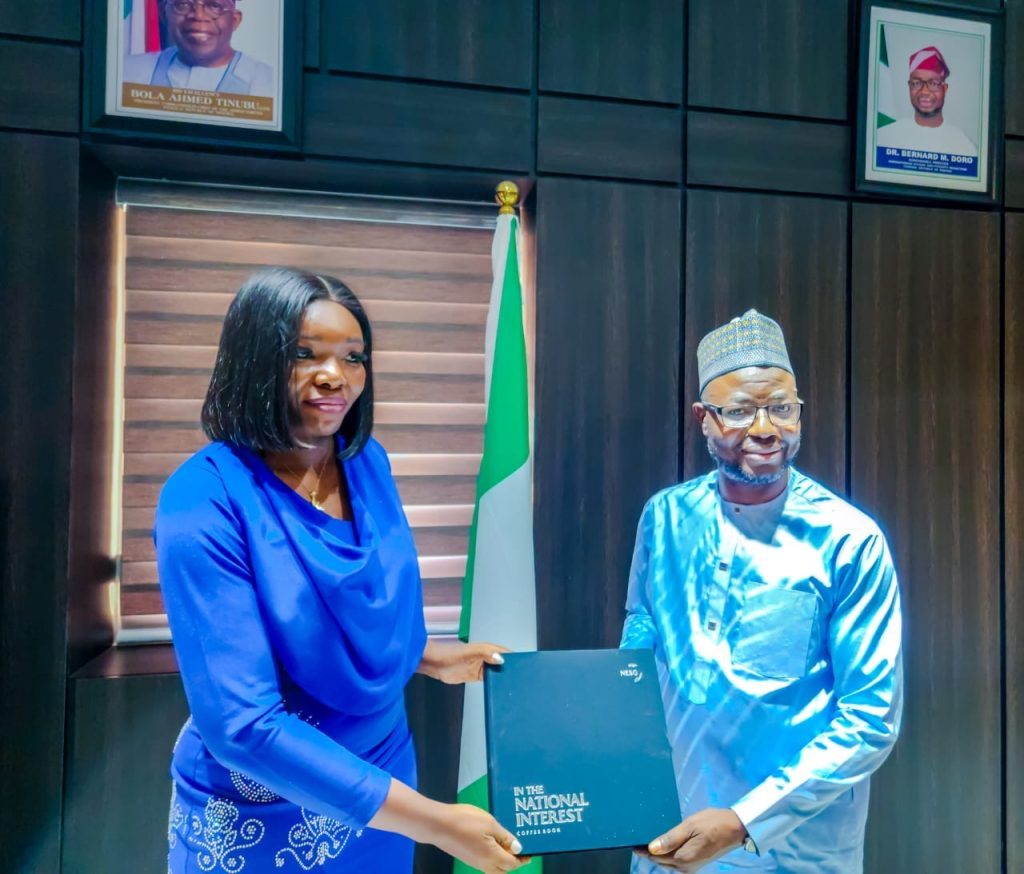
Doro according to a press statement issued by ministry’s Director of Information and Public Relations, Janet McDickson, made the call in an appeal while receiving a delegation from the Nigerian Economic Summit’s Group (NESG) during a courtesy visit to his office, stressing that financing remains a major constraint in achieving the government’s ambitious target of lifting 100 million Nigerians out of poverty by 2029.
“We are determined to scale efforts toward lifting millions out of poverty, but adequate funding is critical to achieving this goal,” the minister said.
He urged NESG to support the ministry with independent costing and analytical work to strengthen the case for increased budgetary allocation and policy backing.
According to Doro, the ministry’s flagship initiative, One Humanitarian, One Poverty, Reduction System (OHOPRS), is designed to address fragmentation in social protection interventions and ensure coordinated, measurable outcomes.
“The system is built to harmonise interventions, track beneficiaries, and create sustainable pathways out of poverty,” he explained.
The minister outlined key pillars of the programme, including unified national registers, a centralised data system powered by analytics, structured poverty exit pathways, and a strengthened financing and monitoring framework.
He also noted that despite significant humanitarian funding inflows, lack of coordination has limited impact.
“This reform will ensure efficiency, transparency, and measurable results across all interventions,” he added.
In her remarks, NESG representative Seun Ojo reaffirmed the organisation’s commitment to supporting government efforts toward inclusive growth and evidence-based policymaking.
“We remain committed to partnering with government as a dialogue partner, connector, and technical adviser to drive sustainable economic reforms,” she said.
Also speaking, Joseph Ogebe Head of Research and Development at NESG, acknowledged recent macroeconomic improvements, including GDP growth and rising foreign reserves, while urging sustained reforms.
“2026 to 2029 represents Nigeria’s consolidation phase, where focus must be placed on tackling inflation and accelerating reforms in key sectors like agriculture and manufacturing,” he noted.
The ministry reiterated its commitment to strengthening collaboration with stakeholders to translate macroeconomic gains into improved livelihoods, positioning social protection as a central pillar in Nigeria’s economic transformation agenda.