FG Cracks Down on Fake ‘Ambassadors,’ Warns Impostors of Prosecution
By Onwe Wisdom, Pan Afric Reporters
The Federal Government has issued a stern warning against the growing trend of individuals and organisations illegally adopting diplomatic titles, declaring that only constitutionally recognised authorities can confer such status, as it moves to protect the integrity of Nigeria’s foreign service.
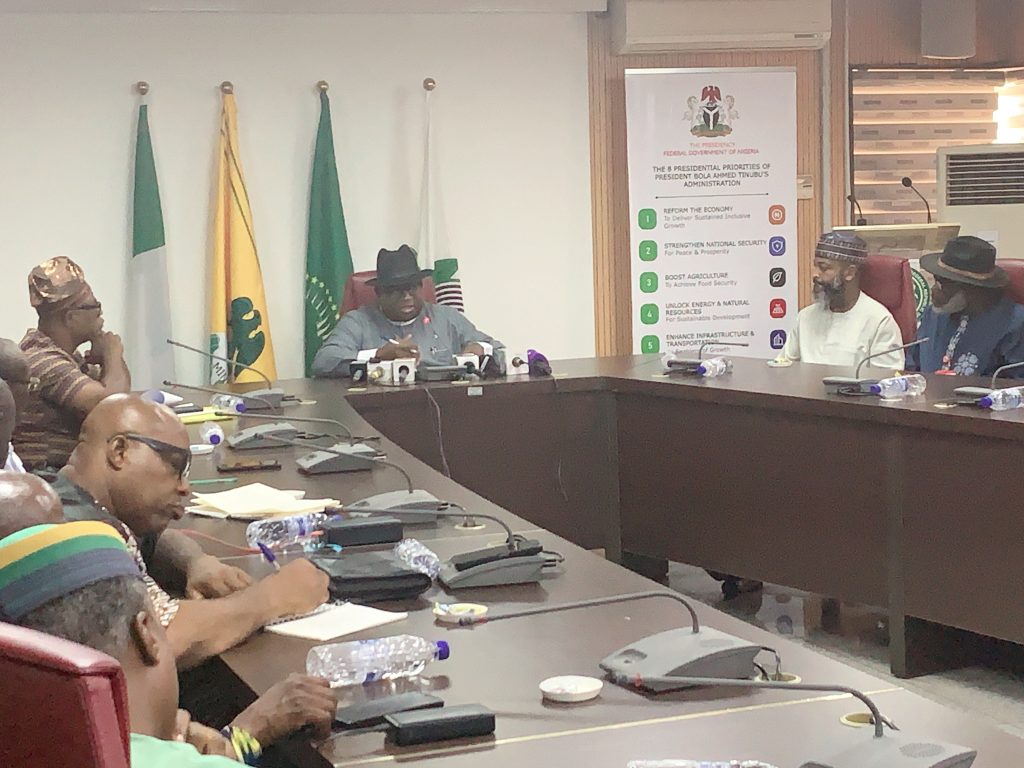
The warning was delivered in Abuja on Friday by the spokesperson of the Federal Ministry of Foreign Affairs, Kimiebi Imomotimi Ebienfa during a media briefing addressing pressing issues within the ministry.
“It has come to the attention of the government that certain unauthorized persons and entities are fraudulently presenting themselves as diplomats or conferring such titles on unsuspecting members of the public,” Ebienfa said. “These actions are not recognized under Nigerian law or any applicable international conventions.”
He disclosed that the ministry has identified a range of criminal practices, including the unauthorized use of titles such as “Ambassador” and “Diplomatic Envoy,” fraudulent conferment of such titles by self-styled organisations, and the use of forged diplomatic materials like fake passports, identity cards, and official vehicle plates.
“These acts amount to impersonation and are criminal offences. Individuals engaging in such activities are strongly advised to desist immediately,” he warned.
Ebienfa stressed that the constitutional authority to appoint and accredit ambassadors rests solely with the President and Commander-in-Chief, noting that no individual, group, or non-governmental organisation has the power to confer diplomatic titles.
“For the avoidance of doubt, the conferment of ambassadorial titles is not subject to payment of fees or membership of any organisation,” he said, adding that while the term “brand ambassador” may be used in commercial contexts, it carries no legal or diplomatic recognition.
The spokesperson revealed that the ministry is working closely with security agencies, including the Nigerian Immigration Service, Federal Road Safety Corps and the Vehicle Inspection Office to identify, investigate, and prosecute offenders.
“The Federal Government remains committed to safeguarding the integrity of Nigeria’s diplomatic service and will not tolerate any form of misrepresentation that undermines the nation’s reputation,” he added.
On the status of newly appointed envoys, Ebienfa clarified concerns over delays in deployment, noting that the government has concluded accreditation processes for ambassador-designates and their spouses.
He announced that a three-day induction programme scheduled for April 27 to 29 will prepare the envoys for their assignments abroad.
“The induction will expose them to the core principles of diplomacy, including engagement with host authorities, conduct in official settings, and representation of Nigeria’s interests,” he said.
According to him, 25 agreement have already been received from host countries, signalling strong diplomatic engagement.
“Upon completion of the induction programme, ambassador-designates who have received agrément will proceed to their respective countries to commence duties,” Ebienfa stated.
He added that while the ministry maintains a policy of non-disclosure regarding acceptance by host countries, alternative postings are arranged where necessary to ensure effective deployment.
The Federal Government reaffirmed its commitment to strengthening Nigeria’s global diplomatic footprint through proper training, strategic postings, and strict enforcement against abuse of diplomatic privileges.