Harvard Experts Hail NASENI’s Groundbreaking Diagnostic Factory as Game-Changer in Fight Against Malaria
By Pan Afric Reporters
International health experts, scientists, and policymakers from Harvard University have praised the establishment of the NASENI-Troment Biotechnologies factory, describing it as a landmark investment capable of transforming disease diagnosis and accelerating efforts to eradicate malaria and other infectious diseases across Nigeria and Africa.
The commendation was contained in a statement issued by the National Agency for Science and Engineering Infrastructure (NASENI) and signed by Olusegun Ayeoyenikan, Director of Information, New Media and Protocol, on June 7, 2026.
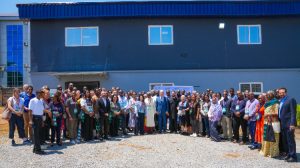
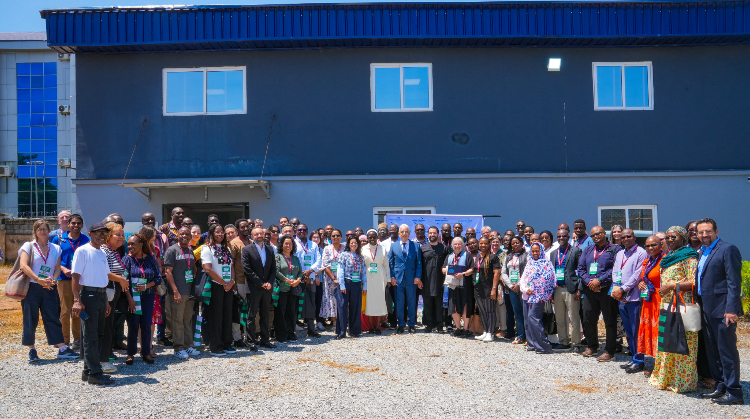
The endorsement came during a tour of the multi-million-dollar NASENI-Troment Biotechnologies facility in Abuja by about 85 participants of Harvard University’s prestigious Science of Defeating Malaria Leadership Development Course and Initiative, currently holding in Nigeria.
The visiting delegation, made up of global medical professionals, scientists, and policymakers, expressed admiration for the facility’s capacity to manufacture Polymerase Chain Reaction (PCR) kits and Rapid Diagnostic Tests (RDTs), describing it as a significant milestone in Africa’s healthcare and biotechnology landscape.
Speaking during the tour, Team Lead of the Science of Defeating Malaria Initiative and one of the world’s foremost malariologists, Professor Dyann F. Wirth of Harvard University, described the factory as a strategic intervention in the continent’s battle against infectious diseases.
“This is an amazing facility that would add value to the eradication of malaria and other public health diseases in Nigeria and across the continent,” she said.
The facility, a strategic partnership between NASENI and Troment Nigeria Limited, is designed to strengthen Nigeria’s healthcare sovereignty by reducing dependence on imported diagnostic products and expanding access to affordable testing solutions.
Chief Executive Officer and Co-Founder of NASENI-Troment Biotechnologies, Mr. Selim Hani, explained that the factory was developed within 18 months and is focused on the production of Rapid Diagnostic Tests and in-vitro diagnostic products for early detection of major public health threats.
“This facility, built from the ground up in the last 18 months, focuses on the manufacturing of RDTs and in-vitro diagnostic products, enabling early detection of major infectious and public health diseases,” Hani said.
According to him, diagnostic kits under the N-CheckUP brand will cover a wide range of health conditions, including malaria, Hepatitis B and C, HIV 1 and 2, pregnancy testing, COVID-19 antigen detection, typhoid, syphilis, and blood glucose monitoring.
He disclosed that the facility has the capacity to produce up to 600 million diagnostic kits annually, making it one of the largest diagnostic manufacturing hubs on the continent.
“It will reduce Nigeria’s and West Africa’s reliance on imported medical diagnostics while improving accessibility and affordability across the region,” he added.
Also speaking, Technical Partner at NASENI-Troment Biotechnologies, Dr. Engin Narinc, described the facility as a historic breakthrough for Africa’s healthcare manufacturing sector.
“This facility is Africa’s first fully localized Rapid Diagnostic Test kit factory. From concept to full-scale launch, our end-to-end production process is designed to deliver world-class diagnostic solutions built entirely in Africa, for Africa,” he stated.
The Harvard-led Science of Defeating Malaria programme, which runs from June 7 to 13 in Abuja, is a globally recognized initiative that equips health professionals, researchers, and policymakers with the skills and strategies required to eliminate and ultimately eradicate malaria.
Industry observers say the NASENI-Troment factory represents a major step toward achieving self-sufficiency in healthcare technology, improving disease surveillance, and strengthening Africa’s capacity to respond effectively to future public health challenges.
The facility is also expected to create jobs, promote technology transfer, and position Nigeria as a leading hub for medical diagnostics manufacturing on the continent.