TCN Challenges Perception of Grid Constraints, Says Nigeria Can Transmit More Power Than It Generates
By Pan Afric Reporters
The Transmission Company of Nigeria (TCN) has dismissed claims that the national transmission grid is the major bottleneck in Nigeria’s electricity value chain, declaring that the country’s transmission network currently has the capacity to wheel significantly more electricity than is being generated.
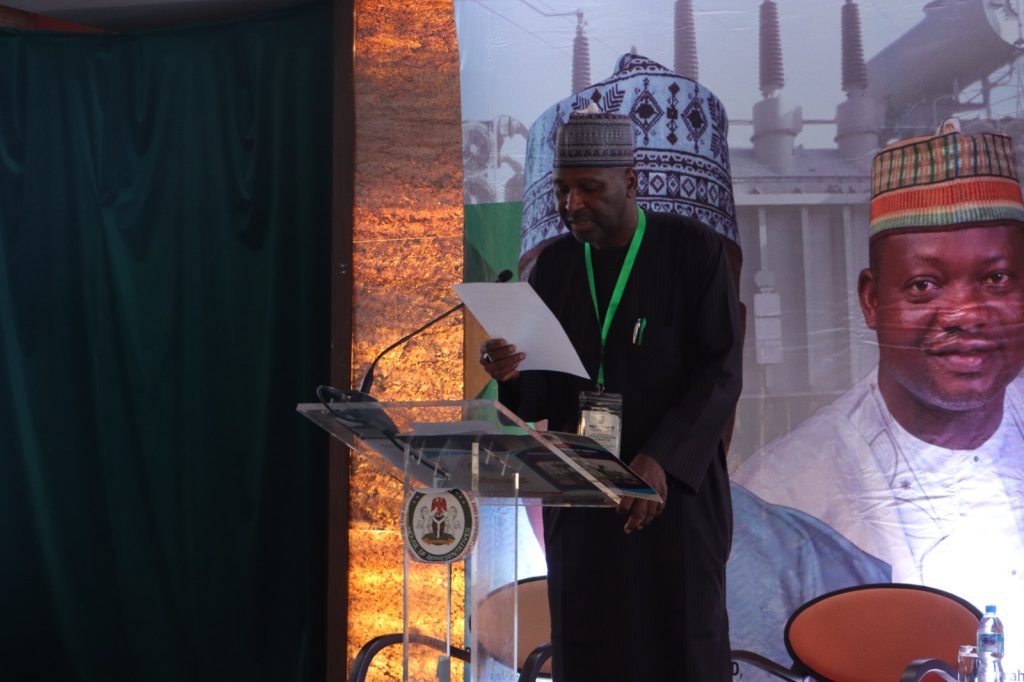
Managing Director and Chief Executive Officer of TCN, Engr. Sule Ahmed Abdulaziz, made the assertion during a four-day Parliamentary and Stakeholders’ Engagement Summit on Power Sector Reforms in Nigeria, where he outlined the company’s achievements, challenges, and roadmap for strengthening the nation’s electricity infrastructure.
The position was contained in a presentation delivered by the TCN Managing Director at the summit organized by the House of Representatives Ad-hoc Committee on Power Sector Reform and Expenditure Investigation.
Addressing lawmakers, government officials, regulators, development partners, and industry stakeholders, Abdulaziz said available data from the Nigerian Electricity Regulatory Commission (NERC) shows that transmission is not currently the weakest link in the power sector.
“The national grid can currently transmit significantly more power than has ever been generated and supplied to it. TCN has consistently wheeled all available generation, demonstrating that the transmission network is ready to support higher levels of electricity delivery,” he stated.
According to him, while Nigeria’s installed generation capacity stands at 13,625 megawatts, the highest power ever generated and delivered to the grid was 5,801.84 megawatts, recorded on March 4, 2025. He noted that TCN’s current wheeling capacity has reached 8,700 megawatts.
The TCN boss described the transmission network as the backbone of Nigeria’s electricity supply industry, stressing that a resilient transmission system is critical for energy security, grid stability, market growth, and long-term economic development.
He disclosed that TCN has expanded its bulk power wheeling capacity from about 7,000MW to 8,700MW through strategic investments supported by the Federal Government and international development partners.
“Over the past few years, TCN has added 1,700MW of transmission capability through deliberate investments aimed at strengthening and modernizing the national grid,” Abdulaziz said.
Highlighting key milestones achieved by the company, he revealed that between January 2024 and November 2025, TCN commissioned 82 transformers nationwide, adding approximately 8,500MVA of transformation capacity to the grid.
He further disclosed that the company has mobilized more than $1.4 billion in financing from international development institutions, including the World Bank, African Development Bank (AfDB), Japan International Cooperation Agency (JICA), and Agence Française de Développement (AFD), to support transmission expansion and modernization projects across the country.
Abdulaziz also pointed to ongoing efforts to digitize grid operations through the deployment of a nationwide Supervisory Control and Data Acquisition (SCADA) system, which he said would enhance real-time monitoring, fault detection, dispatch efficiency, and future smart-grid operations.
“These achievements demonstrate TCN’s commitment to strengthening Nigeria’s transmission infrastructure, enhancing grid reliability, and positioning the sector to support future growth in electricity generation and delivery,” he noted.
Despite the progress recorded, the TCN chief identified vandalism, infrastructure sabotage, right-of-way encroachment, funding constraints, foreign exchange pressures, and weak market liquidity as major obstacles hindering the sector’s growth.
He warned that attacks on transmission infrastructure continue to disrupt power supply and increase operational costs.
“Protecting electricity infrastructure requires stronger security measures, community cooperation, and stricter legal deterrents,” he said.
Abdulaziz also called for coordinated investments across the entire electricity value chain, stressing that increasing transmission capacity alone would not solve Nigeria’s electricity challenges without corresponding improvements in generation, gas supply, and distribution networks.
The TCN Managing Director reaffirmed the company’s support for the implementation of the Electricity Act 2023, describing it as a critical framework for creating a more competitive and modern electricity market.
He urged the National Assembly to strengthen legal protection for critical power infrastructure, ensure adequate funding for priority transmission projects, enforce right-of-way regulations, and support reforms aimed at improving the financial sustainability of the electricity market.
“Nigeria’s electricity challenges are well understood, and the solutions are already known. What is required now is sustained political will, coordinated action, and effective implementation of existing plans, laws, and partnerships,” he said.
Abdulaziz maintained that TCN remains committed to collaborating with government, regulators, investors, and other stakeholders to build a stronger, more reliable, and globally competitive electricity sector capable of driving Nigeria’s industrial growth and economic transformation.
He added that with the right policy support and continued investments, the transmission network would remain the backbone of a modern and efficient power system serving the needs of millions of Nigerians.