HOUSE PASSES STATE POLICE BILL IN LANDMARK SECURITY REFORM, 289 LAWMAKERS VOTE IN FAVOUR
By Pan Afric Reporters
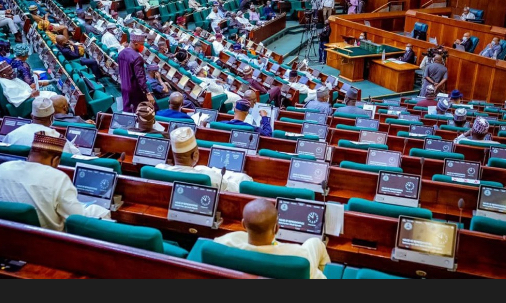
Abuja, June 11, 2026 — In a historic move aimed at overhauling Nigeria’s security architecture, the House of Representatives on Thursday passed the Constitution Alteration Bill seeking the establishment of State Police, marking a major milestone in the country’s long-running debate on decentralised policing and security sector reform.
The bill secured overwhelming support from lawmakers, with 289 members voting in favour, only one member voting against, and no abstentions, following confirmation that the constitutionally required quorum had been met.
The development was contained in a press statement issued by the Office of the House Spokesman and signed by Rep. Akin Rotimi, mnipr, Spokesman of the House of Representatives.
The passage of the bill comes amid growing concerns over insecurity across the country and mounting calls from governors, security experts, and civil society groups for a more localized policing system capable of responding swiftly to emerging threats.
Before voting commenced, attendance was verified at 290 members, satisfying the constitutional requirement of a two-thirds quorum of the 360-member House.
The proposed legislation, which contains 18 clauses, seeks to amend Sections 214 to 216 and other relevant provisions of the 1999 Constitution (as amended) to provide the legal framework for the creation and operation of state police formations across the federation.
Speaking on the significance of the bill, Speaker of the House, Rt. Hon. Abbas Tajudeen, described security as the foundation upon which national development rests.
“By passing this Bill, the House has taken a decisive constitutional step towards creating a policing framework that is more responsive to local realities while remaining firmly anchored within the unity and sovereignty of the Federal Republic of Nigeria,” the Speaker stated.
The legislation is designed to strengthen internal security through a decentralised policing structure, while also providing safeguards for coordination, oversight, accountability, and a clear delineation of responsibilities between federal and state policing authorities.
Deputy Speaker of the House and Chairman of the House Committee on Constitution Review, Rt. Hon. Benjamin Okezie Kalu, hailed the outcome as a reflection of the National Assembly’s responsiveness to widespread demands for security reforms.
“This outcome represents a strong expression of the House’s commitment to national consensus on the urgent need for security sector reform and improved governance structures,” Kalu said.
The State Police Bill was prioritised for consideration and passage during Thursday’s session, while voting on other Constitution Alteration Bills was deferred.
Observers view the passage as one of the most consequential constitutional reforms undertaken by the current National Assembly, given the increasing pressure on existing security institutions to effectively tackle terrorism, banditry, kidnapping, communal violence, and other criminal activities across the country.
The House noted that the State Police proposal forms part of a broader constitutional amendment package covering electoral reforms, judicial reforms, local government administration, devolution of powers, fiscal reforms, human rights protections, and institutional strengthening.
Reaffirming its commitment to democratic reforms, the House of Representatives said the ongoing constitutional review process remains focused on promoting good governance, strengthening democratic institutions, enhancing security, and addressing the aspirations of Nigerians.
With the House’s approval secured, attention now shifts to the remaining constitutional procedures, including concurrence by the Senate and ratification by state Houses of Assembly before the proposal can be transmitted to the President for assent.
If successfully enacted, the legislation is expected to usher in the most significant transformation of Nigeria’s policing system since independence, potentially redefining the nation’s approach to internal security and law enforcement.