FG Targets 100,000 Hectares Wase Grazing Reserve for Livestock Revolution, 10,000 Jobs
By Pan Afric Reporters
The Federal Government has unveiled an ambitious plan to transform the vast Wase Grazing Reserve in Plateau State into a modern livestock production hub, with authorities projecting the creation of more than 10,000 direct and indirect jobs while positioning the reserve as a model for livestock development across Nigeria.
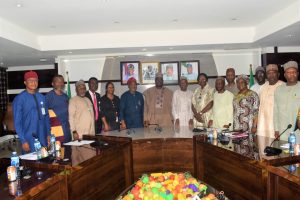
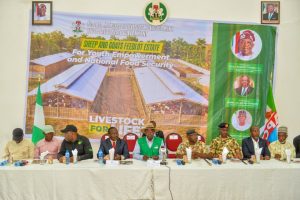
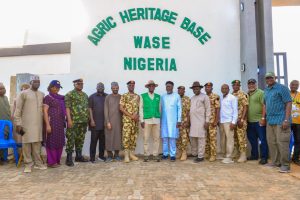
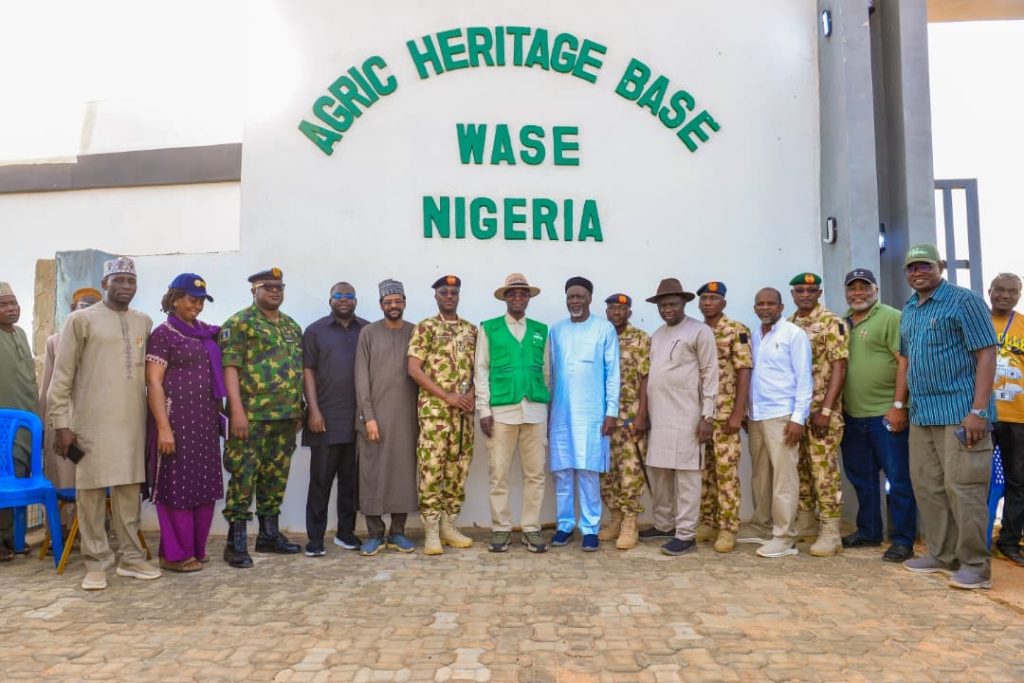
The disclosure was contained in a statement issued by the Federal Ministry of Livestock Development and signed by Henrietta Okokon, Deputy Director, Information and Public Relations, following an inspection visit by the Minister of Livestock Development, Alhaji Idi Mukhtar Maiha, to the Wase Grazing Reserve alongside representatives of Defence Headquarters Holdings and other key stakeholders.
Speaking during the visit, Maiha reaffirmed the Federal Government’s determination to fully utilize the over 100,000 hectares of arable land within the reserve to drive livestock production, improve food security, create jobs, and strengthen rural economies.
According to the Minister, about 30,000 hectares of land within the reserve will be allocated to the Nigerian Army, Nigerian Air Force, and Nigerian Navy through Defence Headquarters Holdings to establish large-scale grazing and livestock production facilities.
“Beyond this visit, we have engaged extensively with stakeholders, pastoralists, and other interested groups seeking to access and utilise the grazing reserve,” Maiha said.
He noted that the project has received widespread support from traditional rulers, community leaders, political office holders, and residents of Wase Local Government Area.
The Minister particularly commended the member representing Wase Federal Constituency in the House of Representatives, Rt. Hon. Dr. Ahmed Idris Wase, for his commitment to agricultural development and support for the initiative.
Maiha stressed that the project enjoys the full backing of President Bola Ahmed Tinubu and the Plateau State Government, providing the political support needed for its successful implementation.
Modern Livestock Production Model
The Minister explained that the initiative would focus on modern livestock management techniques, including cow-calf operations supported by Artificial Insemination (AI) technology to improve the genetic quality of cattle.
Selected bulls, he said, would be raised in feedlots and later processed through modern abattoirs to improve meat production and quality.
“This model will serve as a reference point for neighbouring states such as Kaduna, Bauchi and Nasarawa, while encouraging the establishment of similar livestock infrastructure across the country,” he stated.
Maiha described livestock development as one of Nigeria’s fastest-growing economic sectors and said a project of such scale could generate over 10,000 jobs across multiple value chains.
Dairy Sector Expansion
Beyond beef production, the Minister disclosed plans to strengthen Nigeria’s dairy industry through strategic partnerships with private sector operators, including Integrated Dairies Limited in Jos.
He revealed that the Ministry intends to establish solar-powered milk collection centres to improve milk aggregation, processing, storage, and marketing.
“The sustainable solution to many of the security and economic challenges facing Plateau State and Nigeria is livestock development. Through strategic investments, we can create jobs, improve incomes and foster peaceful coexistence,” Maiha said.
Investors Assess Opportunities
The inspection team included representatives from the Nigerian Sovereign Investment Authority, NIRSAL, Defence Holdings Limited, the Federal Ministry of Water Resources, and the Universal Basic Education Commission (UBEC), all of whom assessed investment opportunities within the reserve.
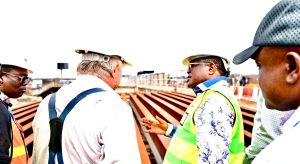
The Minister and his delegation inspected pasture production sites, livestock service centres, irrigation infrastructure, and a micro-earth dam constructed to support irrigated pasture cultivation.
Representatives of the ABIS Group also joined the inspection to explore opportunities for establishing feedlots that would supply quality cattle to the modern abattoir currently under construction in Heipang, Plateau State.
Digital Weather Station Commissioned
As part of activities during the visit, Maiha and the National Project Coordinator of the Livestock Productivity and Resilience Support Project, Dr. Sanusi Abubakar, commissioned a Digital Weather Station funded by L-PRES and managed by Nigerian Meteorological Agency.
The Minister described the facility as a major step toward climate-smart livestock production.
“This facility will enable us to monitor rainfall patterns, wind speed, soil temperature and other climatic factors critical to livestock and pasture management,” he said.
“It also aligns with our commitment to nature-based solutions and greenhouse gas mitigation in livestock production.”
Stakeholders Welcome Initiative
Community leaders and stakeholders in Wase hailed the project as a transformative intervention capable of boosting economic activities, enhancing food security, creating employment opportunities, and improving livelihoods.
Also speaking, L-PRES National Coordinator, Dr. Sanusi Abubakar, said the Wase Grazing Reserve is one of five pilot grazing reserves selected by the Federal Government for remodeling and revitalization.
“The initiative forms part of efforts to strengthen climate-smart livestock production through the installation of Automatic Weather Stations in five pilot grazing reserves across the country in collaboration with NiMet,” he said.
He added that L-PRES is implementing complementary interventions, including sedentary livestock schemes aimed at promoting sustainable production, improving resource management, and enhancing the livelihoods of livestock farmers.
The Minister concluded by assuring residents that the administration of President Tinubu remains committed to creating jobs, reducing poverty, expanding economic opportunities, and fostering peace and security through strategic investments in the livestock sector.