Kaduna Medical-Legal Expert Backs Sickle Cell Bill, Calls for Research-Driven Centers and Subsidized Care
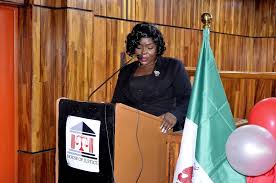
By Onwe Wisdom | Pan Afric Reporters
The Executive Director of the Moluma Medical Legal Center, Kaduna, Gloria Mabeiam Ballason Esq. , has thrown her weight behind the proposed Sickle Cell Bill, describing it as a long-overdue legal intervention for a condition that has claimed countless lives across Nigeria.
Speaking with journalists in an interview at the sideline of a one day Public Hearing hosted by the Senate Committee on Health (secondary tertiary) today 24 November,2025 at the National Assembly, Ballason said the bill touches on “an existential conversation” because sickle cell disorder continues to trap innocent children in lifelong suffering.
“We’re talking about children who get caught up as victims without having any choice,” she said, stressing that the grief endured by countless families is a clear signal that the nation must act.
Ballason noted that the high mortality and persistent medical challenges experienced by people living with sickle cell make the bill urgent.
“When we look at the number of people who have died, the number of families that have been thrown into agony, there certainly must be an answer to the tragedies that people continue to experience,” she stated.
A key provision of the bill seeks the establishment of seven (7) sickle cell centers nationwide, one in each of the six geopolitical zones and one in the FCT. However, Ballason emphasized that such centers must be research-focused to produce meaningful outcomes.
“You cannot have this bill addressing the various challenges without research,” she insisted. “Even if you have the centers without the research, you will not be making a lot of progress.”
To strengthen the implementation framework, the Moluma Medical Legal Center has made formal submissions recommending that experts lead the effort. According to her, “Whoever will chair it should be someone who is an expert in the area, but there should also be geneticists, experts in medical law, as well as experts in medical laboratory… so that the effort doesn’t just end as a process.”
Ballason stressed that Nigeria’s enormous sickle cell burden makes inaction unacceptable. “Nigeria has the highest number. And it’s unfortunate that even though this has been with us all the while, this is the first time that there is legal work to address it,” she lamented, adding that almost every Nigerian family has been touched by the disorder. “This matter ought to have been addressed as early as yesterday.”
The medical-legal advocate called for the bill to elevate sickle cell to a top-tier public health priority. She urged government to subsidize basic treatments for people living with the disorder, just as is done for HIV/AIDS and other chronic conditions. She further recommended increased training for health workers and simple, school-based interventions to protect affected children. “There are effective things that can be done that are not expensive that can ensure that lives are preserved,” she noted.
Ballason reaffirmed that her center’s primary contribution to the bill is its push for enhanced research and a holistic national response. “What we bring to the table is the need for enhanced research… this needs to be prioritized as a public health concern,” she said.
She concluded by reaffirming her identity as a stakeholder committed to change: “My name is Gloria Mabeiam Ballason, the executive director of the Moluma Medical Legal Center in Kaduna,” she said.