Appraising Regulatory Excellence through Komolafe’s Lens
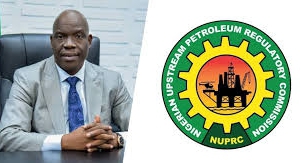
By Ibrahim Idris
When the momentous task of leading a constituted regulatory edifice like NUPRC is entrusted to a single person, the world expects two things: fidelity to statutory duty and demonstrable outcomes. In Nigeria’s upstream petroleum sector, it is no surprising that those expectations have been largely met, and have been exceeded on many occasions by Engineer Gbenga Komolafe. Being the Chief Executive of the Nigerian Upstream Petroleum Regulatory Commission (NUPRC), Komolafe is a living metonym for “Regulatory Excellence”, one who is meticulous in method, and relentless in his delivery.
Komolafe’s regulatory excellence is a precis of performance. His ability to expressly use technological modernity to reorient the upstream governance from an era of opaque process to one that’s characterized by clearer rules, timelier approvals, and an insistence on environmental and fiscal accountability, speaks a lot about the valuable experiences he has gotten over decades of commitment.
Trained as an engineer and a lawyer, and steeped in decades of hands-on experience at the Nigerian National Petroleum Corporation and its subsidiaries, Komolafe is a practitioner-turned-regulator who understands the idiosyncrasies of Nigeria’s oil industry from the pumpjack to the policy memo. His appointment as the inaugural CEO of the NUPRC in 2021 placed him at the fulcrum of the Petroleum Industry Act’s (PIA) ambitious reordering of upstream governance.
Is arrival at the NUPRC with credentials that signal both technical proficiency and institutional knowledge, present him as the perfect leader who could translate the PIA text from just abstract into implementable regulations, and pragmatic decision that would uplift investor confidence while protecting the national patrimony. Komolafe as proven himself capable.
In a capital-intensive industry such as upstream oil and gas, it is well-known that one of the strongest indicators of regulatory is the predictability and timeliness of approvals. Under Komolafe’s leadership, the NUPRC proven this efficiency rationalizing transactional approvals while insisting on enforceable conditions that protect communities and the environment. A salient example is the commission’s approvals of onshore asset sales in 2024 which saw a sign-offs on transactions involving major operators.
However, this action created a new willingness to clear transactions that has been long affected by regulatory uncertainty, on the condition that buyers accept responsibility for remediation and community compensation. This accelerated market orderliness while ensuring that liabilities linked to environmental damage are not abdicated. It further enabled market continuity and protected public interest. This posture which is neither reflexively permissive nor immovably obstructionist, has produced a healthier investment rhythm. By setting clear conditions and timelines, Komolafe and his team have sent a market signal: Nigeria’s upstream sector can transact with greater legal certainty, and the regulator will enforce compliance without needlessly obstructing legitimate commercial pathways.
Komolafe’s NUPRC understood that regulatory excellence in the contemporary petroleum sector is inseparable from environmental stewardship, and a regulator that fails to harmonize extractive activity with climate commitments, will over time, undermine both national credibility and long-term resource value. Therefore on this note, the commission foregrounded decarbonization as an operational requirement rather than a rhetorical afterthought that is hardly being implemented.
Moreover, the launching and enforcement of the Upstream Petroleum Decarbonisation Template (UPDT), and the insistence that licence applicants demonstrate low-carbon credentials and evidence of renewable-energy integration, constitute an important normative shift. The NUPRC, on the 1st of January 2025, stipulated a regulatory condition that aligns Nigeria’s upstream licensing with expectations of global nations’ governance and investor desire for lower-carbon portfolios. These administrative structuring operationalize decarbonization by embedding measurable mitigation commitments into the licence lifecycle. This has become a blueprint for good governance whereby, applicants must present verifiable plans, timelines to work with, and monitoring structure.
Komolafe has made his policy more persuasive by proving it with real data. Under his leadership, the NUPRC reported a notable growth in national oil reserves and a substantial uptick in production between April 2023 and November 2024, accompanied by a marked reduction in theft and deferments. This was made possible due to the good relationship the commission fostered with security agencies and its deployment of monitoring systems contributed to these improvements. These outcomes are mot accidental; they are results from all elements of a regulatory strategy that prizes accountability.
Regulation often plays a catalytic role in attracting and preserving investment. Metrics like, rig count, capital commitments, and licensing round outcomes that investors watch out for, has shown progressive movement under Komolafe’s watch. It is reported that active rig count has increased geometrically from eight in 2021 to 69 as of October 2025, revealing a 763% increase, and substantial investments flowing into exploration and production activities indicate a renewed operational momentum. These shifts are consistent with a regulatory environment that has become less volatile and more adjudicatively certain.
In practical terms, this is consequential because, higher rig counts mean more acreage is being tested and developed; new investments translate into jobs, forward and backward linkages, and enhanced fiscal inflows for the state. The regulator’s role here has been to create an enabling framework, one that clarifies title transfers, streamlines licencing, and enforces compliance, thereby lowering perceived sovereign risk and unlocking capital that had hitherto been reticent.
Under Komolafe, the NUPRC has been proactive in institutionalizing technical and procedural tools that make oversight more effective and less discretionary: the promulgation of measurement regulations, the introduction of the Advanced Cargo Declaration Mechanism, and the modernization of the licensing apparatus are illustrative. This action of his aligns with the popular saying that, “Great regulators are not only arbiters; they are architects of process. “
There is an often observed strain among public figures where they substitute verbosity for efficacy. If you are looking for a talkative then you may seek salvation elsewhere, because unlike most, Komolafe’s modus operandi, by contrast, privileges “speaking with action.” To be clear, Komolafe’s leadership has been accompanied by tangible communication of policy direction, stakeholder consultations, and public reporting. The difference is tone: where many an official indulges in florid programmes of rhetorical self-congratulation, Komolafe’s communications tend to be utilitarian, one that is aimed at clarity and compliance rather than propaganda.
The validations from local and international bodies are innumerable. Under Komolafe, the commission has garnered multiple awards and recognition for service delivery and regulatory ingenuity. These accolades are not end-goals; they are signposts that the industry and peer institutions acknowledge the seriousness of the reform trajectory. Awards and commendations, when paired with measurable results, strengthen the claim that the NUPRC is not merely performing administratively but is effecting legitimate sectoral transformation.
Komolafe’s NUPRC has been an early adopter of the emergent architecture of next generation: one that integrated digital tracking, balance measurements, and embeds climate-related frameworks within licencing. This is a blueprint that is instructive, making regulators synthesizing being business-friendly and being accountable together, rather than choosing one when it’s possible t have both through rule-making and consistent enforcement.
Komolafe leadership style is a deliberate one which is result oriented, and synonymous with outcomes. He is the procedural craftsman who gets things done. Believe me, if you are interested in an administrator who gives priority to Law and demonstrable gains, Komolafe is the perfect exemplary figure: the “Sure Plug” for a sector that needs a good blend of legalism and pragmatism.
There is no doubt that Nigeria’s upstream sector remains complex and evolving. But the successes under Komolafe are credible progress markers that ensure sustenance. They have proven that when a leader combines transparency with technological tools and strategic partnerships, the result is governance that produces both public value and investor confidence. For that reason, Gbenga Komolafe is not merely a regulator among many, he is a case study in how regulatory institutions can be rebuilt, not by rhetoric, but by disciplined action.
Idris is an oil and gas expert contributed this piece NNPC Quarters, KAduna.