45th ABU Convocation: Okonjo-Iweala’s Unpalatable Message to Africa

By Prof. MK Othman
Nigeria stands at a decisive crossroads. With youthful potential, resources, entrepreneurial drive, and intellectual talent, we still struggle with policy inaction, weak institutions, and overreliance on outside approval. I have highlighted how stories of competence and integrity can transform Nigeria’s global image. This aligns with university values: seeking truth, engaging in evidence-based dialogue, and nurturing active citizens. Thus, the significance of ABU’s 45th Convocation is clear, especially in light of Dr. Ngozi Okonjo-Iweala’s candid message to Africa.
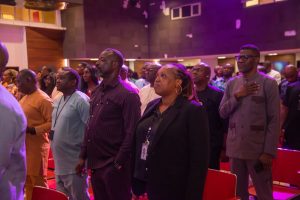
This year’s ABU Convocation was more than an academic ceremony; it became a forum for critical discourse on national and continental issues. By inviting Okonjo-Iweala for the pre-convocation lecture and awarding her an Honorary Doctor of Science degree, ABU reiterated its dedication to tackling key development issues through engagement with leaders.
Convocations typically celebrate achievement, but ABU’s event prompted deep reflection. The numbers were impressive: 27,370 graduates from 110 departments, 323 First Class honors, 4,632 Second Class Upper degrees, and 610 PhDs. The top Computer Science graduate earned a CGPA of 4.92. These results show institutional resilience and academic rigor. Yet, numbers alone cannot define success; ABU must assess the environment its graduates enter. Okonjo-Iweala addressed this in her lecture.
As Director-General of the World Trade Organization, Okonjo-Iweala is a global economic leader. Her inspiring journey—from Ogwashi-Ukwu to Harvard and MIT, leading Nigeria’s Finance Ministry, and now heading the WTO—exemplifies the “half-full” narrative of Nigeria’s global standing. I have stressed how exceptional Nigerians abroad can be in strengthening our story through skill and integrity, and Okonjo-Iweala personifies this. Still, her presence at ABU was more than an honor; it was a challenge.
Her message was clear and uncomfortable: Africa must end dependency as aid declines. In a world of geopolitical tension and shifting supply chains, reliance on external support is no longer viable. Some attendees reacted to her blunt remarks, as they challenged entrenched notions of aid and external rescue. Instead, she urged Africa to position itself as an investment hub—a future workforce and market that enhances global diversity and resilience. Over-reliance on partners exposes our vulnerabilities, but these gaps also bring new opportunities. Okonjo-Iweala advocated for re-globalization and shifting supply chains to labor-intensive manufacturing, mineral processing, pharmaceuticals, renewable energy, and agro-processing across Africa.
Her emphasis on renewable energy was especially significant. Africa holds 60% of the world’s solar potential but accounts for only about 2% of global solar investments. This gap is concerning. Instead of just importing solar panels and wind turbines, Okonjo-Iweala encouraged African leaders to promote local manufacturing. This effort goes beyond energy access; it sparks job creation, supports industrial growth, and advances technology. At its core, it is about dignity. This compelling message reinforces ABU’s mission. Founded in 1962 by Ahmadu Bello, the university has consistently seen education as a means for societal change. Its tradition of inviting accomplished leaders to deliver convocation speeches underscores the belief that knowledge should engage with power and be tested in real-world settings.
ABU’s honorary degree recipients represent a tradition of leadership, spanning Nnamdi Azikiwe to Nelson Mandela and Aliko Dangote to notable jurists. By awarding its 115th honorary degree to Okonjo-Iweala, ABU affirms its intellectual openness and commitment to national engagement.
What sets this convocation apart is its sincerity. Okonjo-Iweala’s lecture, “Challenges and Opportunities for Africa and Nigeria in the Present Global Geopolitical and Geostrategic Context,” recognized Africa’s demographic strengths. By 2050, the continent may hold a quarter of the global workforce and nearly 30% of the world’s vital mineral reserves to support a low-carbon transition. Yet, demographics without jobs breed frustration; minerals without value-added processing are wasted.
Her insistence that African leaders must “step up at home” reveals a crucial truth: the investment climate is shaped more by domestic reforms than by external speeches. Essential factors such as infrastructure development, regulatory stability, anti-corruption measures, and regional integration—facilitated by initiatives such as the African Continental Free Trade Area—are not mere luxuries; they are necessities. Aid cannot replace effective governance.
For Nigeria, the implications of her message are immediate. Our universities graduate thousands of students each year, including the newest ABU cohort. The vital question is whether a supportive economic environment exists to fully utilize their talents. The exceptional CGPA of 4.92 from the top graduate demonstrates discipline and mentorship, yet if national policies do not align with industrial strategies, such brilliance risks leading to brain drain rather than fostering growth.
It is fitting that ABU’s convocation fits this broader context. Universities must not be ivory towers; they are incubators for national progress. Bringing Okonjo-Iweala—a leader in rural development and reform—ABU showed intellectual courage is central to its identity.
Honoring Okonjo-Iweala means more than acknowledging her achievements; it celebrates a leadership model of competence, integrity, and global citizenship. Her career—from the World Bank to Finance Minister to WTO head—centers on one idea: disciplined policy unlocks human potential. This is the essence of development.
Recognizing ABU also underscores public universities’ key role in nation-building. Despite financial challenges and skepticism, ABU continues to develop scholars and citizens who contribute across fields. The convocation lecture series shows how universities join with accomplished people to address hard truths.
“Unpleasant message” here is not pessimism but honesty. Africa’s future needs strategy, not sentiment; competitiveness, not pleas; leadership, not regret. Okonjo-Iweala’s speech is a call to turn challenges into change.
As an academic leader, I see collaboration between universities and practitioners as vital. Graduates must create opportunities and redesign flawed systems. Research should inform policy in sectors such as agriculture, renewable energy, and digital innovation. ABU’s convocation provides a roadmap for progress.
Ultimately, the 45th Convocation of Ahmadu Bello University will be remembered for more than just conferring degrees and honors. It marks a crucial moment when scholarship meets governance and youthful dreams align with seasoned wisdom. It stands as a moment when a distinguished daughter of Africa called on her continent to stand tall, and when a historic university provided the platform for such a meaningful challenge.
In the dialogue between “half-empty” and “half-full,” moments like these inspire hope. But this is not naive optimism; it is rooted in reality—supported by evidence, discipline, and institutional commitment. In honoring Okonjo-Iweala, ABU celebrated Nigeria and Africa’s unlimited potential. By delivering her honest message, she honored the university with the truth it seeks. Through that exchange of courage and honesty, the enduring promise of higher education for both national and global development is revealed. In these turbulent times, ABU Zaria embodies resilience and vision. Accepting Dr. Okonjo-Iweala’s unpalatable message is not just a challenge—it is a call to action. Let us rise to it with integrity, determination, and purpose, ensuring that Africa steps confidently onto the glorious path of its future. I celebrate my alma mater, employer, means livelihood—ABU Zaria—and the proud daughter of Africa, Dr. Ngozi Okonjo-Iweala, for standing tall and keeping my head high in the academic arena.