Kalu Pushes ‘Near-Shoring’ Strategy, Seeks EU Tech Partnerships to Boost Jobs, Cut Migration
By Onwe Wisdom, Pan Afric Reporters
Deputy Speaker of the House of Representatives, Rt. Hon. Benjamin Kalu, has called for stronger technology transfer and local production partnerships between Nigeria and European countries, outlining a bold economic pathway to unlock the nation’s raw materials, create jobs for its teeming youth population and curb irregular migration.
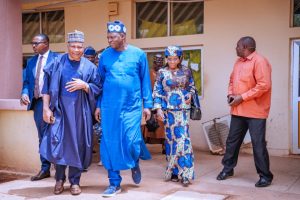
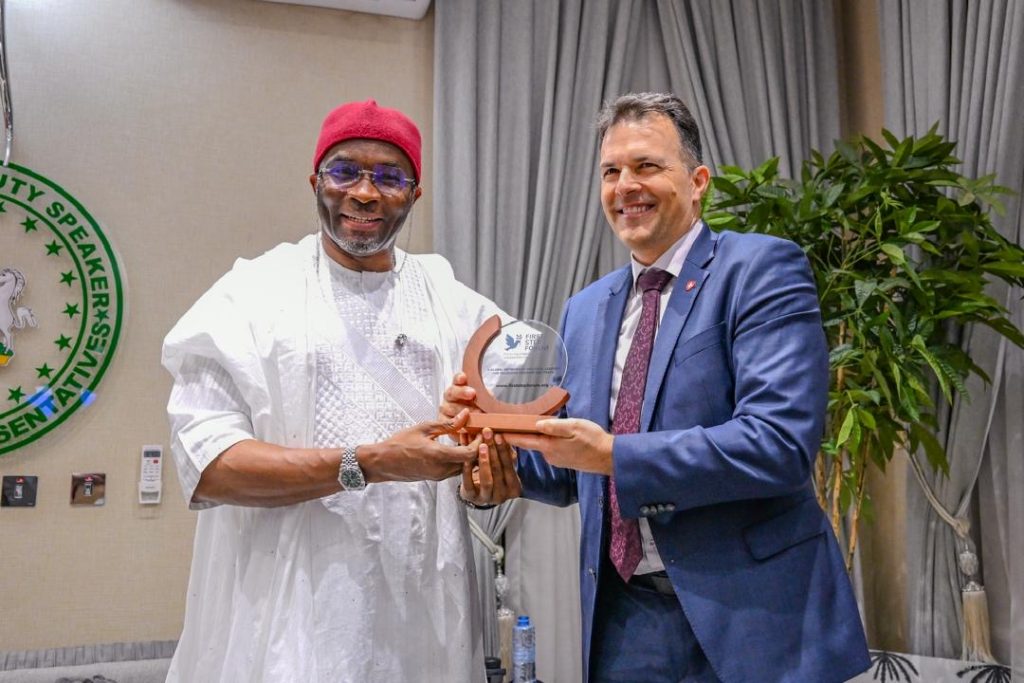
Kalu made the appeal while receiving a delegation of European parliamentarians under the First Step Forum, led by Marc Jost, during a courtesy visit aimed at deepening bilateral relations and addressing shared global challenges.
Advocating the adoption of the “near-shoring” economic model, the Deputy Speaker stressed the need to relocate industrial capacity, finance and technology closer to resource-rich regions such as Africa.
“We have a huge population within our youth demography. You have the capital and the technology; we have the raw materials. The question is why are we not practising what the economy calls near-shoring?” Kalu said.
He explained that near-shoring involves situating manufacturing and industrial processes within countries that produce primary resources, rather than exporting them in raw form.
Using Nigeria’s cocoa and lithium resources as examples, Kalu argued that the country must transition from a raw material exporter to a value-adding industrial economy.
“Why should I export my cocoa to you when you can bring your technology and finance here to turn it into chocolate? Let our cocoa farms become chocolate factories. That is value addition, that is job creation,” he stated.
The Deputy Speaker further pointed to Nigeria’s vast lithium deposits, describing them as among the best globally, and underscored the urgency of building partnerships that would support local battery production, especially as the world shifts toward cleaner energy solutions.
He also called for a reset in Africa-Europe relations, urging both sides to move beyond historical grievances and instead build a future anchored on mutual respect, shared prosperity and strategic collaboration.
On Nigeria’s religious diversity, Kalu described it as a source of national strength that enhances governance and inclusiveness.
“Our diversity is not a disadvantage; it is a beautiful coloration that allows us to see issues from multiple perspectives. That is how we achieve balanced and inclusive governance,” he said.
Kalu further highlighted the inclusive leadership style of President Bola Ahmed Tinubu, noting that despite being a Muslim, the President promotes religious harmony through policies and symbolic actions, including the recent unveiling of a chapel at the National Assembly attended by the First Lady.
The meeting underscored growing momentum for deeper Nigeria-Europe cooperation, particularly in areas of industrial development, economic transformation and migration management.