CONSENSUS VS DIRECT PRIMARIES: Sen. Opeyemi Defends Electoral Process, Says Dissent Triggers Contest
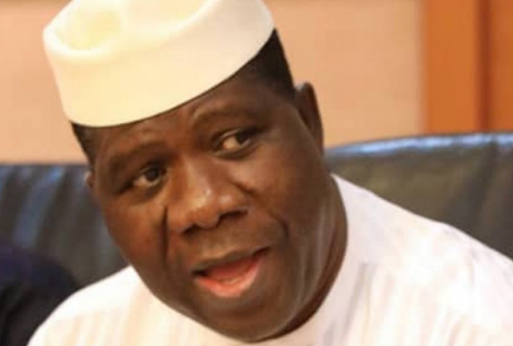
The senate leader, Sen. Opeyemi Bamidele (Ekiti Centra) has defended the use of consensus in party primaries, insisting that it remains a legitimate democratic option under Nigeria’s electoral framework, while emphasizing that any disagreement automatically opens the door for direct primaries.
Speaking after submitting his expression of interest and nomination forms, the senate majority leader explained that the current electoral process is guided by the Electoral Act 2026, which recognizes only two modes of candidate selection—direct primaries and consensus.
“Consensus and direct primaries are both part of the democratic process,” he said. “Even where there is only one aspirant, there must still be a primary, because party members must openly endorse that candidate.”
He noted that consensus arrangements are typically driven by agreement among party stakeholders, but stressed that such agreements cannot override individual rights within the party.
“In situations where stakeholders agree on a particular aspirant, they can adopt consensus,” he explained. “But once even one person disagrees, then there must be primaries. That is the law.”
The lawmaker further clarified that the electoral framework eliminated indirect primaries to prevent what he described as the undue concentration of decision-making power in the hands of a few delegates.
Addressing concerns over controversies surrounding consensus arrangements in parts of Ekiti politics, he admitted that the process has not always been seamless.
“I will not say that every attempt at consensus has been smooth,” he said. “But there are cases where it has been unanimous.”
Citing his personal experience, the lawmaker disclosed that stakeholders in his senatorial district endorsed him without coercion, citing satisfaction with his performance.
“I did not have to lobby or discourage anyone from contesting,” he said. “Stakeholders approached me and expressed confidence in my representation. No one else even obtained the form.”
He, however, acknowledged that such scenarios may not be replicated across all constituencies.
“That is my personal experience; it may not be the same elsewhere,” he added. “In any constituency where people are not agreeable to consensus, then there will definitely be direct primaries.”
Reiterating the voluntary nature of consensus, he described it as “a suggestion” rather than an imposition, noting that democratic choice ultimately rests with party members.
“A consensus is only valid where there is agreement,” he said. “Where there is none, the process must return to the people through direct contest.”