World Milk Day: FG Unveils Plan to Empower 37,000 Women, Youth and Transform Nigeria’s Dairy Industry
By Onwe Wisdom, Pan Afric Reporters
The Federal Government has announced an ambitious plan to empower more than 37,000 women and young Nigerians through targeted livestock development programmes, as part of a broader strategy to revolutionise the nation’s dairy industry, boost local milk production, and strengthen food security.
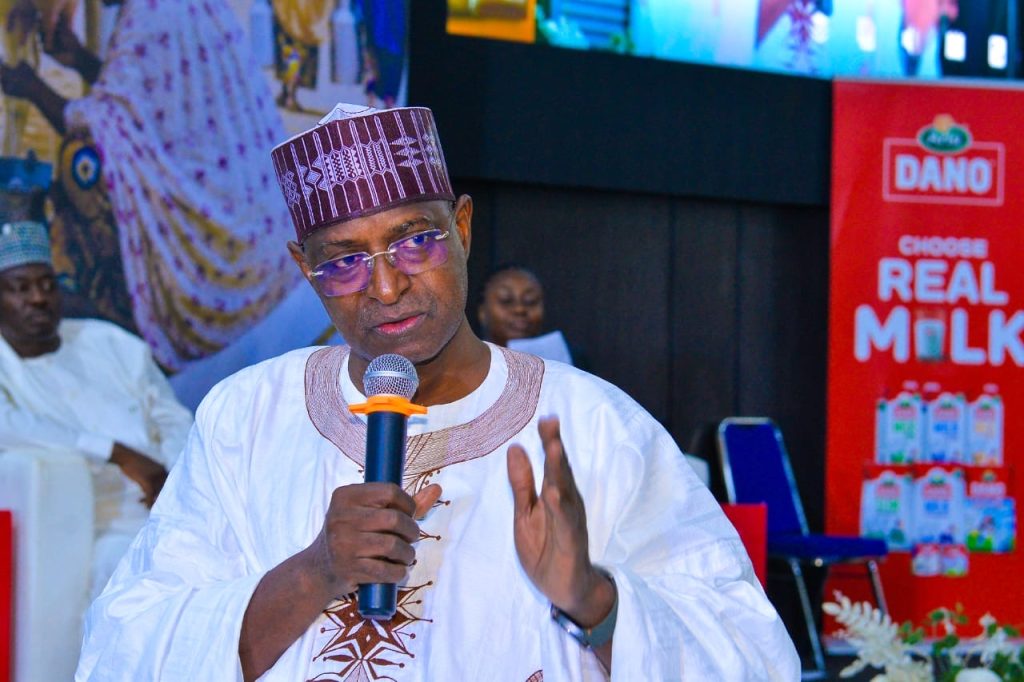
The initiative, which places women at the centre of Nigeria’s livestock value chains, was unveiled by the Minister of Livestock Development, Alhaji Idi Mukhtar Maiha, during the 2026 World Milk Day Conference held in Abuja under the theme: “Celebrating Women’s Dairy Farmers: Promoting Fresh Milk Consumption for a Healthy Nation.”
The announcement was contained in a statement issued by the Federal Ministry of Livestock Development and signed by Henrietta Okokon, Deputy Director, Information and Public Relations, on June 1, 2026.
Speaking at the event, Maiha said the Ministry would deliberately increase the participation of women across critical livestock sectors, including dairy production, poultry, piggery, rabbitry, beekeeping, beef production, and fodder development.
“There is going to be a deliberate effort by the Ministry. From dairy to poultry, piggery, rabbitry, beekeeping, beef production and fodder development, there should be a deliberate attempt to feminise all these value chains,” the Minister declared.
He stressed that women play a pivotal role in milk production, processing, storage, and marketing, adding that sustainable growth in the dairy sector cannot be achieved without empowering them.
“No meaningful transformation of the dairy sector can occur without the inclusion and empowerment of women. We are committed to creating greater opportunities for women and youth through dairy cooperatives, skills development, milk aggregation systems, value addition and enterprise support initiatives,” Maiha said.
The Minister explained that the proposed Women and Youth in Livestock Empowerment Initiative would provide economic opportunities for over 37,000 beneficiaries through enterprise incubation, cooperative strengthening, access to finance, technology transfer, skills acquisition, and market integration.
He further unveiled the National Dairy Policy Implementation Framework, describing it as a strategic roadmap designed to accelerate local milk production, attract investments, and reduce Nigeria’s dependence on imported dairy products.
According to him, the government is also working towards establishing women-led milk aggregation and processing cooperatives to enhance local value addition and improve access to processors and markets.
Maiha noted that beyond policy pronouncements, practical investments in infrastructure, financing, technology, and training would be required to unlock the full potential of women in the dairy industry.
“Improving the productivity of women dairy farmers requires more than policy statements. It requires deliberate investment in infrastructure, training, financing, technology, market access and inclusion within decision-making structures across the dairy value chain,” he added.
Earlier, the Permanent Secretary of the Ministry, Dr. Chinyere Ijeoma Akujobi, represented by the Director of Ruminant and Monogastric Development, Mr. Victor Egbon, described the dairy sector as a critical economic driver capable of creating jobs, improving household incomes, and strengthening national food security.
“For Nigeria, this conversation is particularly important because the dairy sector represents not only a nutrition imperative but also a strategic economic opportunity capable of generating employment, improving household incomes and strengthening food security,” she stated.
Also speaking, Senior Special Assistant to the President on Livestock Development, Idris Ajimobi, commended the Ministry’s efforts in repositioning the livestock sector, urging stakeholders to prioritise local milk production and encourage greater consumption of fresh dairy products produced within Nigeria.
The National President of the Commercial Dairy Ranchers Association of Nigeria (CODARAN), M.D. Abubakar, called for effective implementation of backward integration policies to ensure measurable reductions in dairy imports.
“Any programme that fails to achieve import substitution amounts to efforts without results,” he warned.
In his remarks, the Chief Executive Officer of Promasidor Nigeria, François Gillet, reaffirmed the company’s commitment to supporting Nigeria’s dairy development agenda through local production and investment.
He disclosed that Promasidor currently operates one of Nigeria’s largest dairy farms, spanning over 500 hectares and housing more than 750 cattle that produce fresh milk daily while supporting about 1,000 indirect jobs.
Gillet called for sustained support for dairy farmers, particularly women, while advocating increased consumption of fresh milk to improve nutrition outcomes nationwide.
Other stakeholders, including the Country Representative and Political Director of Propcom+, Dr. Adiya Ode, and representatives of the Nigeria Agribusiness Group (NABG), stressed the need for improved infrastructure, feed availability, genetic improvement, and stronger public-private collaboration to unlock the sector’s enormous potential.
The conference attracted key players from across the dairy and livestock ecosystem, including representatives of the Federal Ministries of Agriculture and Food Security, Industry, Trade and Investment, the National Animal Production Research Institute (NAPRI), the National Biotechnology Research and Development Agency, Nestlé Nigeria, USDA Foreign Agricultural Service (FAS) Lagos, Sahel Consulting, the Presidential Livestock Reforms Implementation Committee, development partners, investors, and dairy industry exhibitors.
Stakeholders at the event expressed optimism that the new policy framework and empowerment initiatives would significantly boost local milk production, improve livelihoods, create jobs, and position Nigeria as a competitive player in Africa’s dairy industry.