Senate Backs FRSC Reform Drive as Corps Seeks Better Funding, Technology, Personnel and Legislative Support
By Pan Afric Reporters
The Senate Committee on Federal Character and Inter-Governmental Affairs has pledged to strengthen legislative oversight of the Federal Road Safety Corps (FRSC) as the Corps appealed for increased funding, modern operational equipment, more personnel, technology-driven enforcement and legislative backing to improve road safety and reduce fatalities across Nigeria.
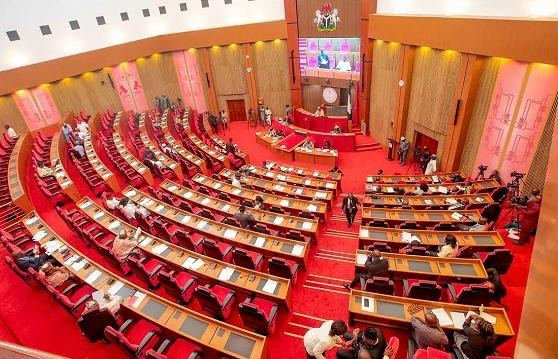
The commitment emerged during an interactive session between the Senate Committee on Federal Character and Inter-Governmental Affairs and the leadership of the Federal Road Safety Corps (FRSC), led by Corps Marshal Shehu Mohammed, where both parties deliberated extensively on the operational realities, institutional challenges and future direction of road safety administration in Nigeria.
Chairman of the Committee, Senator Ede Dafinone, who represents Delta Central Senatorial District, said the meeting formed part of the committee’s strategic engagement with agencies under its oversight following the recent leadership reshuffle in the Senate.
He explained that the engagement was in accordance with Order 96, Subsection 27, Item 80 of the Senate Standing Orders 2026, which empowers the committee to oversee agencies within its constitutional mandate, including the FRSC.
According to him, the committee intends to reposition its oversight responsibilities by developing strategic frameworks that will strengthen institutional efficiency, improve service delivery and deepen accountability across agencies.
“We are building relationships with stakeholders in this critical segment of the public service to elicit ideas, share concerns and advance a strategic plan of action for the committee.”
He said the committee would continue to discharge its constitutional responsibilities through oversight visits, interactive sessions, investigative hearings, public consultations and policy recommendations aimed at addressing institutional weaknesses.
The chairman noted that the committee was committed to designing regulatory frameworks capable of improving governance while ensuring sanctions for erring officials and institutions where necessary.
Giving background on the FRSC, Senator Dafinone described the Corps as Nigeria’s foremost road traffic management agency established under the Federal Road Safety Corps (Establishment) Act, 2007, with responsibilities that include road traffic administration, crash prevention, highway patrol, rescue services, public enlightenment, vehicle and driver administration, enforcement of traffic laws and prosecution of traffic offenders.
He said the Corps Marshal was expected to brief the committee on the operational status of the agency, workforce capacity, nationwide deployment, ongoing challenges and areas requiring legislative intervention.
The committee chairman also disclosed that discussions relating to the ongoing FRSC recruitment exercise would be handled during a closed-door executive session.
Delivering his presentation, FRSC Corps Marshal Shehu Mohammed apologised for arriving late to the meeting, explaining that an official engagement to Kogi State delayed his arrival.
“Let me sincerely apologise for the delay. It was due to an official engagement involving traveling from Kogi state”
Presenting an overview of the Corps’ operations,
Mohammed described road traffic crashes as one of Nigeria’s most pressing public safety and public health concerns.
He observed that Nigeria possesses one of Africa’s largest road networks, making road safety management an enormous national responsibility.
According to him, upon assuming office, the management of the Corps adopted deliberate strategies aimed at reducing crashes, fatalities and injuries while creating safer highways for all road users.
“Our primary mandate is to reduce road traffic crashes and fatalities and create an enabling environment for motorists to travel safely across Nigeria.”
The Corps Marshal identified inadequate operational funding as one of the greatest obstacles confronting the agency.
He revealed that the Corps has continued to operate with ageing patrol vehicles, noting that the last major procurement of operational vehicles occurred in 2013.
“The last time operational vehicles were purchased for the Federal Road Safety Corps was in 2013.”
Mohammed told lawmakers that the Corps is gradually shifting from conventional enforcement to technology-driven operations.
He said the FRSC is investing in body-worn cameras, digital monitoring systems and modern command-and-control centres capable of monitoring patrol activities in real time.
“We are shifting towards technology-based enforcement using body cameras and modern control rooms that enable us to monitor our operatives in real time.”
He appealed to the National Assembly to support increased investment in technology infrastructure to improve efficiency.
The Corps Marshal lamented inadequate manpower, saying the Corps lacks sufficient personnel to effectively police Nigerian roads.
He disclosed that monitoring traffic intersections in the Federal Capital Territory alone would require between 300 and 400 officers working in shifts.
“Our personnel strength is not adequate for the volume of work before us.”
One of the major requests presented to the committee was legislative support for a bill seeking to permit selected FRSC personnel to bear arms.
Mohammed argued that patrol teams frequently encounter dangerous situations involving elements and heavily loaded commercial vehicles without adequate tools to engage them adequately.
He clarified that the request was not intended to militarise the Corps but to safeguard personnel and government assets.
“The purpose is not to confront motorists but to protect our personnel, facilities and support enforcement operations.”
He informed lawmakers that the legislation had already passed the House of Representatives and appealed to the Senate for speedy consideration.
Responding to questions from senators, the Corps Marshal insisted that road safety enforcement alone cannot solve Nigeria’s transportation challenges.
He attributed the widespread practice of vehicle overloading to the absence of an efficient and affordable public transport system.
According to him, commercial motorists often justify carrying excessive passengers because commuters have few alternatives.
“When we stop overloaded vehicles, the passengers ask us, ‘What option do we have?’”
He noted that at many bus stops in Abuja and several northern states, commuters routinely wait for any available vehicle—including trucks—to continue their journeys.
Mohammed admitted that the Corps often exercises discretion because many offenders cannot afford prescribed fines.
He explained that poverty continues to influence transport choices, making strict enforcement difficult in many communities.
The Corps Marshal recounted discussions with state governors who similarly questioned what transportation alternatives were available to low-income Nigerians.
He also blamed low literacy levels for poor compliance with traffic regulations.
According to him, many road users remain unaware of the dangers associated with unsafe transportation practices, including carrying passengers alongside livestock and heavy goods.
“Road safety is holistic. It is not just about enforcement.”
He called for greater investment in public education and behavioural change campaigns.
Mohammed disclosed that some government officials and other high-profile individuals routinely violate traffic laws, particularly traffic signals.
“Many VIPs do not stop at traffic lights. They often cite security concerns.”
He explained that FRSC officers are often limited to reporting such violations to the relevant institutions.
The Corps Marshal also announced that the FRSC has significantly improved driver’s licence production following the replacement of obsolete equipment.
He assured Nigerians that applicants should no longer wait beyond two weeks after biometric capture to receive their licences.
He further disclosed that the Corps would launch a contactless driver’s licence application system within one month, alongside premium same-day processing services.
“Within the next one month, we will launch and implement the contactless driver’s licence system.”
Mohammed further described overloading as one of the most difficult traffic offences confronting the Corps.
He explained that the high cost of freight transportation forces transport operators to use passenger buses to convey goods.
According to him, transporting cargo with a dedicated truck may cost about ₦1 million, whereas using passenger vehicles costs only a fraction of that amount.
He therefore called for comprehensive reforms of Nigeria’s transportation ecosystem.
Despite the challenges, the Corps Marshal highlighted Nigeria’s growing leadership in road safety administration across Africa.
He disclosed that the FRSC currently plays a leading role within the West African Road Safety Organisation and hosts the secretariat of the African Association of Lead Road Safety Agencies, with several African countries visiting Nigeria to understudy the country’s road safety management
During the interactive session, members of the committee suggested that the validity period of driver’s licences should be reviewed, proposing extensions from annual renewal to five or ten years to reduce administrative burdens on motorists and improve efficiency.
The committee said the proposal would form part of its ongoing review of policies affecting agencies under its oversight.
The meeting ended with both the Senate Committee and the FRSC reaffirming their commitment to closer collaboration aimed at strengthening road safety governance, improving institutional performance and reducing the alarming rate of road traffic crashes and fatalities across Nigeria.
The interaction also underscored the National Assembly’s resolve to provide legislative support where necessary while ensuring that the FRSC is better equipped to discharge its statutory responsibility of safeguarding lives and property on Nigeria’s highways.