MSF@30: FG, UN Commend 30 Years of Medical Humanitarian Service in Nigeria
By Salami Abdulrahaman | Pan Afric Reporters
The Federal Government and the United Nations have commended Médecins Sans Frontières (MSF) for 30 years of medical and humanitarian service in Nigeria, particularly its interventions in conflict-affected communities, disease outbreaks and malnutrition emergencies.
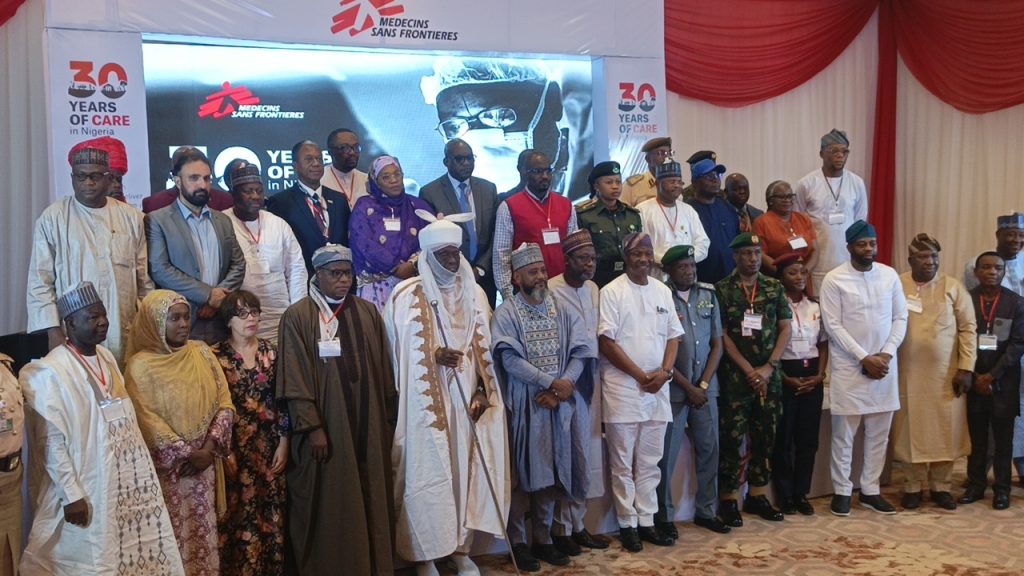
The commendation was made at an event in Abuja to mark three decades of MSF’s continuous operations in Nigeria since 1996.
Representing the Secretary to the Government of the Federation (SGF), Senator George Akume, Dr Aishatu Gogo Idayako said the Federal Government recognised MSF’s contributions to communities affected by conflict, displacement, malnutrition, disease outbreaks and poverty.
She said MSF’s expertise in emergency response, community-based healthcare, maternal and child health, nutrition and disease control had provided valuable support to Nigeria’s health sector.
Idayako said partnerships with credible humanitarian and development organisations remained critical as the government strengthens the healthcare system and pursues reforms aimed at improving access to quality and affordable healthcare.
“The Federal Government therefore values the role of credible humanitarian and development partners in complementing its efforts,” she said.
She noted that the Renewed Hope Agenda places human capital development and healthcare delivery at the centre of national development, including the revitalisation of primary healthcare facilities and improved services for vulnerable Nigerians.
Idayako congratulated MSF’s leadership and staff, as well as Nigerian health workers, volunteers, community leaders and partners who have supported the organisation’s work over the past three decades.
In his remarks, MSF Country Representative,, Ahmed Aldikhari said the organisation’s 30-year journey in Nigeria had been marked by interventions in delivery rooms, treatment of severe malnutrition, vaccination campaigns and emergency responses to disease outbreaks.
He recalled that MSF began continuous operations in Nigeria in 1996 in response to meningitis epidemics in Kano, Bauchi and Katsina states.

Aldikhari said the organisation’s interventions had since expanded to include maternal and paediatric healthcare, nutrition, vaccination, surgery, tuberculosis and HIV care, as well as emergency responses to conflict and displacement.
He disclosed that MSF currently operates in more than 14 states in collaboration with the Ministry of Health and other humanitarian partners.
According to him, MSF treated more than 400,000 children for malnutrition in 2025 alone, describing malnutrition as one of the most pressing health emergencies facing children, particularly in northern Nigeria.
He stressed that treatment alone could not address the scale of the crisis and called for greater emphasis on prevention and coordinated responses.
“Malnutrition, disease and displacement are not separate crises. A child weakened by malnutrition becomes more vulnerable to disease, while conflict can cut families off from food and healthcare,” he said.
Aldikhari also called for sustained collaboration among the government, humanitarian organisations and other stakeholders to tackle malaria, cholera, diphtheria, measles and neglected diseases such as noma.
Also speaking, the UN Resident and Humanitarian Coordinator, Ms Elsie Attafuah, said Nigeria had demonstrated that recovery was possible, citing efforts by the government, communities and partners to rebuild homes, restore basic services and revive livelihoods in parts of the North-East.
She, however, noted that humanitarian needs remained acute, with violence, displacement, hunger and disease continuing to affect communities across the North-East, North-West and North-Central regions.
Attafuah stressed the need to link humanitarian assistance with development and peacebuilding, noting that a rebuilt home requires clean water, a reopened clinic needs trained staff and essential medicines, while returning farmers need security and access to markets.
She listed three priorities for stronger collaboration: protecting people and their access to care; investing in peacebuilding and sustained services; and strengthening Nigerian leadership and capacity.
The UN coordinator called for the protection of patients, health workers and medical facilities, as well as safe and unhindered humanitarian access to communities based on need.
She said MSF’s clinical experience and community knowledge could contribute to stronger responses alongside health authorities, the World Health Organisation (WHO), UNICEF and other partners.
Attafuah emphasised the need to invest in skilled personnel, adequately financed institutions and meaningful participation of affected communities.
She said the UN family would continue to stand in solidarity with MSF through practical cooperation, respect for its independent voice and support for principled humanitarian action.
She described the 30th anniversary as an opportunity to renew commitment to a Nigeria where fewer people require emergency care and those who need it can receive it safely and with dignity.
MSF-Spain, a part of the wider MSF movement, has operated in Nigeria since 1996, providing impartial medical assistance to populations affected by conflict, epidemics, disasters and limited access to healthcare.
The organisation currently implements healthcare projects in more than 15 states, including Zamfara, Sokoto, Kebbi, Borno, Ebonyi and Cross River.
Its operations include supporting general hospitals in Shinkafi and Zurmi in Zamfara State and maintaining a mobile emergency response team to provide rapid assistance during health emergencies.
#UnitedNations