South Africa Reopens Asylum System After Constitutional Court Ruling
By Pan Afric Reporters
South Africa has reopened its asylum system to new applicants following a Constitutional Court ruling that struck down provisions that had effectively prevented thousands of asylum seekers from lodging claims.
The reopening follows a July judgment in which the Constitutional Court upheld an earlier Western Cape High Court ruling declaring amendments to the Refugees Act unconstitutional. The court found that the provisions could result in people being returned to countries where they faced danger without their refugee claims first being properly considered.
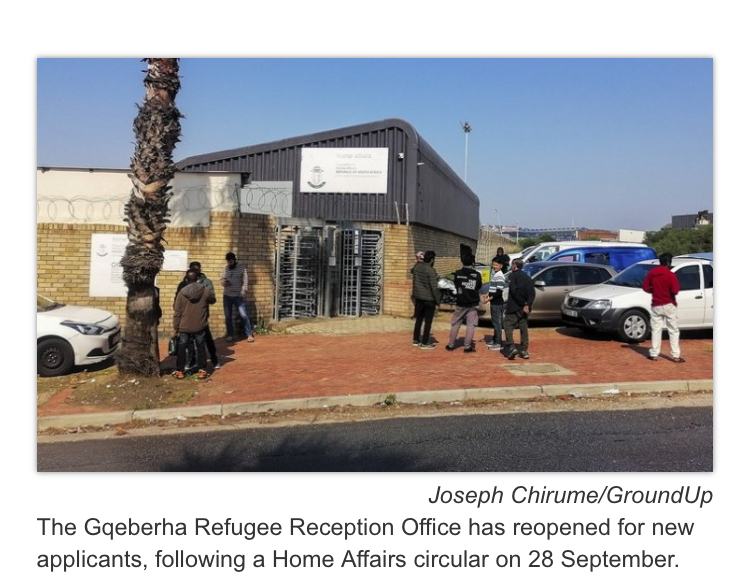
According to a Home Affairs circular issued on September 28, Refugee Reception Offices are now required to accept applications from every new applicant, including people who entered South Africa without a visa or through an unofficial port of entry.
The restrictions, introduced in 2020, required asylum seekers who had not entered through an official port of entry or who failed to report to a refugee office within five days to provide “compelling reasons”. Those without an asylum transit visa were also required to establish “good cause” for their unlawful entry.
The system was further disrupted when Refugee Reception Offices closed between March 2020 and May 2022 because of the COVID-19 pandemic. Only 91 asylum transit visas were reportedly issued between April 2022 and March 2024.
The Scalabrini Centre of Cape Town, represented by Lawyers for Human Rights, challenged the restrictions, telling the Constitutional Court that “hundreds of thousands of people” had been affected.
Despite the reopening, rights groups have cautioned that significant challenges remain. During a visit to the Gqeberha Refugee Reception Office, applicants reportedly faced long waits, while an official advised them to bring identification or a letter from human rights lawyers—guidance that appears inconsistent with the Home Affairs circular, which states that applications should not be rejected because of a lack of documentation.
Tibebu Solomon, leader of the Ethiopian and Eritrean community in the Eastern Cape, who led a September 9 protest by about 400 asylum seekers, welcomed the development but said it was “not yet time to celebrate.” He called for fair access, proper consideration of applications and decisions based on individual circumstances.
James Chapman of the Scalabrini Centre also welcomed the reopening, but expressed concern about the capacity of Refugee Reception Offices to cope with the expected influx and warned against applicants from genuine refugee situations being rejected without proper consideration.
Linton Harmse, director of the Nelson Mandela University Refugee Rights Centre, said hundreds of asylum seekers were expected to approach the offices daily after years of restrictions. He warned that capacity constraints could lead to appointment dates being pushed several months into the future, particularly at the Gqeberha office, which reportedly has only three refugee reception officers.
Meanwhile, Sharon Ekambaram of Kopanang Africa Against Xenophobia described the court victory as evidence of judicial independence, arguing that the previous system had exposed asylum seekers to unlawful treatment and the risk of refoulement—being returned to a place where they could face persecution or serious harm.
The Department of Home Affairs had not responded to requests for comment at the time of publication. Source said.