EU Ambassador Urges Nigeria to Strengthen Electoral Information Protection Ahead of 2027 Polls
Pan Afric Reporters
The European Union has urged Nigeria to strengthen its preparedness against electoral misinformation, foreign interference and coordinated information manipulation ahead of the 2027 general elections, warning that fabricated announcements and misleading online content could undermine voters’ confidence and electoral participation.
The EU said protecting electoral information requires early institutional preparedness, effective collaboration among stakeholders and stronger mechanisms for verifying and disseminating accurate information before, during and after elections.
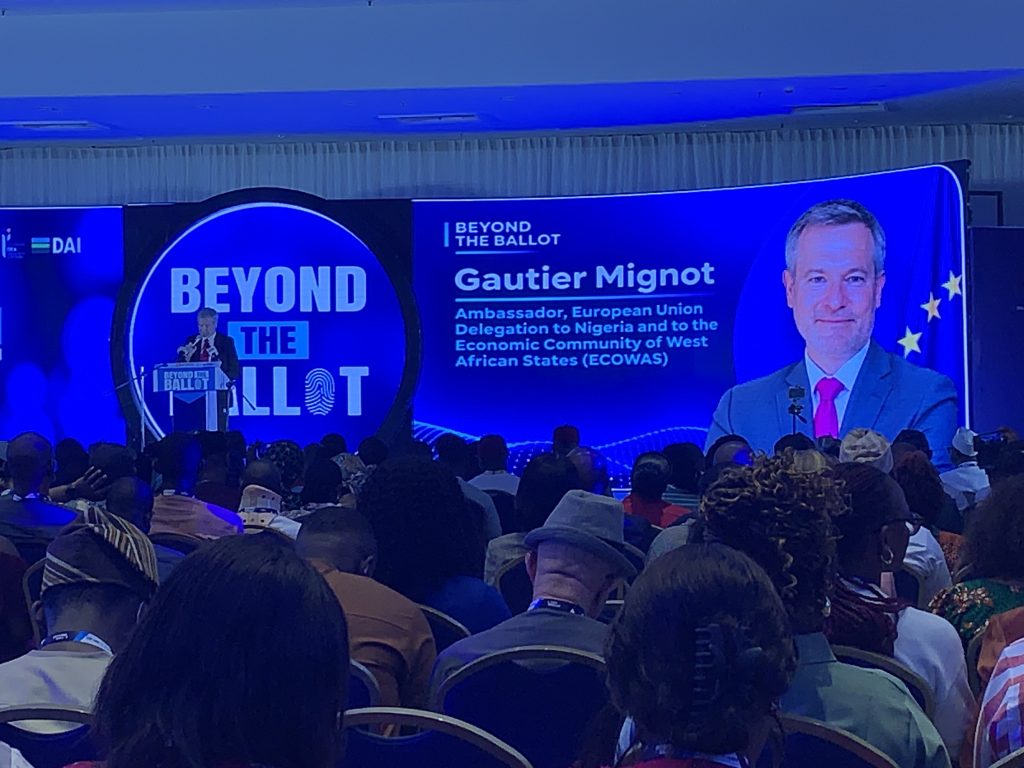
The EU Ambassador to Nigeria and the Economic Community of West African States (ECOWAS), Gautier Mignot, made the call on Monday in Abuja at the ongoing two-day National Summit on Electoral Information Integrity, themed “Beyond the Ballot: AI, FIMI and the Integrity of Nigeria’s 2027 Elections.”
Mignot warned that elections could be undermined without a single ballot being manipulated, noting that fabricated announcements could misdirect voters and create confusion about polling arrangements.
He identified three priority areas for addressing the challenge: preparing institutions before electoral pressure arises, making partnerships operational and protecting democratic rights while safeguarding electoral information.
According to him, electoral stakeholders must establish clear communication channels, define institutional responsibilities and agree on procedures for responding to misleading information before election-related emergencies occur.
The ambassador also called for stronger international cooperation, noting that information manipulation crosses national borders and requires countries to share threat assessment methods, learn from previous incidents and strengthen verification capabilities.
However, he cautioned that collaboration must not compromise the independence of journalists, fact-checkers and other democratic institutions.
“Journalists must retain editorial independence. Fact-checkers must remain free to reach their own conclusions,” Mignot said.
He further warned against using the fight against misinformation as an excuse to suppress legitimate criticism, independent reporting or political disagreement.
According to him, citizens questioning public institutions should not automatically be regarded as spreading misinformation, stressing that reporting institutional failures remains an important democratic responsibility.
Mignot also advocated accessible electoral information across different languages, community media platforms and formats suitable for persons with disabilities.
He urged stakeholders to develop clear response procedures, institutional commitments and implementation timelines to ensure that misleading information is promptly addressed without undermining citizens’ democratic freedoms.
He said international partners, including the European Union, should support local efforts to protect the conditions necessary for citizens to make free and informed electoral choices.