HEALTH JAR 2026: Tinubu’s Health Reforms Deliver 41 Commitments as PHC, Insurance Coverage Expand – Pate
By Pan Afric Reporters
The Federal Government has achieved all 41 presidential commitments in the health sector, with nearly 24 million Nigerians now covered by health insurance, 3,526 primary healthcare centres revitalised and significant improvements recorded in maternal and newborn healthcare, local medical manufacturing and health security, the Coordinating Minister of Health and Social Welfare, Professor Muhammad Ali Pate, has disclosed.
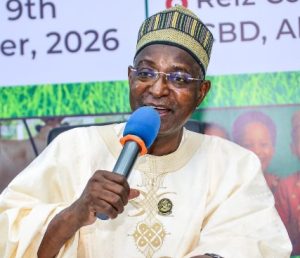
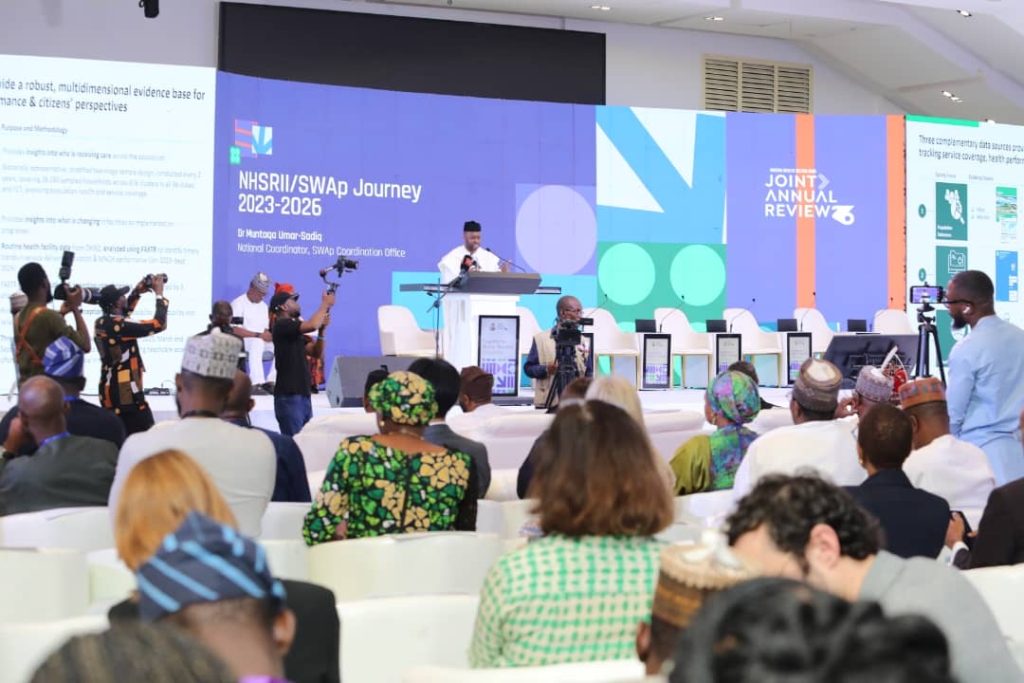
The achievements were highlighted in speeches delivered at the Third Nigeria Health Sector Joint Annual Review (JAR), held from November 10 to 12, 2026, at the Transcorp Event Centre, Abuja, under the theme, “Together to Higher Grounds.” The Federal Ministry of Health and Social Welfare, through its Coordinating Minister, Minister of State, Dr. Iziaq Adekunle Salako, and Permanent Secretary, Daju Kachollom S. mni, presented the progress, challenges and priorities of the ongoing health sector transformation agenda.
Pate attributed the gains to the commitment of President Bola Ahmed Tinubu’s administration through the Nigeria Health Sector Renewal Investment Initiative and the Health Sector Strategic Blueprint, implemented under the Sector-Wide Approach (SWAp).
He said the reforms were strengthening governance, accountability and coordination across federal, state and local governments, as well as development partners, under the framework of “One Plan, One Budget, One Report, One Conversation and One Voice.”
On healthcare financing, Pate disclosed that cumulative releases under the Basic Health Care Provision Fund (BHCPF) had reached approximately ₦422.3 billion as of October 2026, while 3,526 primary healthcare centres had been revitalised, with work ongoing on another 900 facilities. He added that more than 8,000 BHCPF-supported facilities were benefiting from the initiative.
The Coordinating Minister also reported progress in maternal and newborn healthcare, revealing that 19,758 skilled birth attendants had been recruited across 22 states, while 4,747 community health workers had been engaged in 10 states and 78,054 frontline health workers trained.
According to him, the Maternal and Newborn Mortality Reduction Innovation Initiative (MAMII) increased the proportion of participating BHCPF facilities with at least two midwives or community health extension workers from 12 per cent to 91 per cent.
“Additionally, 750,000 pregnant women had been mapped to functional health facilities, while emergency transport services had conveyed 104,566 women and newborns,” Pate stated.
He further disclosed that skilled deliveries in BHCPF facilities rose from 4.8 million in 2023 to 7.9 million by the end of the second quarter of 2026, while fourth antenatal care visits increased from six million to 8.7 million.
Outpatient attendance also climbed to 43 million, with more than 17 million adolescent girls receiving the Human Papillomavirus (HPV) vaccine, while measles and rubella vaccination reached 100 million children.
On financial protection, Pate said health insurance coverage had expanded from approximately 16 million to nearly 24 million Nigerians within three years.
He added that 5,106 patients benefited from up to 80 per cent reductions in dialysis costs, while 710 cancer patients received an 80 per cent subsidy on selected cancer medicines. The free 48-hour emergency care programme also supported more than 15,000 Nigerians across 507 empanelled facilities.
The Minister highlighted the growing capacity of Nigeria’s local pharmaceutical and medical manufacturing industry, noting that 10 factories or manufacturing lines had been commissioned, six of them in 2026, covering pharmaceuticals, rapid diagnostic tests, insecticide-treated nets and medical oxygen.
He said the Presidential Executive Order on healthcare manufacturing had facilitated ₦24 billion in tax waivers for pharmaceutical manufacturers, alongside 12 technology-transfer agreements and a prospective investment pipeline exceeding $5 billion.
On health security, Pate cited Nigeria’s successful management of an imported Ebola case as evidence of improved preparedness, surveillance and emergency response, while acknowledging persistent challenges involving stunting, healthcare affordability, quality of care and patient satisfaction.
In his special remarks, the Minister of State for Health and Social Welfare, Dr. Iziaq Adekunle Salako, said the administration had recorded substantial progress across the eight health priority areas of the Renewed Hope Agenda, with key performance indicators scoring between 60 and 92 per cent.
Salako said the Joint Annual Review was designed to move the health sector beyond ceremonial policy announcements towards measurable and verifiable outcomes.
“This year’s theme, ‘Make the Data Count’, conveys two meanings: every number must be dependable enough to steer by, and every number must be used to change a life,” he said.
He explained that data must serve as a scorecard for performance, guide future projections and consolidate the reforms initiated under President Tinubu.
The Minister of State disclosed that nearly eight million additional Nigerians had been enrolled in health insurance, including more than three million vulnerable persons, while over 8,000 primary healthcare centres were receiving direct support.
He also noted that facility-reported maternal deaths had fallen by approximately 60 per cent compared with 2024, while neonatal and under-five deaths declined by 22 and 25 per cent respectively.
Salako further reported that local pharmaceutical production share had increased from 30 per cent in 2023 to 50 per cent in 2026, alongside an approximately 10 per cent increase in active local pharmaceutical companies.
He identified 2027 as a critical year for consolidating reforms and urged stakeholders to produce actionable resolutions with clearly assigned responsibilities and timelines for integration into annual operational plans.
“The JAR should be moving from reviewing activities to reviewing results, citizen-centred, state-led and evidence-first,” he said.
The Minister of State also outlined long-term targets under the administration’s health agenda, including at least 90 per cent functional primary healthcare centres by 2031, quarterly financing for at least 17,600 PHCs through the BHCPF, health insurance coverage for 40 per cent of Nigerians, MAMII coverage across all 774 local government areas and reducing out-of-pocket health expenditure to below 50 per cent.
In her welcome remarks, the Permanent Secretary of the Ministry, Daju Kachollom S. mni, described the Joint Annual Review as a critical accountability and performance assessment platform for evaluating progress, identifying implementation gaps and defining strategic priorities.
She disclosed that the Health Sector Renewal Compact had been expanded to include the Association of Local Governments of Nigeria (ALGON), private-sector actors, traditional rulers and faith-based institutions to deepen stakeholder participation.
Kachollom also said Joint Annual Reviews had been conducted across all 36 states and the Federal Capital Territory, while implementation of resolutions from the National Council on Health improved from 60 per cent in 2025 to 75 per cent in 2026.
However, she warned that significant challenges remained, particularly in under-five and neonatal mortality, health workforce shortages, non-communicable diseases, prevention of mother-to-child HIV transmission and public health emergency response.
“Data from the review period indicate that only 22 per cent of public health events achieved the seven-day early response target,” she said, underscoring the need to strengthen preparedness, surveillance and response mechanisms.
The Permanent Secretary urged stakeholders to ensure that policy commitments and investments translated into tangible improvements at the point of care, stressing that discussions must produce practical, measurable and time-bound actions.
She reaffirmed the Ministry’s commitment to building a resilient, equitable and responsive health system capable of delivering quality, accessible and affordable healthcare to all Nigerians.
Pate, Salako and Kachollom called for sustained collaboration among governments, development partners, private-sector actors, health workers and communities, emphasising that the ultimate measure of the ongoing reforms must be improved health outcomes and a better quality of life for Nigerians.