African Leaders Push Coordinated Action to Recover Stolen Assets, Curb Illicit Financial Flows
By Pan Afric Reporters
African leaders and asset recovery experts have called for stronger continental cooperation, effective legal frameworks and coordinated institutional action to recover stolen public assets and curb illicit financial flows threatening the continent’s development.
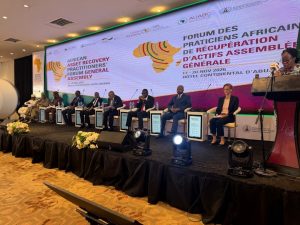
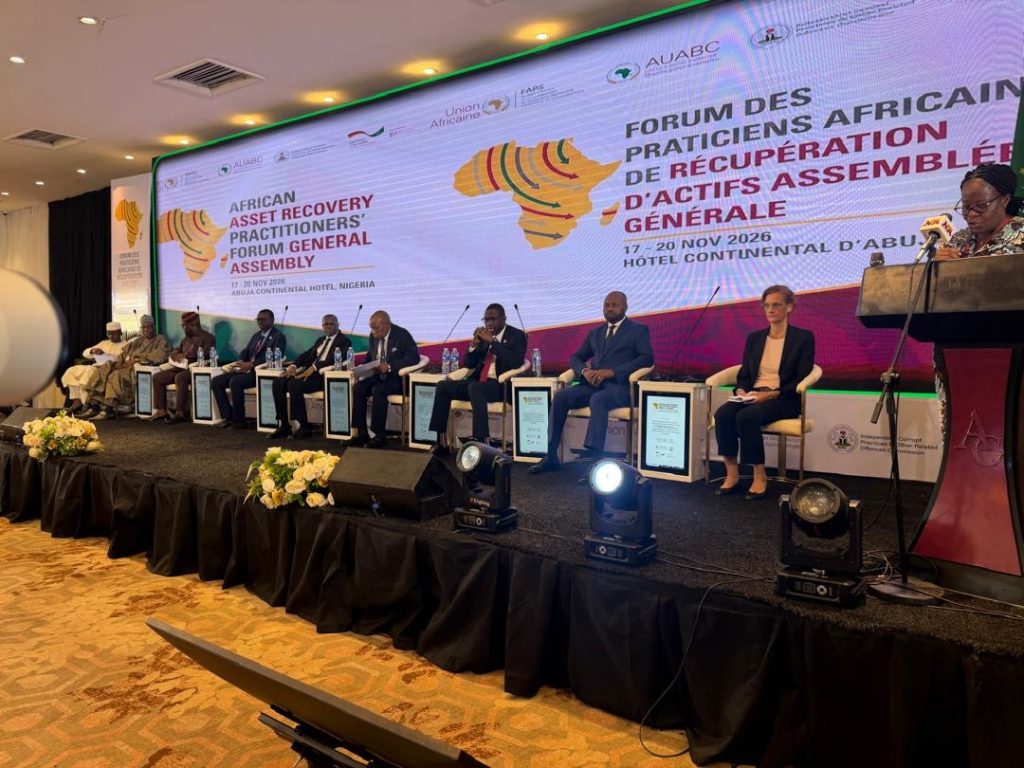
The call was made at the First General Assembly of the African Asset Recovery Practitioners Forum (AARPF), held in Abuja under the theme, “From Commitment to Action.” According to a press statement issued on Tuesday, November 17, 2026, by the Independent Corrupt Practices and Other Related Offences Commission (ICPC), the meeting brought together key stakeholders to strengthen Africa’s asset recovery architecture and translate existing commitments into measurable results.
Speaking at the Assembly, ICPC Chairman, Dr Musa Adamu Aliyu, SAN, who also chairs the Forum’s Interim Steering Council, described asset recovery as a critical instrument in the fight against corruption, urging African countries and practitioners to intensify collaboration in tackling illicit financial flows.
He stressed that every asset lost to corruption represented a development opportunity denied to Africa and its people, calling for a coordinated and sustained approach supported by effective recovery mechanisms, stronger institutions and enhanced cooperation among member states.
Declaring the Assembly open, the Attorney-General of the Federation and Minister of Justice, Chief Lateef Olasunkanmi Fagbemi, SAN, described illicit financial flows as a major obstacle to Africa’s development, noting that the continent continues to lose resources urgently required to improve citizens’ welfare.
Fagbemi said the Assembly’s theme was particularly relevant, stressing that Africa’s progress should be measured not merely by commitments made but by tangible results and their impact on people’s lives.
He called for effective mechanisms to freeze, confiscate and manage recovered assets, while emphasising information sharing, international cooperation and capacity building as essential measures for closing gaps in the continent’s asset recovery framework.
Similarly, the Head of Development Cooperation at the German Embassy, Dr Karen Jansen, expressed concern over the enormous resources Africa continues to lose through illicit financial flows.
She said recovering the stolen resources was imperative to financing development, improving citizens’ welfare and restoring public confidence in governance. Jansen also highlighted the importance of international partnerships and sustained cooperation in strengthening Africa’s capacity to trace, freeze and recover illicitly acquired assets.
The Chairperson of the African Union Advisory Board Against Corruption (AUABC), Honourable Kwami Edem Senanu, described the successful commencement of the Assembly as evidence of what Africa could achieve through unity, shared responsibility and cooperation.
Senanu commended Nigeria for its support and consistent championing of the Common African Position on Asset Recovery (CAPAR), urging stakeholders to consolidate existing commitments through practical actions and stronger institutional engagement.
Also speaking, the Head of the Political Affairs, Peace and Security Department of the African Union Commission, Ambassador Bankole Adeoye, represented by Mr Isiaka Garba, said the initiative was designed to move Africa’s asset recovery commitments beyond policy declarations to tangible actions and measurable outcomes.
In his keynote address, titled “From Commitment to Action: Enhancing Africa’s Asset Recovery Architecture through Effective Implementation of the Common African Position on Asset Recovery (CAPAR),” Abdullahi Shehu Yibaikwal, PhD, emphasised that asset freezing and confiscation must be firmly grounded in law and guided by due process and respect for the right to a fair hearing.
He further underscored the importance of transparency, legitimacy and public trust in asset recovery processes, proposing a four-pillar framework to strengthen the implementation of CAPAR and translate Africa’s commitments into concrete outcomes.
The Assembly comes amid growing concerns over the scale of financial resources lost by Africa through illicit financial flows. Estimates cited in the statement indicate that the continent lost as much as $1.8 trillion between 1970 and 2008, while subsequent estimates put annual losses at approximately $150 billion.
In response to the challenge, the African Union Assembly adopted CAPAR in February 2020 as a continental framework for strengthening the identification, tracing, freezing, confiscation and return of assets acquired through illicit means.
A major highlight of the Abuja meeting was a high-level panel discussion on “From Commitment to Action: What Will It Take to Make CAPAR Work?” moderated by a former ICPC Chairman, Mr Ekpo Nta.
Participants examined practical steps for translating CAPAR into effective action, focusing on institutional capacity, inter-agency and international cooperation, implementation challenges and mechanisms for ensuring that commitments deliver measurable asset recovery outcomes across the continent.
The stakeholders stressed that Africa must move beyond declarations to effective implementation, insisting that recovered assets should be transparently managed and channelled towards improving citizens’ welfare and advancing sustainable development.
The First General Assembly is expected to strengthen knowledge exchange among asset recovery practitioners, deepen cooperation between national and international institutions and reinforce a coordinated continental response to corruption and illicit financial flows.