Beyond 3 Million Barrels: Nigeria Charts Digital, Policy-Driven Path to Energy Sector Transformation
By Onwe Wisdom, Pan Afric Reporters
The Federal Government has reaffirmed its commitment to repositioning Nigeria’s oil and gas sector through a strategic blend of digital innovation, investment inflows, and policy reforms, as it targets production growth beyond three million barrels per day.
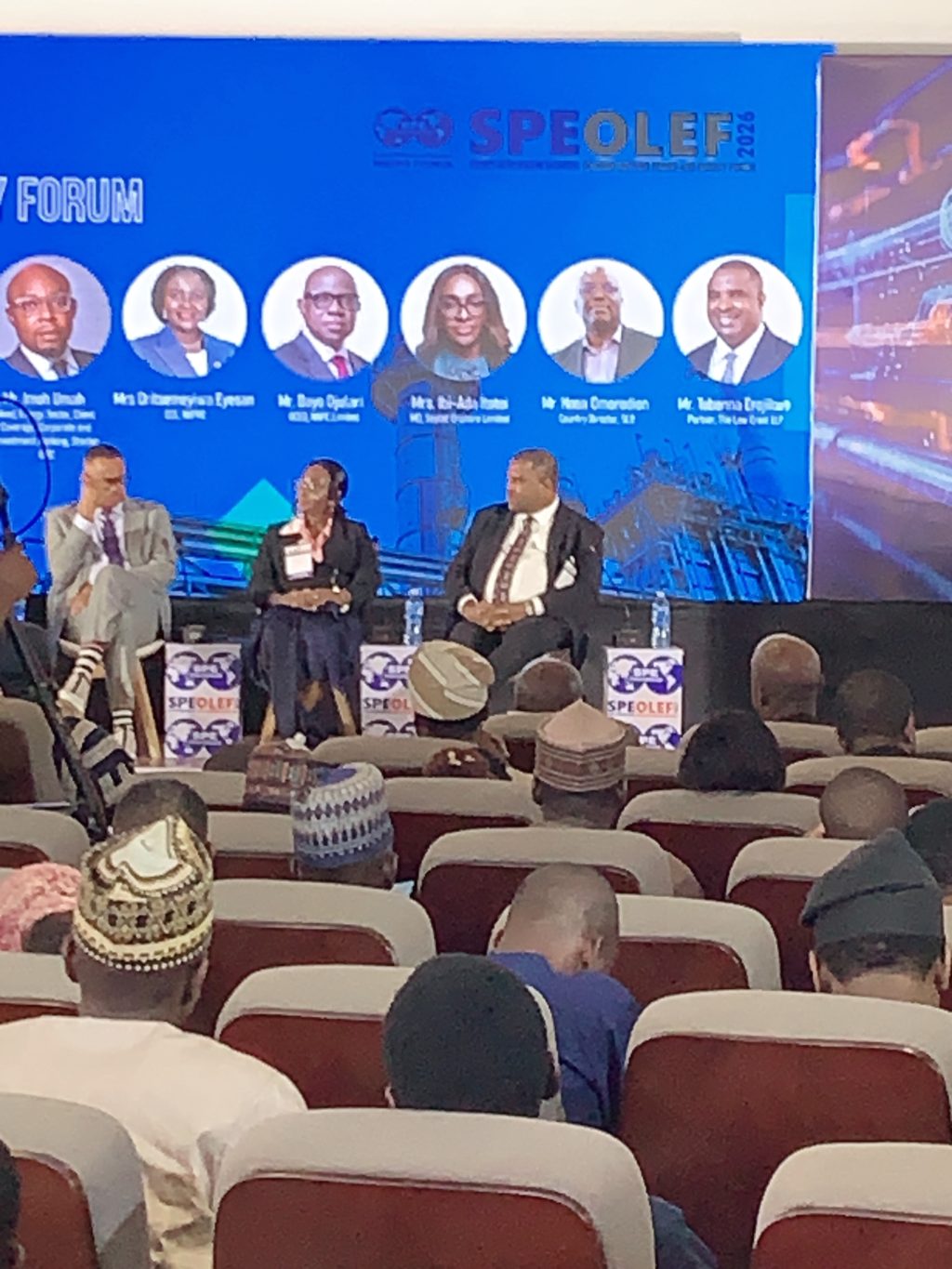
Speaking as Special Guest of Honour at the 26th edition of the Olobiri Lecture Series and Energy Forum organized by the Society of Petroleum EEngineers Nigeria Council, the Minister of State for Petroleum Resources (Gas), Hon. Ekperikpe Ekpo emphasized that Nigeria now possesses both the technical intelligence and political will required to transform its energy landscape.
According to the minister, the administration of President Bola Ahmed Tinubu has demonstrated decisive leadership through executive actions and the appointment of dedicated ministers overseeing oil and gas portfolios.
“The intelligence is well established. What remains is the political will, and that has been provided by Mr. President,” he said, stressing that the time had come for Nigerians to “take the destiny of the country into their own hands.”
The event, which commemorates the historic discovery of commercial oil in Oloibiri in 1956, served as both a reflection on Nigeria’s energy legacy and a platform to outline future strategies for sectoral growth.
Delivering his address on the theme “Beyond the 3 Million Barrels Target: Harmonizing Digitalization, Capital, and Policy Framework for Intelligent Operation and Asset Optimization,” the minister identified three critical enablers for achieving sustainable production increases.
He noted that digitalization is reshaping the global energy industry, with technologies such as artificial intelligence, predictive analytics, and automation improving efficiency, safety, and cost management.
“The future of oil and gas operations is undeniably data-driven. Intelligent operations will reduce downtime, enhance reservoir management, and ultimately drive cost efficiency,” he stated.
On capital investment, the minister acknowledged that funding remains a major challenge, particularly in an era of global energy transition where investors are increasingly selective.
“To attract capital, we must offer clarity, stability, and returns. That is why we are implementing reforms and incentives that position Nigeria as a preferred investment destination, especially in gas development,” he added.
Highlighting regulatory progress, the minister described the Petroleum Industry Acts as a landmark reform that has introduced transparency and predictability into the sector.
He explained that the Act, alongside presidential executive orders and ongoing regulatory improvements, is enhancing governance and ease of doing business.
“Our objective is to create a stable and coherent framework that supports innovation, efficiency, and long-term value creation,” he said.
The minister underscored the centrality of natural gas to Nigeria’s energy future, describing it as both a transition fuel and a catalyst for economic transformation.
Under the government’s “Decade of Gas” initiative, he said efforts are underway to expand infrastructure, deepen domestic utilization, and unlock value across the gas value chain.
“Gas is key to industrialization, power generation, transportation, and export diversification. Our approach ensures that resources translate into tangible socio-economic benefits,” he noted.
Addressing environmental concerns, the minister stressed the importance of aligning energy expansion with sustainability goals.
“Intelligent operations must also be clean operations. Reducing emissions, eliminating gas flaring, and adopting low-carbon technologies are essential,” he said, reaffirming Nigeria’s commitment to balancing energy security with climate obligations.
While commending the organizers for sustaining the Olobiri Lecture Series as a platform for policy dialogue and technical advancement, the minister called for greater collaboration among stakeholders.
He urged industry players, policymakers, and institutions to align efforts in driving innovation and maximizing Nigeria’s hydrocarbon potential.
“The time has come to act. We must not wait for tomorrow—the transformation begins today,” he concluded.