FG Pushes Ahead with Lagos–Abidjan Mega Highway, Flags Design Gaps, Seeks Regional Consensus
By Onwe Wisdom, Pan Afric Reporters
Nigeria has reaffirmed its commitment to the landmark 1,028km Lagos–Abidjan Corridor project, positioning it as a transformative infrastructure initiative set to boost trade, connectivity, and economic integration across West Africa, even as it raises critical concerns over design and implementation frameworks.
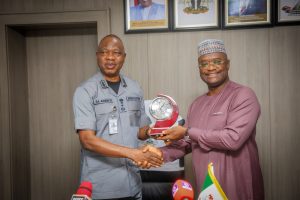
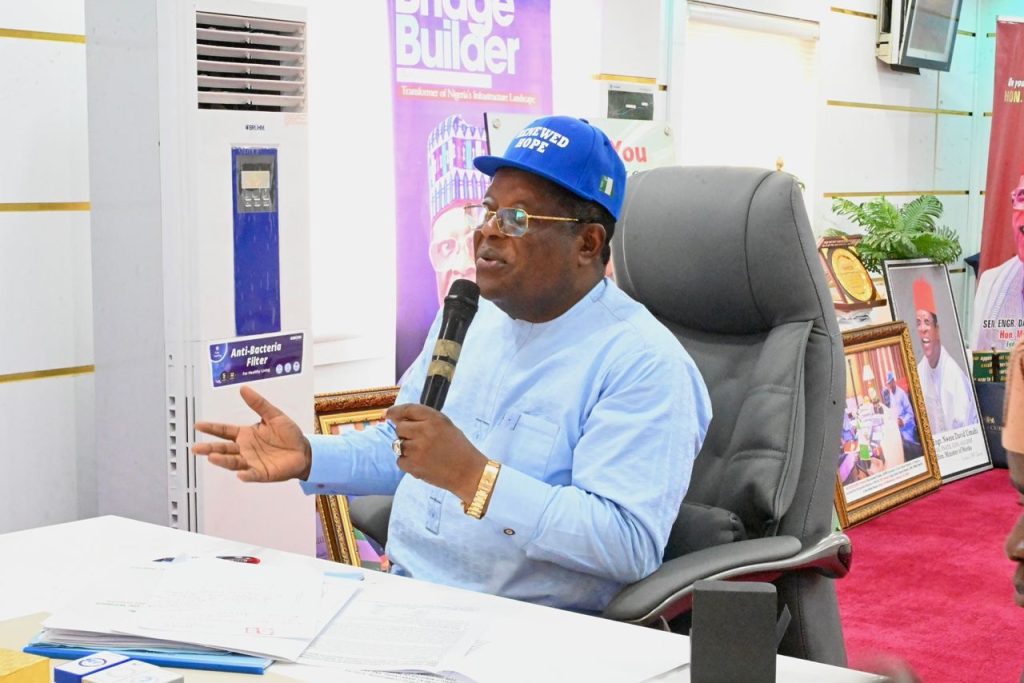
The assurance was given by the Honourable Minister of Works, David Umahi, during a high-level meeting in Abuja with delegations from the Economic Community of West African States Commission and the African Development Bank.
According to a press release issued by the Office of the Honourable Minister of Works and signed by Francis Nwaze, the engagement focused on reviewing progress, resolving technical concerns, and advancing financing plans for the regional highway project.
Umahi conveyed the backing of President Bola Ahmed Tinubu, stressing that infrastructure development remains central to the administration’s agenda.
“This project will drive trade across West Africa and the African coast,” the minister said, noting that the corridor will connect Nigeria to Côte d’Ivoire through Ghana, Togo, and Benin.
He disclosed that while Nigeria’s section of the corridor is approximately 79.5 kilometres, the country plans to exceed standard specifications by adopting reinforced concrete technology and expanding to three lanes per carriageway.
“I am executing mine with reinforced concrete and three lanes, not the two-lane ECOWAS design. I have also rejected aspects of the ECOWAS design due to lack of consultation and impractical elements,” Umahi stated.
The minister highlighted ongoing mega road projects across Nigeria, including the Sokoto–Badagry Superhighway and Lagos–Calabar Coastal Highway, noting that these initiatives are interconnected with the Lagos–Abidjan vision.
“President Bola Tinubu is delivering durable infrastructure designed to last over one hundred years,” he added.
However, Umahi pointed to unresolved issues, particularly the unequal distribution of corridor lengths among participating countries and design inconsistencies.
“The distribution of corridor length across countries is unequal and can only be resolved at the level of heads of state,” he said, adding that Nigeria is developing its own design model tailored to local realities.
On the regional side, ECOWAS Director of Transport, Chris Appiah, said consultations with member states were ongoing.
“We have gone through the designs, taken comments, and provided responses… and we are here to take any final issues on the technical side,” he noted.
The African Development Bank delegation, led by Salawou Mike Moukaila, described the project as a top priority for regional integration and economic growth.
“Our senior management has made this project a priority because it will enhance regional integration,” Moukaila said, adding that strong interest exists among global co-financiers.
He emphasized Nigeria’s strategic importance, noting that a significant share of trade along the corridor originates from the country.
“The Nigerian section is strategically important because a significant portion of trade originates from Nigeria along this corridor,” he said.
Despite technical and financing challenges, the Federal Government reiterated its commitment to delivering the project, with plans to continue engagements with ECOWAS, AfDB, and other stakeholders.
The Lagos–Abidjan Corridor, widely described as a potential “game changer,” is expected to significantly boost intra-African trade, improve cross-border mobility, and strengthen regional economic integration when completed.