How the Second Tenure of Engr. (Dr.) Sule Ahmed Abdulaziz Could Transform Nigeria’s Power Sector
Admin, Pan Afric Reporters
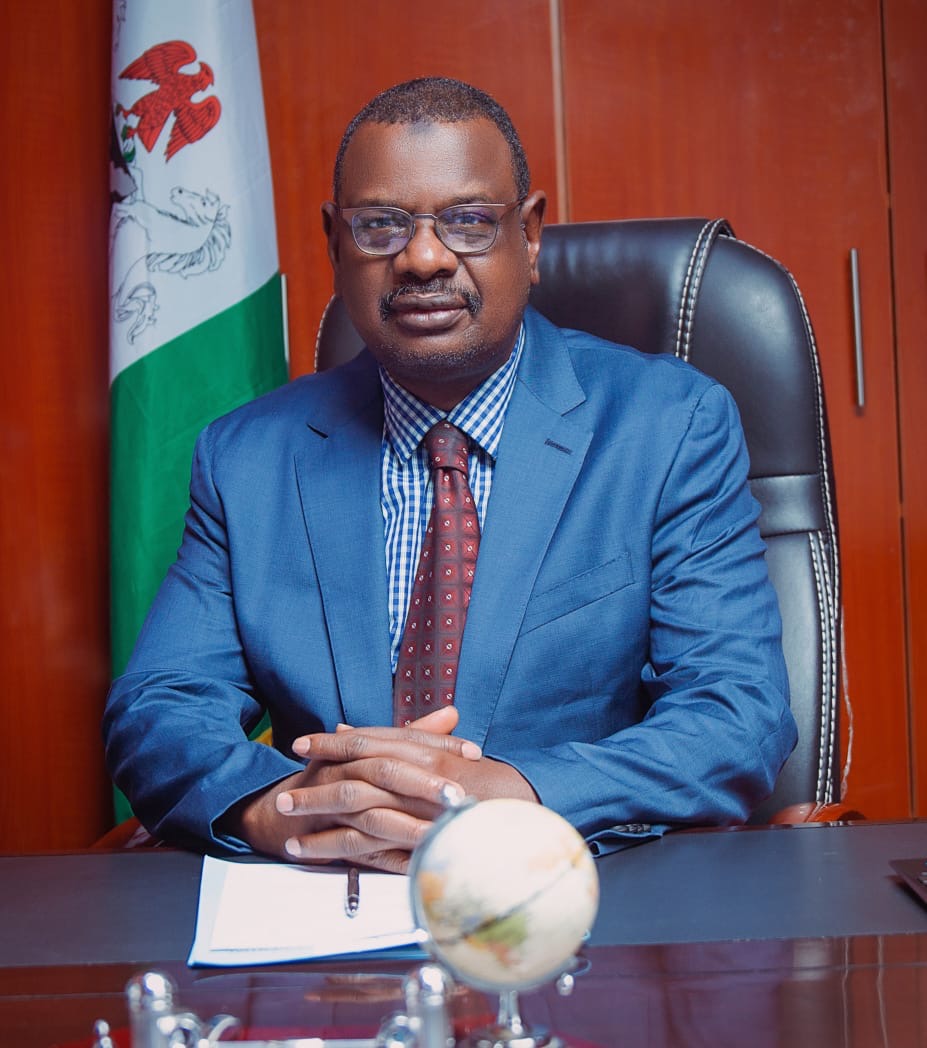
The reappointment of Engr. (Dr.) Sule Ahmed Abdulaziz as Managing Director/CEO of the Transmission Company of Nigeria (TCN) marks more than administrative continuity, it signals a strategic opportunity to consolidate reforms and accelerate transformation in Nigeria’s electricity value chain. With transmission widely regarded as the “critical link” in the Nigerian Electricity Supply Industry (NESI), his second tenure could prove decisive.
A Technocrat with Proven Experience, Abdulaziz is no stranger to the system; a career engineer who rose through the ranks from NEPA to PHCN and eventually TCN, he brings over 25 years of technical and managerial experience.
Sule Ahmed Abdulaziz previously served as Acting MD from 2020 before his substantive appointment in 2022, overseeing transmission operations, project execution and system management.
His first stint was marked by measurable progress: improved bulk grid power supply and stability, expansion of power lines and substations, and better coordination with power generation and distribution companies as well as internal material store management and improvements in staff capacity.
These achievements now form the foundation upon which his second coming will build:
1. Deepening Grid Stability and Capacity Expansion
One of the most critical challenges in Nigeria’s power sector is the instability in the national grid operations. Under Abdulaziz, TCN has already demonstrated improved capacity—transmitting up to 6,000MW, with projections for further increases through infrastructure upgrades. The simulated national bulk transmission capacity is currently north of 8700MW.
His renewed mandate is likely to focus on: expanding transmission lines and substations nationwide, Integrating modern transmission grid management technologies and Reducing transmission loss factor through better infrastructure and load balancing and management.
If sustained, these efforts could finally align transmission capacity with and even surpass generation output—Lehigh would become a major historic feat in Nigeria, though that is the international standard.
2. Accelerating Infrastructure Modernization:
Transmission infrastructure is capital-intensive, and Abdulaziz has shown strong competence in leveraging donor-funded projects and managing large-scale engineering works. During his earlier tenure, projects such as new 330kV lines and substations progressed significantly under structured project management units.
Going forward, transformation will depend on: Fast-tracking ongoing World Bank and AfDB-backed projects, Deploying smart transmission grid technologies for real-time monitoring and Upgrading of aging infrastructure across key transmission corridors.
Modern infrastructure is essential not just for reliability, but also for attracting investment into the broader energy sector.
3. Strengthening Sector Coordination
A major shift under Abdulaziz has been his collaborative leadership style—treating generation and distribution companies as partners rather than competitors or adversaries. This has improved the critical “Disco-TCN interface,” ensuring smoother bulk power delivery.
His second tenure could deepen this by: Enhancing coordination across GenCos, DisCos, and regulators and Reducing bottlenecks that lead to stranded generation.
A more synchronized electricity market will directly translate to better service delivery for consumers.
4. Human Capital Development and Institutional Stability
One often overlooked aspect of power sector reform is the workforce capacity. Abdulaziz has emphasized training, industrial harmony, and non-disruptive labour relations—key to operational efficiency and continuous sustainability.
In his second term, this could evolve into: Advanced technical training for power transmission management and automation, Leadership development within TCN, Sustained industrial peace, critical for uninterrupted operations and Institutional stability is essential for long-term reform continuity and benefits.
5. Driving Regional Power Integration
TCN is not just a national player—it is central to West Africa’s energy integration through the West African Power Pool (WAPP). Under Abdulaziz, cross-border projects such as the North Core project linking Nigeria to neighboring countries have gained traction.
It has been under his watch as Board Chairman of WAPP and MD/CEO of TCN and with the collaboration of all power generation companies as well as distribution companies that the Nigerian Independent System Operator, NISO was able to successfully synchronize Nigerian power system with other WAPP networks early this year. Efforts are on going for another synchronization test that would lead to permanent synchronization that will come with obvious technical, economic and social benefits.
His continued leadership could boost electricity exports and regional trade, position Nigeria as a power hub in West Africa and enhance foreign exchange earnings from energy.
This regional outlook expands the economic impact of TCN beyond domestic supply.
6. Ensuring Reform Continuity and Policy Stability
Perhaps the most significant advantage of Abdulaziz’s reappointment is continuity. The Nigerian power sector has historically suffered from policy inconsistency and leadership turnover. His return offers:
Stability in ongoing reforms, Completion of legacy projects, Sustained momentum in transmission upgrades.
Stakeholders have already noted that continuity is critical to sustaining the gains achieved so far.
The Bigger Picture: Transmission as the Game Changer
Nigeria’s power sector is often judged by generation capacity, but transmission is the real enabler. Without a strong transmission backbone, increased generation cannot translate into improved electricity supply.
Under Abdulaziz’s renewed leadership, TCN has the opportunity to evolve into a catalyst—unlocking stranded power, stabilizing the grid, and enabling economic growth.
Conclusion:
The second coming of Engr. (Dr.) Sule Ahmed Abdulaziz is not just a leadership renewal—it is a critical moment for Nigeria’s power sector. If his track record is sustained and scaled, his tenure could mark the transition from incremental progress to systemic transformation.
The real test, however, lies in execution: turning plans and compacts into megawatts, infrastructure into reliability, and reforms into tangible power delivered to the last mile millions of Nigerians in their homes and industries.