Senate Raises Alarm Over Recruitment Racketeering, Funding Crisis Threatening Federal Character Commission
By Pan Afric Reporter
The Senate Committee on Federal Character and Inter-Governmental Affairs has raised serious concerns over alleged recruitment irregularities, job racketeering, and persistent violations of federal character provisions across government institutions, warning that the trend poses a threat to national unity, fairness, and public trust in governance.
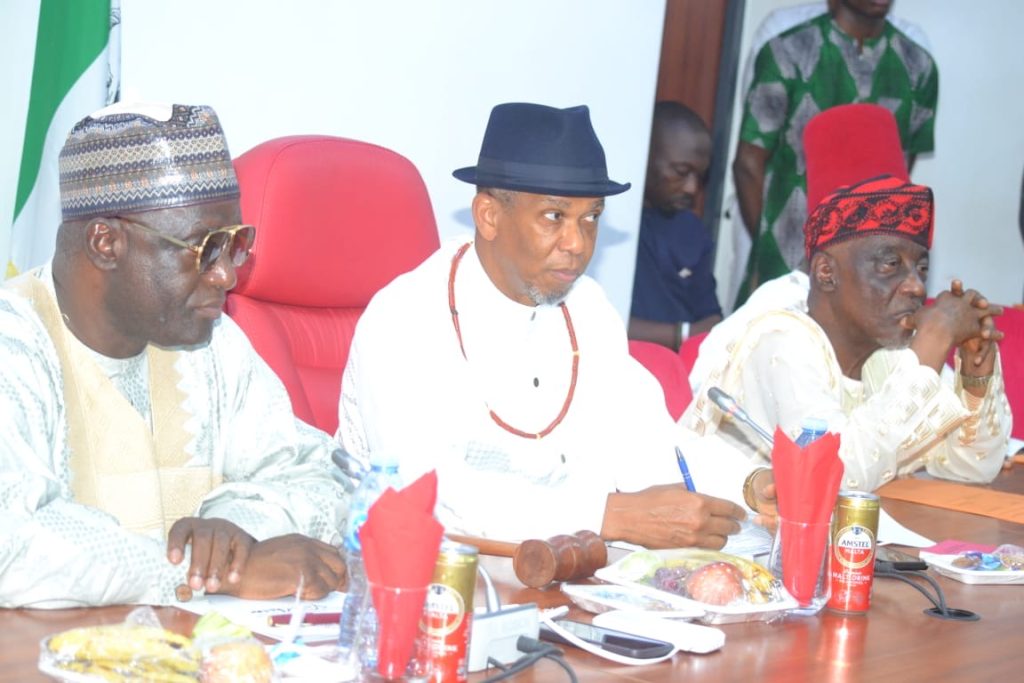
The concerns emerged on Wednesday during an interactive session between the Senate Committee and the Federal Character Commission (FCC) in Abuja, where lawmakers also heard details of the severe operational and funding challenges confronting the constitutional body charged with ensuring equitable representation in Nigeria’s public service.
Chairman of the Committee, Senator Ede Dafinone, said the Federal Character Principle remains one of the country’s most important constitutional safeguards for promoting inclusion, equal opportunity, and national cohesion.
However, he lamented that despite the Commission’s constitutional mandate, significant imbalances continue to persist across the public sector, while many Ministries, Departments and Agencies (MDAs) have failed to cooperate with the Commission’s oversight responsibilities.
According to him, some government agencies routinely ignore requests for information, maintain inadequate personnel records, and circumvent established recruitment procedures, thereby undermining the integrity of the federal character framework.
“Institutions entrusted with safeguarding equity must themselves remain above reproach. The Federal Character Principle is not merely about compliance but about ensuring fairness, transparency, and national cohesion,” Dafinone stated.
The lawmaker also expressed concern over growing allegations of recruitment racketeering and irregular employment practices within parts of the public service, warning that such accusations, whether proven or not, diminish public confidence in government institutions.
He further highlighted concerns over alleged manipulation of nominal rolls and abuse of waiver provisions by some MDAs as a means of bypassing recruitment regulations designed to guarantee equitable representation.
FCC Chairman Paints Grim Picture
Responding to lawmakers’ inquiries, the Executive Chairman of the Federal Character Commission, Huluyat Motunrayo Omidiran, attributed many of the Commission’s challenges to chronic underfunding and the limitations imposed by the current envelope budgeting system.
Omidiran explained that the FCC, established under Section 153 of the 1999 Constitution (as amended), is responsible not only for monitoring federal recruitment exercises but also for overseeing the equitable distribution of socio-economic infrastructure and development projects across the country.
She disclosed that the Commission operates from its headquarters in Abuja and maintains offices in all 36 states and the Federal Capital Territory, with a workforce exceeding 1,100 employees.
Despite its broad mandate, she said inadequate budgetary allocations have severely restricted the Commission’s ability to carry out field inspections, monitor projects, conduct public enlightenment campaigns, and undertake routine oversight activities nationwide.
According to her, one of the FCC’s most demanding responsibilities is monitoring federal projects and interventions across Nigeria’s 774 local government areas, a task requiring significant logistics and operational support.
“It is inappropriate for a constitutional regulatory body to depend on the same agencies it is expected to regulate for logistics and operational support. Such dependence compromises our independence and oversight functions,” she told lawmakers.
No Official Vehicles for Commissioners
In one of the most striking revelations during the session, Omidiran disclosed that the Commission’s operational fleet had virtually collapsed, leaving commissioners without official vehicles.
“As we speak, none of the commissioners has an official vehicle. The car pool is virtually empty, and I am managing a fairly used vehicle as Executive Chairman, hoping it does not break down on my way to and from the office,” she said.
She added that funding shortages have also prevented the Commission from carrying out regular public sensitisation programmes needed to educate Nigerians about the importance and relevance of the Federal Character Principle.
The FCC boss appealed for increased funding, improved staff welfare, enhanced remuneration, recruitment of additional personnel, and deployment of modern technology to strengthen the Commission’s capacity.
Push for Special Tribunal
Omidiran further urged the National Assembly to support the establishment of a dedicated Federal Character Commission Tribunal to fast-track the prosecution of individuals and institutions that violate federal character provisions.
She disclosed that discussions were already underway with the Office of the Attorney-General of the Federation to strengthen the Commission’s legal department and improve enforcement mechanisms.
The FCC also highlighted ongoing efforts to modernise its operations through digital reforms, including the launch of a new website and plans to automate recruitment monitoring and compliance systems.
Senate Promises Support
In his closing remarks, Senator Dafinone assured the Commission that the Committee would carefully consider its requests, including improved funding, acquisition of operational vehicles, deployment of technological infrastructure, enhancement of staff welfare, and stronger legal enforcement tools.
He reaffirmed the Senate’s commitment to strengthening the legal and institutional framework required to ensure effective implementation of the Federal Character Principle across the country.
“The Federal Character Commission must be adequately empowered, properly funded, accountable, and proactive in advancing national unity and inclusion. Every Nigerian must have confidence that there is a place for them in the Nigerian project,” he said.
The interactive session formed part of the Committee’s oversight activities aimed at evaluating the performance, challenges, and operational needs of institutions responsible for promoting equity, fairness, and national integration within Nigeria’s federal system.