INSECURITY:Senator Ned Nwoko Renews Push for Civilian Gun Ownership, Private Military Contractors
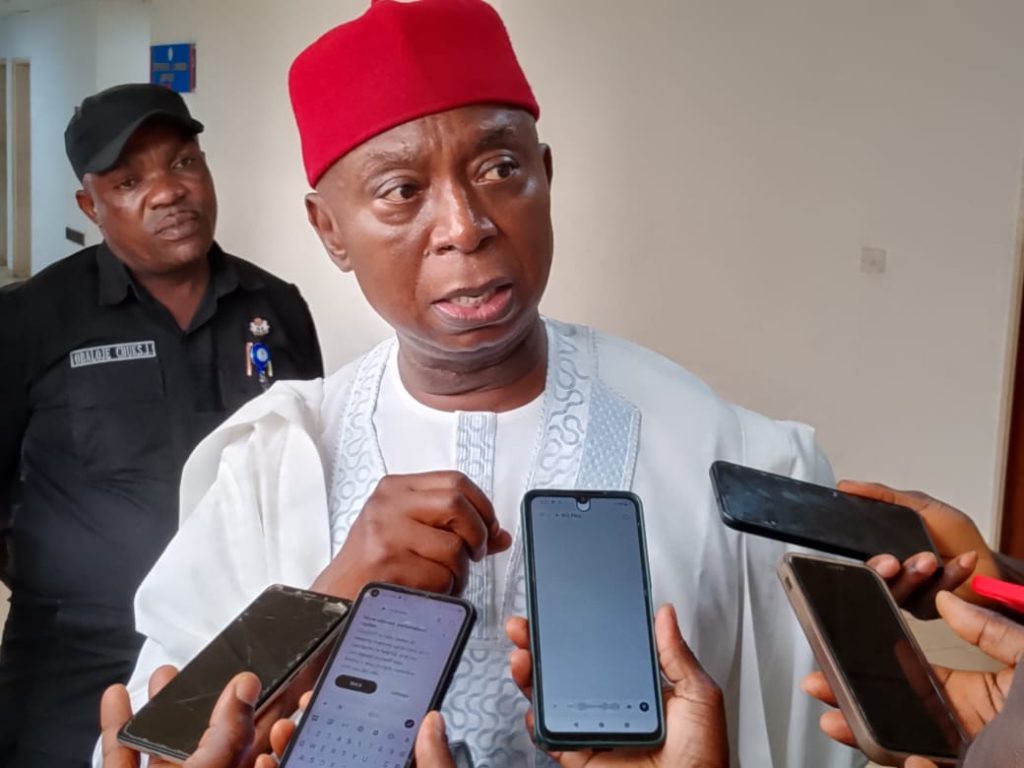
Senator Ned Nwoko has renewed his call for the passage of legislation that would allow qualified Nigerians to legally own firearms for self-defence, insisting that responsible citizens should be empowered to protect themselves amid the country’s worsening security challenges.
The lawmaker, who represents Delta North Senatorial District in the Senate, made the call while speaking with journalists, arguing that the increasing wave of killings, kidnappings and attacks across the country has exposed the limitations of existing security arrangements. He said his proposals are contained in two security-related bills currently before the National Assembly.
According to Senator Nwoko, the first bill seeks to establish a legal framework that would permit eligible Nigerians to acquire and possess firearms strictly for self-defence under a rigorous licensing regime.
“Whether we have state police or not, we must advance the situation where people have the right to carry arms if they want. It is not compulsory that everybody must have a gun, but those who desire one should have the opportunity after proper training and certification,” he said.
The senator stressed that the proposal is not intended to encourage indiscriminate gun ownership but to ensure that only responsible and law-abiding citizens are licensed.
He explained that applicants would undergo professional firearms training, obtain medical certification confirming they are mentally fit, secure recommendations from their local government chairman or traditional ruler, and receive security clearance from both the Director of the Department of State Services (DSS) and the Commissioner of Police in their respective states.
“Many bad people are already illegally armed. What I am advocating is for the good people to also have the opportunity to possess arms legally if they choose to do so,” Nwoko stated.
Citing attacks on schools and communities, the senator argued that trained and licensed civilians could help reduce casualties during attacks.
“Just imagine if two or three teachers in a school under attack were legally armed. They would have been able to fight back,” he added.
Beyond civilian firearm ownership, Nwoko also advocated the establishment of licensed military contracting companies through another bill before the National Assembly.
He explained that the proposed legislation would provide a legal framework for retired military personnel, former security operatives and civilians with recognised military training to form regulated private military and security organisations capable of supporting security operations within and outside Nigeria.
According to him, countries such as the Democratic Republic of Congo, South Africa, Burkina Faso and Iraq have successfully engaged licensed private military contractors to complement government security efforts.
“Government spends enormous resources training military personnel. When they retire, many are still physically fit and highly experienced. Rather than leaving them idle, they should be given a legal framework to continue contributing to security through licensed military contracting companies,” he said.
The senator argued that such a framework would not only create employment opportunities for retired security personnel but also reduce the risk of experienced ex-service members being drawn into illegal arms trafficking or criminal activities.
Calling for wider public support for the proposed legislation, Nwoko maintained that addressing Nigeria’s security crisis requires bold reforms beyond the ongoing debate over state policing.
“We need to encourage Nigerians to stand up. It is not enough to keep saying we are not mature enough. Responsible citizens should be empowered to defend themselves within the law,” the Delta North senator said.
The senator’s advocacy for regulated civilian firearm ownership and private military contractors has continued to generate national debate, with supporters arguing that it could strengthen community security, while critics have expressed concerns over the potential risks of expanding civilian access to firearms.