POLICY ROUNDTABLE AGAINST INSURGENCIES: NCTC, Sokoto Governor Seek Stronger Action Against Insurgency
By Pan Afric Reporters
The National Counter Terrorism Centre (NCTC), Office of the National Security Adviser (ONSA), has called for stronger intelligence coordination, community engagement and preventive measures to curb the expansion of insurgencies and banditry in North-West and North-Central Nigeria.
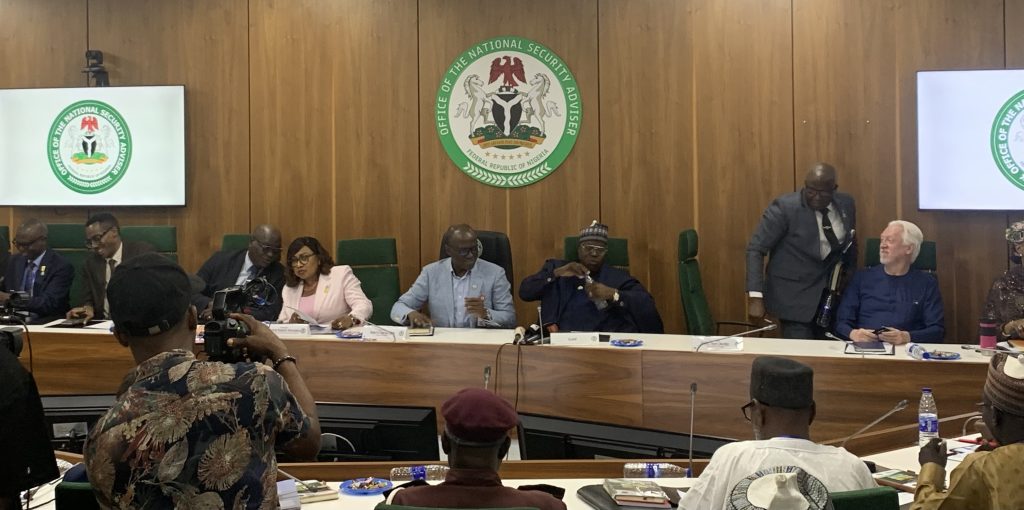
The National Coordinator of the NCTC, General Adamu Garba Laka made the call on Wednesday in Abuja at a policy roundtable organised by the Centre in collaboration with the Bonn International Centre for Conflict Studies (BICC) and other partners, stressing that military operations must be complemented by effective governance, strategic communication and rehabilitation programmes.
He said armed groups continued to exploit poverty, unemployment, local grievances, competition over land and resources, coercion and governance gaps to recruit members, emphasising the need for context-specific solutions that address the underlying causes of insecurity.
The National Coordinator reaffirmed the Centre’s commitment to harmonising Nigeria’s Disarmament, Demobilisation and Reintegration (DDR) framework and strengthening cooperation among relevant institutions. He urged participants to develop practical recommendations with clear responsibilities and implementation strategies.
Also speaking, the Deputy Governor of Sokoto State, Idris Muhammad Gobir who represented Governor Ahmed Aliyu, called for improved intelligence gathering, adequate funding for security operations and stronger accountability in tackling insecurity.
He expressed concern over the activities of bandits operating across the border communities of Sokoto, Zamfara and Kebbi states, urging security agencies to intensify surveillance and utilise local intelligence to identify and dismantle criminal hideouts.
The deputy governor also criticised the spread of inflammatory content on social media, arguing that individuals whose actions threaten national security should be held accountable. Stressing that combating insecurity required collective responsibility and sustained political commitment
The Deputy German Ambassador to Nigeria supported the preventive approach, noting that military action alone could not resolve the crisis. He disclosed that Germany had provided more than €80 million to the Northwest Prevention Facility to support peace structures, early-warning systems and livelihood initiatives, with Niger and Kebbi states expected to join its next phase.
Similarly, the African Union Commission’s representative, Mrs Joselyns Nehimana, called for stronger intelligence-sharing, cross-border cooperation and human rights-based rehabilitation programmes, noting that Nigeria’s experience could inform the African Union’s counterterrorism strategy for 2026–2030.
Earlier, Dr Oyawole Ohimini, a senior researcher at BICC, urged authorities to look beyond forests and remote communities in tackling banditry, highlighting ransom-financing networks, misinformation and disinformation as factors that sustain armed violence.
The two-day roundtable is being held under the project Breaking Patterns of Armed Violence, Preventing Recruitment and Supporting Exit from Armed Groups in Africa, with support from the German Federal Foreign Office and contributions from the African Union, the United Nations Peacebuilding and Peace Support Office, Usmanu Danfodiyo University, Sokoto, and other partners.