“Our House, Our Rules”: Reps Unveil Bill to Take Charge of National Assembly Infrastructure

Public hearing in Abuja sets stage for agency that will wrest control of parliamentary buildings from FCDA and bolster legislative independence.
By Onwe Wisdom
Pan Afric Reporters NASS-Abuja — 7 July 2025
In a landmark move to bolster legislative independence, the House of Representatives on Monday hosted a public hearing on the Bill for an Act to Establish the National Assembly Infrastructure and Property Agency. The proposed legislation seeks to give the National Assembly full control over the development, maintenance, and management of its infrastructure across Nigeria.This public hearing expressed Nigeria’s quest for a more independent legislature.

Declaring the public hearing open, the Speaker of the House, Rt. Hon. Abbas Tajudeen, represented by Hon. Isa Ali described the bill as a “major step in strengthening the National Assembly’s institutional independence.” He emphasized that the creation of the agency is not about replacing the existing Directorate of Estates and Works, but rather about asserting the legislature’s autonomy by transferring key responsibilities from the Federal Capital Development Authority (FCDA) to a dedicated, legislative-run agency.

” The new agency would protect and sustain the physical integrity of the National Assembly Complex and its associated properties across the country,” while signalling to Nigerians that parliament is “serious about leading by example.”
Why the Bill Matters
For 25 years the Federal Capital Development Authority (FCDA)—an executive-branch body—has built and maintained the legislature’s offices, chambers and ancillary facilities. House Services Committee Chair Rep. Amos Daniel argued that the arrangement “contradicts the doctrine of separation of powers” and must now be reviewed “to reflect institutional independence and efficient governance.”

Amos stressed the need to rectify what he called a “critical anomaly” in Nigeria’s democratic structure—where an executive agency (FCDA) oversees the infrastructure of the legislature.
“While we remain grateful to the FCDA for their years of service, the time has come to revisit and restructure this arrangement to reflect institutional independence and efficient governance,” Rep. Daniel said. “A legislature that controls its infrastructure operates with greater dignity and responsiveness in the service of the people.”
Under the draft law, NAIPA among other things would assume all construction, maintenance and refurbishment duties for the National Assembly and its agencies nationwide; Report regularly to the Senate and House Committees on Services, providing an extra layer of oversight;Be guided by a board that blends political leadership and technical expertise, including presiding officers, committee chairmen, the Clerk to the National Assembly, and independent professionals.

Borrowing from Global Best Practice
Lawmakers drew parallels with other parliaments that control their own estates: South Africa’s Parliamentary Services Administration, Kenya’s Parliamentary Service Commission, the U.S. Architect of the Capitol, and the U.K.’s Parliamentary Estate Directorate. “A legislature that manages its own facilities stands stronger and more independent,” the Speaker noted.
An Inclusive Approach
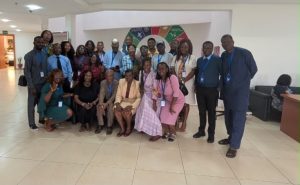
Flagging the legislature’s “consultative culture,” Rep. Daniel welcomed civil-society groups, professional bodies, development partners and the media to “enrich the legislative process.” Stakeholders will submit memoranda over the coming days before the committee finalises its report.
What Happens Next
If the bill sails through both chambers and receives presidential assent, NAIPA will replace the FCDA on parliamentary projects—from chamber renovations to staff clinics and garages—while the current Directorate of Estates and Works is absorbed into the new structure.
Hon. Amb. Daniel Asama Ago, a co-sponsor, urged colleagues to give the bill a swift passage: “The independence of the legislature is not complete until we control the very environment in which we make laws.”


With Monday’s hearing, the House of Representatives has signalled that the era of relying on an executive agency to fix leaking roofs or stalled elevators may soon be over—replaced by a home-grown system designed, in the words of the Speaker, to “maintain our house well so we can better serve the Nigerian people.”