Health Expert Suggests Ways To Reduce Malaria In Nigeria

By Alex Odeh
The Founder/ Director of the African Institute for Health Policy and Health Systems, Nigeria, who doubles as the Vice Chancellor of David Umahi Federal University of Health Sciences, Uburu, Ohaozara Local Government Area of Ebonyi State, Prof Jesse Uneke, has said that Nigeria requires a paradim shif from a one-size-fits all approach to malaria programming.
Prof Jesse Uneke, disclosed this recently during a second engagement/ co-creation workshop held at Tahir Guest Palace, Kano State.
Prof Uneke maintained that there was need for a renewed focus on the use of high-quality data for efficient planning and effective Malaria Subnational Tailoring (SNT) program implementation.
He argued that achieving further reductions in malaria burden in Nigeria, will require a shift from a one-size-fits-all approach to malaria programming towards a more targeted approach, which requires a renewed focus on the use of high-quality data for efficient planning and effective SNT program implementation.
In his opening/ welcome remarks, the Vice Chancellor of David Umahi Federal University of Health Sciences, Uburu, Nigeria, Prof Jesse Uneke, who is also the Founder/ Director of the African Institute for Health Policy and Health Systems, Nigeria, commended the Kano State Government for the excellent commitment towards the elimination of malaria in the State.
The workshop was organized to share the findings from the first co-creation workshop, deliberate on the first draft evidence for policy brief for malaria strategic plan subnational tailoring in Kano State, as well as deepen discussion on the institutionalization of the malaria strategic plan subnational tailoring in the state.
The Co-creation workshop/ engagement event was the second on “Promoting evidence-informed policymaking and implementation to facilitate Monitoring, Learning, and Evaluation (MLE) for Malaria Subnational Tailoring (SNT) in Kano State”.
The event was organized by the African Institute for Health Policy and Health Systems, Nigeria and the Office of the Vice Chancellor, David Umahi Federal University of Health Sciences (DUFUHS), Nigeria, in collaboration with Solina Centre for International Development and Research, Bill and Mellinda Gates Foundation, etc.
In his opening/ welcome remarks, the Vice Chancellor of David Umahi Federal University of Health Sciences, Uburu, Nigeria, Prof Jesse Uneke, who is also the Founder/ Director of the African Institute for Health Policy and Health Systems, Nigeria, commended the Kano State Government for the excellent commitment towards the elimination of malaria in the State.
He expressed his gratitude over the turn-out of the stakeholders to the event. He commended the stakeholders’ commitment to the project so far and to the malaria elimination program at large. He applauded the enthusiastic performance of the stakeholders during the last co-creation workshop in Kano.
Prof Uneke added that such level of enthusiasm is required in assessing the evidence brief for policy for malaria strategic plan sub-national tailoring, that has been drafted by his team using the findings from the last engagement with the stakeholders as well as available literatures.
The health systems expert closed his remark by charging the stakeholders to be diligent in rating the performance of the National Malaria Strategic Plan (NMSP) 2021-2025 in the state and in suggesting ways to enhance the NMSP 2026-2030.
Speaking on the lecture titled: “Promoting evidence-informed policymaking and implementation to facilitate Monitoring, Learning, and Evaluation (MLE) for Malaria Subnational Tailoring (SNT) in Kano State part two”, Prof Jesse Uneke, the Health Policy and Health Systems expert, summarized the key milestones in the evolution of malaria policies and guidelines in Nigeria, from the colonial era of 1950s to the NMSP 2021-2025.
He argued that achieving further reductions in malaria burden in Nigeria, will require a shift from a one-size-fits-all approach to malaria programming towards a more targeted approach, which requires a renewed focus on the use of high-quality data for efficient planning and effective SNT program implementation.
Prof Uneke stressed the importance of contextual evidence and experiential evidence in conjunction with best available scientific evidence while making policies, adding that use of best available scientific evidence alone in formulating policies, is our greatest undoing.
The professor of Health Policy and Health Systems shared with the stakeholders the role of policy briefs in institutionalizing evidence informed policymaking including the NMSP subnational tailoring.
He ended the plenary by charging the participants to make valuable contributions as always, during the group deliberations, that will guarantee suitable recommendations for malaria control in the state.
The second plenary, which was taken by another Health Policy and Health Systems expert, Dr Onyedikachi Chukwu, featured the results of the SWOT analysis of the malaria elimination program in Kano State, as well as the report of the stakeholders mapping done by the team in June 2025.
Some of the strengths highlighted were Government funding, Wide spread ITNs distribution, Mass media campaigns, School-based programs, etc.
While commending the State for the efforts so far, he emphasized the need to address the weaknesses identified, which include Inadequate resources, Weak health system infrastructures especially at the local government and ward level eg poor storage facilities for the malaria commodities, Poor data management and limited asses to data for planning, among others.
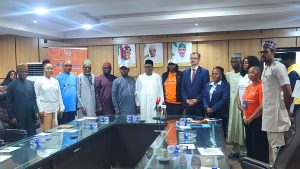
The event was well attended by about seventy-five (75) stakeholders, mainly policymakers and a few researchers from Kano State, selected from; Kano State Malaria Elimination Program, Kano State Primary Health Care Development Agency, Kano State Hospital Management Board, Solina Center, Malaria Consortium Kano State, Civil Society Organizations, Nigerian Union of Teachers, etc.
Goodwill messages from some of the organizations including Solina Centre for International Development and Research, Malaria Consortium, Kano State Primary Health Care Development Agency, and Kano State Hospital Management Board were conveyed by their representatives. Each of them conveyed the unwavering commitment and support of their organization in any cause that will result to malaria elimination in Kano State, adding that they are enthusiastic about what will come out of the engagement event.