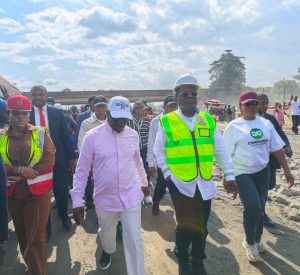
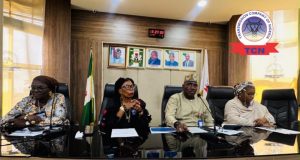
HON. GEN. CHRISTOPHER MUSA: An Encapsulation of Patriotism, Integrity, Competence, Dedication, and Commitment to National Security in Khaki and Agbada
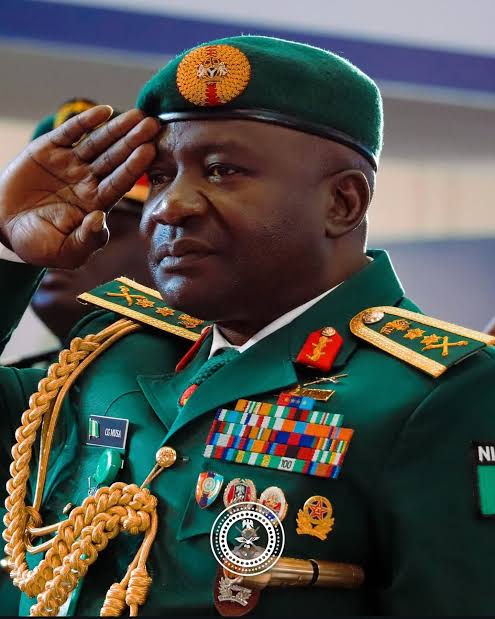
By Onwe Wisdom| Pan Afric Reporters
Introduction
Christopher Musa, a name that in recent years has come to symbolize resilience, reform, and resolve in Nigeria’s struggle for secured, peaceful and stability. From his early days as a commissioned officer to his final tenure as Chief of Defence Staff (CDS) and now his elevation to Minister of Defence, Gen. Musa’s career traverses decades that have challenged Nigeria’s security architecture and national unity. Yet, through each challenge, Musa has in his uniform and now in agbada embodied the ideals of patriotism, integrity, competence, dedication, and steadfast commitment to national security. ThHON. GEN. CHRISTOPHER MUSA: An Encapsulation of Patriotism, Integrity, Competence, Dedication, and Commitment to National Security in Khaki and Agbadais essay explores how his actions, policies, aHON. GEN. CHRISTOPHER MUSA: An Encapsulation of Patriotism, Integrity, Competence, Dedication, and Commitment to National Security in Khaki and Agbadand leadership illustrate these values, and why many view him as a transformative figure in Nigeria’s defense and security trajectory.
Patriotism: Serving the Nation Above All
From the moment Musa was commissioned into the Nigerian Army in 1991, his career has been marked by steady rise and increasing responsibility, reflecting a deep-rooted commitment to the sovereignty and territorial integrity of Nigeria.
National duty over personal comfort: Over 39 years of active service before retirement, Musa served in multiple capacities from commanding troops on the ground to strategic planning roles , navigating difficult internal security crises that threatened communities and the nation’s unity.
Return to public service in civilesque role: Even after retirement as CDS, his patriotism was affirmed when he accepted appointment as Minister of Defence in December 2025 a civilian but strategically pivotal role, demonstrating that his commitment to Nigeria transcends uniform and personal comfort.
Unity beyond ethnicity or region: Musa hails from the North (Kaduna), yet his service and the national responsibility he assumed — cut across all regions. By embracing the role of Defence Minister, he signaled that patriotism is about allegiance to the nation, not narrow identity politics.
His willingness to lead, both in uniform (“khaki”) and in civilian attire (“agbada”), underscores a patriotism that values Nigeria’s collective security and prosperity above individual status.
Integrity: Upholding Ethical Standards and Accountability
In an environment where military service can be fraught with temptations, missteps, or allegations of abuse, Musa has taken deliberate steps to embed ethical conduct, transparency, and accountability in Nigeria’s security institutions.
Zero-tolerance for corruption: Under his watch, his administration reportedly prosecuted 15 senior officers in 2024 for corruption, signaling that no rank is above the rule of law.
Institutionalizing accountability: Musa’s leadership saw the establishment of a Military Ombudsman Office in 2024, providing a mechanism through which complaints including misconduct or abuses — could be addressed impartially.
Human rights and ethical conduct training: Under his oversight, mandatory training in human rights and ethical conduct was instituted for troops a critical measure in ensuring that security operations respect the dignity and rights of civilians even as the military pursues insurgents and criminals.
Transparency in setbacks: When controversies emerged for instance, the civilian casualties associated with drone strikes (such as the reported “Tudun Biri drone strike” in December 2023), the leadership under Musa reportedly responded with public acknowledgement and support for victims’ families, demonstrating willingness to confront failure and protect human dignity.
These instances show that Musa didn’t just lead with force, he attempted to instill moral discipline and institutional norms, reinforcing public trust in the armed forces.
Competence: Strategic Vision, Operational Excellence, and Reform
Perhaps Musa’s most visible legacy lies in his strategic vision for modernizing Nigeria’s military and transforming how national security is conceptualised and operationalized.
Operational successes against insurgency: Under his leadership, Operation Hadin Kai,the major ongoing counter-insurgency campaign reportedly liberated more than 1,500 hostages and reclaimed strategic territories in Borno and Yobe, significantly degrading insurgent strength.
Intelligence-driven, technology-intensive strategy: Musa shifted from reactive operations to proactive, intelligence-led warfare deploying surveillance technologies such as UAVs and satellite imagery to locate insurgent hideouts.
Rapid-response “mobile strike teams”: Under his command, the military introduced mobile strike units equipped with night-vision gear and armored vehicles, enabling swift incursions into insurgent strongholds, a doctrinal innovation that changed the tempo and effectiveness of operations.
Modernization and professionalization of the military: Musa championed acquisition of advanced assets (drones, modern weaponry), modernization of training facilities and barracks (including virtual-reality simulators), and restructured the military’s architecture to emphasize interoperability across Army, Navy, and Air Force.
Jointness and strategic coordination: His tenure saw improved collaboration among different services and security agencies a critical competence in dealing with threats that cut across land, air, and maritime domains, as well as intelligence-based terrorism, banditry, and insurgency.
Through these reforms, Musa demonstrated not only battlefield effectiveness but institutional competence building a military structure more suited for modern threats than the legacy Cold-War posture Nigeria often inherited.
Dedication: Care for Troops, Civilians, and the Future of Nigeria
Dedication to national security under Musa has extended beyond immediate operations: it has touched troop welfare, community relations, youth development, and long-term stability.
Troop welfare and morale: Under his watch, frontline troops’ allowances reportedly increased by 20% (2024), and comprehensive health insurance was introduced to cover combat-related injuries — a significant step to ensure readiness, morale, and dignity of those who serve.
Improved living conditions: Modern barracks and recreational facilities were constructed for soldiers often overlooked aspects that affect discipline, mental health, and long-term retention.
Community-oriented security via Civil-Military Cooperation (CIMIC): Recognizing that security isn’t just about guns and boots, Musa’s leadership saw the military engage in rebuilding communities, constructing schools, healthcare centers, markets; installing boreholes; organizing vocational training for youths — especially in conflict-affected regions.
Youth empowerment and nation-building: Through a scholarship program launched in 2023, the military under Musa began supporting disadvantaged but promising students, covering tuition and mentoring signaling a belief that tomorrow’s peace depends on opportunities for today’s youth.
Advocacy even after retirement: At his valedictory parade in 2025, Musa reaffirmed his dedication , stressing that although he’s leaving active duty, his love for Nigeria remains unshaken and that he will continue to support and advise the nation’s security apparatus.
This breadth of focus from the battlefield to the barracks, from remote communities to urban centres shows Musa’s understanding that national security is holistic: protecting lives today and investing in sustainable peace and progress for the future.
Commitment to National Security: Holistic Strategy and Long-Term Vision
What sets Musa apart is not just episodic interventions against insurgents or bandits, but a strategic overhaul of Nigeria’s security architecture, seeking long-term stability, institutional resilience, and national unity.
Border security and “fencing Nigeria” doctrine: Under his guidance, Nigeria moved toward fortifying borders, improving surveillance, and coordinating intelligence and defence efforts — an approach aimed at preventing infiltration by external threats rather than simply chasing them after they enter.
Inter-agency and inter-service synergy: Recognizing that modern threats are multidimensional insurgency, cyber warfare, banditry, militancy. Musa prioritized coordinated action among the Army, Navy, Air Force, and intelligence agencies (e.g. DSS, NIA).
Peacebuilding beyond force: deradicalization and community trust: His approach combined kinetic operations with non-kinetic tools dialogue, rehabilitation, community engagement, youth empowerment acknowledging that lasting security must be won not only with weapons but with trust.
Adaptability and forward-looking reforms: Musa’s embrace of new technologies (drones, surveillance, cyber defence), modern training, and jointness shows a commitment to evolving Nigeria’s security institutions to meet future threats rather than relying on outdated models.
From uniform to policy: shaping defence as Minister: His appointment as Minister of Defence in December 2025 signals continuity of vision , ensuring that the reforms and values he championed in uniform could translate into sustainable national security policy.
In sum, his commitment is not episodic, but institutional, seeking to reimagine and reconfigure how Nigeria perceives, defines, and preserves its national security.
Challenges, Criticisms, and Resilience — A Test of Character
No leadership journey is without setbacks, scrutiny, and challenges; the true test is how one responds. Under Musa, the security architecture and policies did face controversies — yet his responses showed moral courage and resilience.
Civilians harmed in operations: Incidents such as the December 2023 “Tudun Biri drone strike” reportedly resulted in civilian casualties,a critical lapse in operations. The leadership under Musa responded with public acknowledgment and support for victims’ families, demonstrating accountability rather than denial.
Critics questioning results: Some argue that despite reforms, insurgency and banditry remain persistent; others say successes are uneven. But Musa’s push for structural reforms modernization, transparency, community engagement reflects recognition that security is a marathon, not a sprint.
Balancing use of force with human rights: The institution of human rights training, establishment of the military ombudsman, and zero-tolerance for corruption signals that Musa understood the delicate balance between force and respect for citizens’ rights, a sophisticated take on modern security leadership.
Rather than clinging to power or rank, Musa navigated these challenges with humility, openness, and a willingness to learn — traits rare in many security establishments globally.
Why “Khaki and Agbada” Matters: A Symbol of Transition Without Compromise
The phrase “in khaki and agbada” captures a powerful duality in Christopher Musa’s service , the blending of military discipline and statecraft; the fusion of uniformed valour with civilian leadership; the continuity of patriotic commitment beyond rank or uniform.
Khaki, his decades in active service, leading troops, commanding operations, shaping military doctrine.
Agbada, his role as Minister of Defence today, guiding policy, coordinating agencies, charting a national security trajectory for Nigeria’s future.
This duality matters because it demonstrates that national security doesn’t end with boots and bullets — it needs vision, policy, governance, community trust, and integration. Musa’s transition from uniformed commander to civilian overseer embodies that necessary continuum.
Conclusion
In a country as diverse and challenged as Nigeria, national security is not just about defence, it’s about identity, unity, institutions, hope, and the future of generations yet unborn. Through his journey from Second Lieutenant to Chief of Defence Staff, and now to Minister of Defence, Gen. Christopher Musa represents more than a soldier: he embodies a holistic national security paradigm rooted in patriotism, integrity, competence, dedication, and unwavering commitment.
His achievements,operational successes against insurgents; modernization of the armed forces; institutional reforms; welfare for troops; community engagement; investment in youth and future generations, collectively illustrate a man who understands that security is more than war: it is peace, stability, development, dignity, and trust.
Whether in khaki or agbada, Musa stands as a beacon of hope for Nigeria’s national security, a reminder that even in turbulent times, leadership grounded in values, vision, and compassion can reshape national security and instill hope.
Onwe Wisdom is the Publisher, Pan Afric Ethos Magazine (print) & Pan Afric Reporters (online) and he writes from Abuja, the Federal Capital Territory of the Federal Republic Nigeria.
panafricreporters@gmail.com