RABIES: FG Targets 70% Dog Vaccination as Nigeria Steps Up 2030 Elimination Drive
Pan Afric Reporters
The Federal Government has intensified its campaign to eliminate rabies in Nigeria by 2030, targeting vaccination of at least 70 per cent of the country’s estimated more than 30 million dogs as stakeholders call for stronger collaboration across the human, animal and environmental health sectors.
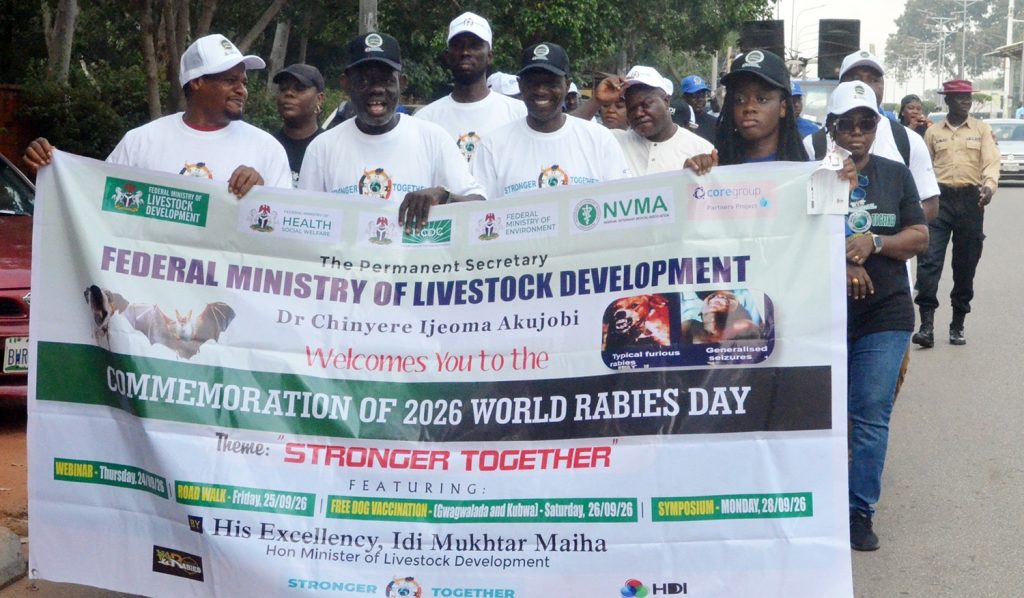
The Federal Ministry of Livestock Development (FMLD) disclosed this in a statement issued on Friday, September 25, 2026, to commemorate World Rabies Day 2026, with the theme, “Stronger Together: Ending Rabies in Nigeria.”
Speaking at the event, the Chief Veterinary Officer of Nigeria and Director, Veterinary Public Health and Epidemiology, Dr. Samuel Akawu Anzaku, described rabies as a major public health concern despite being a preventable and vaccine-preventable disease.
Anzaku said Nigeria’s participation in the global campaign to eliminate rabies by 2030 must extend beyond public awareness, stressing that the annual commemoration should translate into sustained interventions, particularly mass vaccination of dogs.
He said activities under the national campaign would include mass vaccination across communities and Area Councils, a technical symposium and wider mobilisation involving State Veterinary Services, development partners, private-sector organisations and other stakeholders.
The Chief Veterinary Officer also disclosed plans to introduce human pre-exposure prophylaxis for frontline workers who are regularly exposed to dogs, including veterinarians, para-veterinary professionals and hunters.
He stressed the importance of the One Health approach, noting that effective rabies control requires coordinated action across the livestock, human health and environmental sectors. He also called for stronger measures to tackle stray dogs, with active involvement of relevant environmental authorities.
Meanwhile, the National Coordinator, Rabies Control Programme in Nigeria and Coordinator, National One Health Technical Working Group on Rabies, Dr. George Uzaga Onyemaokwu, disclosed that Nigeria had recorded more than 100 rabies cases between January and August 2026, with reports received from between 18 and 20 states in some months.
Onyemaokwu identified parts of the North-Central and North-East as areas of particular concern and stressed that responsible dog ownership remained critical to controlling the disease.
He explained that Nigeria has an estimated dog population of more than 30 million and said achieving high vaccination coverage was essential to preventing transmission and reducing the human and economic burden of rabies.
“Prevention through vaccination remains critical to saving lives and reducing the economic burden associated with rabies,” he said, while urging state governments, development partners, private organisations and other stakeholders to support mass dog vaccination campaigns.
Also speaking, the One Health Lead at the Nigeria Centre for Disease Control and Prevention (NCDC), Dr. Nasir Ahmed, called for sustained collaboration among government institutions, communities and other stakeholders, noting that the Centre continues to support public awareness and access to post-exposure prophylaxis for persons exposed to rabies.
The FCT One Health Desk Officer, Dr. Sharifat Fadugba, called for stronger grassroots engagement, improved data on the dog population and increased vaccination coverage, while the Chairperson of the Nigerian Veterinary Medical Association (NVMA), FCT Chapter, Dr. Chinnemeka Joe Irobe, represented the National President, Dr. Moses Arokoju, and disclosed that the association had commenced mass dog vaccination across rural communities in the FCT.
Stakeholders consequently urged Nigerians to practise responsible dog ownership, ensure regular vaccination of dogs and immediately report dog-bite incidents or exposure to suspected rabid animals to the nearest health or veterinary facility.
They also urged the public to take unusual changes in dogs’ behaviour—including unprovoked aggression, excessive irritability and abnormal biting—seriously, stressing that sustained collaboration among the human, animal and environmental health sectors would be essential to achieving Nigeria’s 2030 rabies elimination target.