FG Rejects Fuel Subsidy Return, Unveils Measures to Cushion Rising Petrol Prices
By Pan Afric Reporters
The Federal Government has rejected calls for the return of petrol subsidy, warning that such a policy would worsen Nigeria’s fiscal and economic challenges while exposing the country to renewed currency and fuel-supply crises.
The government, while acknowledging the hardship caused by rising fuel prices, said the current pressure was largely driven by the global energy crisis, including the disruption of crude oil and refined-product supplies following the conflict in the street of Humous
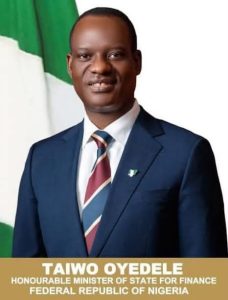
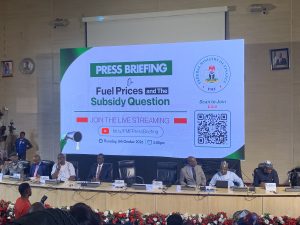
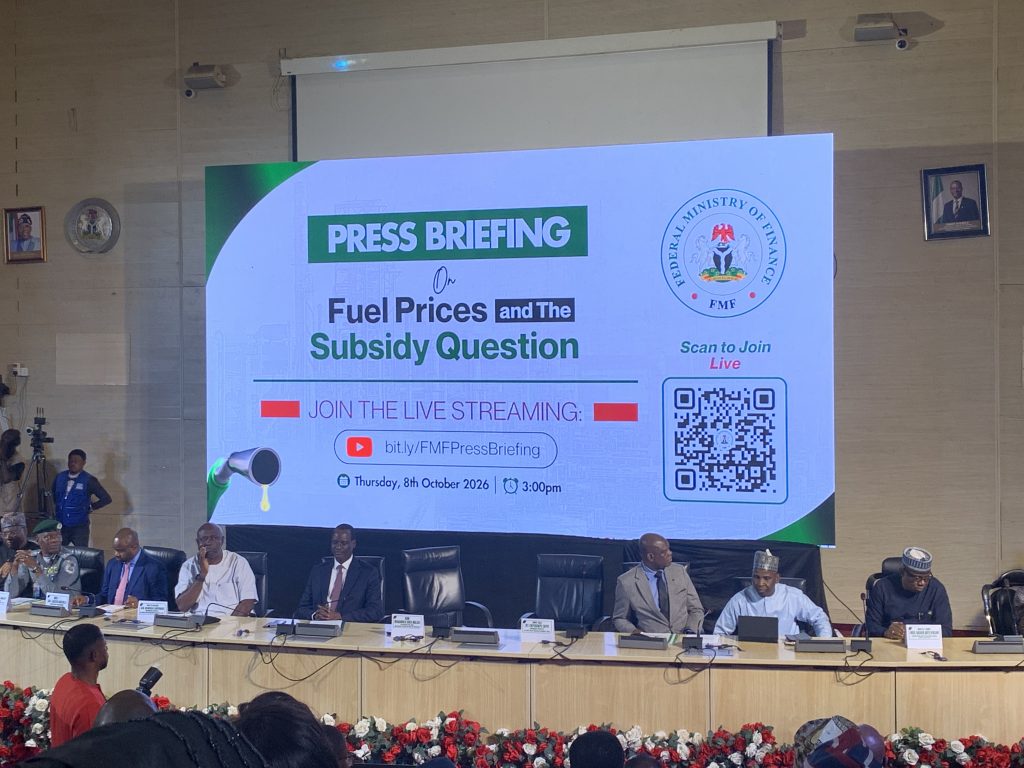
The Hon. Minister of Finance, Taiwo Oyedele gave the position in a press briefing on the Fuel Price and Subsidy Question holding at the ministry’s main auditorium. He further explained that Brent crude had risen above $100 per barrel, while diesel exports from the Middle East and Russia had fallen significantly, pushing up refined-product prices and shipping costs globally, notes that petrol, which sold for about N830 per litre before the latest global shock, now averages about N1,400.
He said the removal of subsidy had nevertheless prevented the impact of the global crisis from becoming substantially worse. It argued that restoring subsidy would effectively transfer the burden from consumers to the public purse, with potentially severe consequences for salaries, pensions, infrastructure, healthcare and other public services.
Addressing proposals for a so-called production subsidy for local refineries, he said such an arrangement would still amount to a consumption subsidy because it would involve selling crude to refiners below market value and passing the discount to consumers.
“A subsidy does not lower the cost of fuel. It only changes how it is paid and when,” the government stated, warning that returning to the policy could trigger capital flight, depletion of foreign reserves, renewed pressure on the naira and higher inflation.
He maintain that subsidy removal had released N15.8 trillion to the Federation Account between June 2023 and December 2025, with N10.4 trillion accruing to states and local governments. The government also maintained that the increased revenue had helped governments meet wage obligations and fund infrastructure, electricity support and social interventions.
Rather than restoring a blanket subsidy, the Federal Government in his briefing announced a series of measures aimed at cushioning the impact of high fuel prices. These include a 30-day discount on petrol sold through NNPC Limited stations, with priority for public transport operators.
He also states plans to introduce forward crude sales to domestic refineries to provide greater price certainty, while negotiating a N1,350-per-litre ceiling on the ex-refinery or landing cost of petrol to reduce price volatility.
The government, he said is proposing a price modulation which would not constitute a subsidy or price control, explaining that refiners and importers would absorb temporary cost increases and recover them when market conditions improve.
Other measures according to the minister include removing illegal levies that increase transportation costs, expanding cash transfers and subsidised credit for vulnerable households and small businesses, accelerating the Compressed Natural Gas (CNG) programme, and considering an excess-profit tax on energy operators found to be exploiting consumers.
Said more than 120,000 vehicles were already operating on CNG, supported by over 400 conversion centres and 96 refuelling stations, while more than 550 CNG buses had been deployed. It added that fares on routes served by CNG buses had fallen by between 30 and 50 per cent.
It also said Nigeria had granted a full waiver of taxes and duties on petrol worth more than N3.3 trillion for the year ending September 30, 2026, alongside other tax and duty relief measures intended to moderate energy and transportation costs.
He stressed that its objective was not to reverse the economic reforms initiated under President Bola Ahmed Tinubu but to ensure that their benefits reached Nigerians faster and more directly.
“Removing the subsidy came at a price, and many households are still bearing it. But the alternative has been tried,” he said, warning that returning to the old system could recreate the cycle of fuel scarcity, smuggling, currency instability and fiscal crisis.
He assured that Federal Government was also working on a broader package of fiscal measures aimed at sustainably reducing inflation to single digits, stressing that maintaining macroeconomic stability remained essential to achieving long-term improvements in household welfare.