NASENI Expands Local Production of Rapid Diagnostic Test Kits, Reducing Import Dependence
Pan Afric Reporters
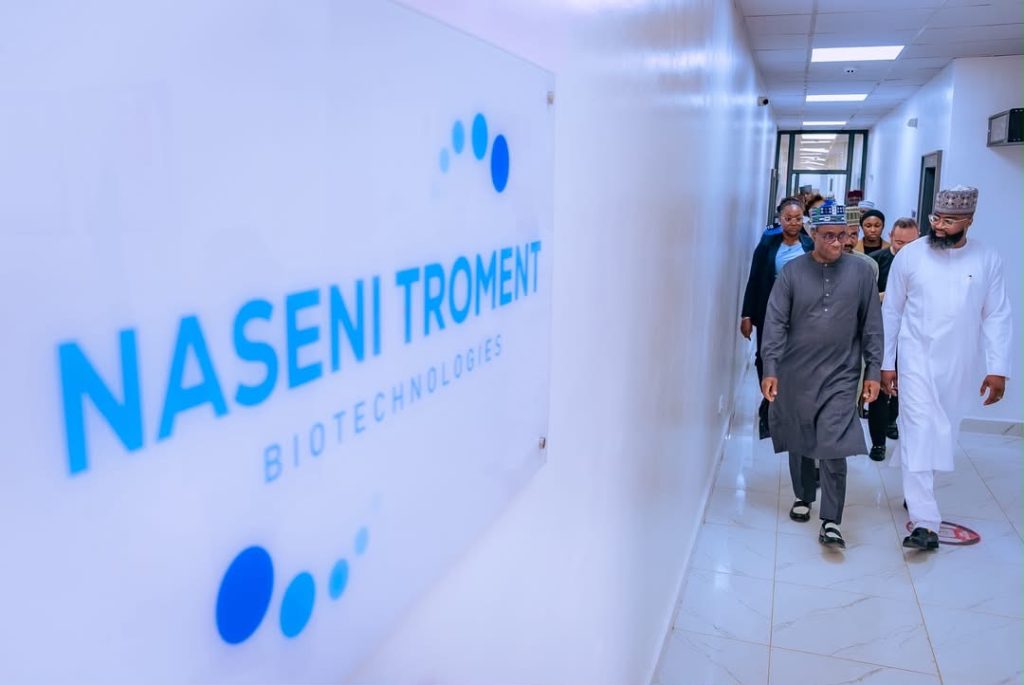
The Director-General of the Budget Office of the Federation, Mr Tanimu Yakubu has toured the NASENI–Troment Diagnostics Factory, where the National Agency for Science and Engineering Infrastructure (NASENI) showcased its growing capacity to manufacture rapid diagnostic test kits locally and reduce Nigeria’s dependence on imports.
During the visit, the Executive Vice Chairman/Chief Executive Officer of NASENI, Mr. Khalil Suleiman Halilu, highlighted the factory’s production of rapid diagnostic test kits for malaria, tuberculosis (TB), HIV, hepatitis B and C, monkeypox, syphilis, and pregnancy testing.
The products are manufactured to international standards and are certified by the World Health Organization (WHO), the National Agency for Food and Drug Administration and Control (NAFDAC), as well as ISO quality management systems.
Halilu explained that the factory has the capacity to meet up to 80 percent of Nigeria’s demand for rapid diagnostic test kits, making it a strategic investment in strengthening the country’s healthcare system, improving local manufacturing, and enhancing national health security.
He noted that the facility recently received commendation from the Harvard University-led Science of Defeating Malaria team for its contribution to expanding local diagnostic manufacturing capacity.
Speaking during the tour, Halilu reiterated that NASENI’s vision extends beyond manufacturing products to building industries that improve everyday life.
“Since assuming office, my vision has been to ensure that every Nigerian household uses at least one product proudly made by NASENI. We are steadily turning that vision into reality. Industrialization becomes truly meaningful when it delivers practical solutions that improve lives and create Infinite Possibilities for our people.”
The NASENI–Troment Diagnostics Factory is one of the Agency’s flagship healthcare manufacturing projects, reinforcing the Federal Government’s commitment to local production, import substitution, and a more resilient healthcare value chain.