Senate, Customs Deepen Reform Partnership as NCS Retreat Targets Stronger Legislative Oversight, Sustained Modernisation and Reform for Higher Revenue
By Pan Afric Reporters
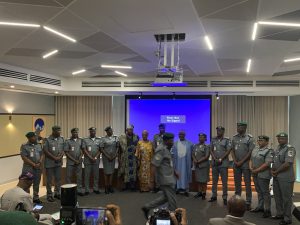
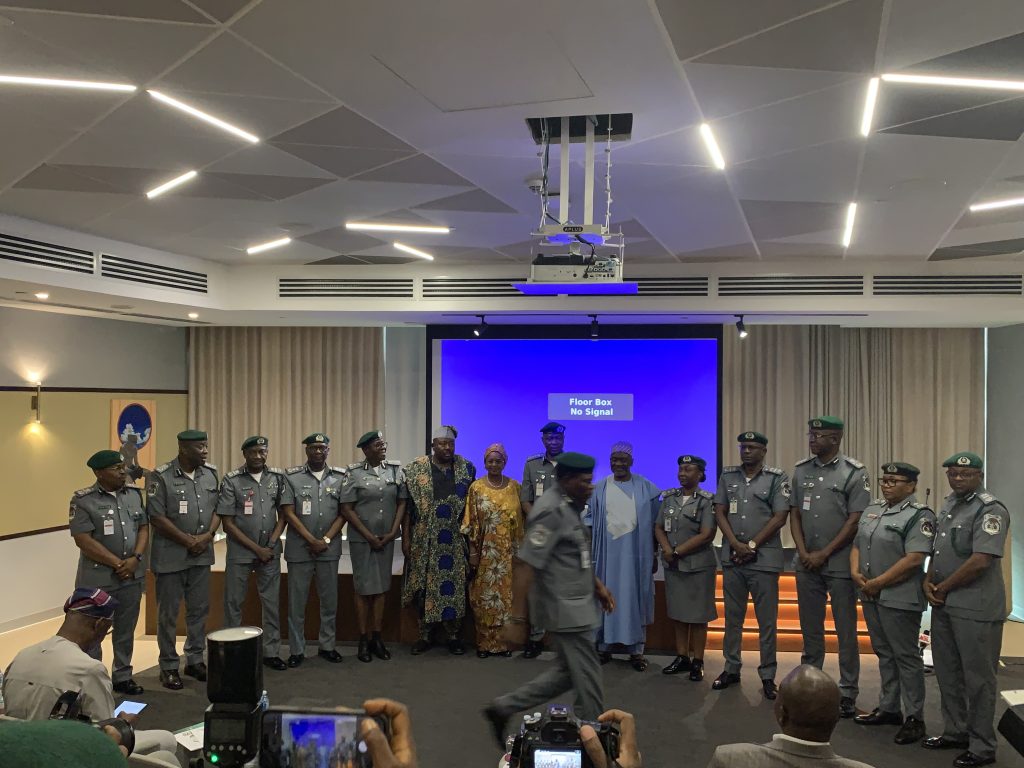
The Nigeria Customs Service (NCS) has intensified its drive towards institutional modernisation, transparency and revenue optimisation by convening a two-day retreat with the Senate Committee on Customs and Excise, where both institutions reaffirmed their commitment to strengthening legislative oversight, accelerating digital reforms and positioning Nigeria’s customs administration among the world’s leading trade facilitation agencies. The retreat, held in Abuja on Wednesday, focused on the theme, “Legislative Oversight in the Context of Nigeria Customs Service Modernisation and Reforms.”
The Chairman of the Senate Committee on Customs and Excise, Senator Jibrin Isah, said the retreat was designed to deepen lawmakers’ understanding of the operations of the Nigeria Customs Service, enabling them to provide more informed legislative support for the agency’s ongoing reforms.
Speaking in his opening remarks, Senator Isah commended the Comptroller-General of Customs (CGC), Bashir Adewale Adeniyi, for what he described as remarkable achievements in revenue generation, trade facilitation and institutional reforms under his leadership.
According to him, the Customs Service surpassed its 2025 revenue target by generating about ₦7.8 trillion against an approved benchmark of ₦6.5 trillion, describing the feat as evidence of the Service’s growing efficiency.
“The Service has under the able leadership of the Comptroller-General recorded so many milestones. The results have manifested in a quantum leap in revenue generation, improved diversification and very robust problem-solving activities,” Senator Isah said.
He assured the Service of the National Assembly’s continued legislative support, urging Customs management to freely approach lawmakers whenever additional legal backing becomes necessary.
“Where you require legislative partners, please do not hesitate to call on us,” he added, while encouraging fellow senators to actively participate in the retreat to become better ambassadors of the Customs Service.
The Committee Chairman also congratulated the Nigeria Customs Service for emerging as the global leader in customs administration through its election to chair the World Customs Organization Council, saying the recognition had elevated Nigeria’s international standing.
Delivering the keynote address, Comptroller-General of Customs Bashir Adewale Adeniyi said the retreat was deliberately organised to bridge the gap between the legislature and the Customs Service beyond routine oversight engagements centred on budgets and revenue performance.
“We have invited you here to close that distance. We are not asking you to be less exacting with us. We are asking you to be exacting from a position of complete familiarity with what we are building,” Adeniyi told the senators.
The Customs boss disclosed that the Service generated ₦7.277 trillion in 2025, exceeding its revenue target by 10.24 per cent, while collections between January and May 2026 had already reached ₦3.35 trillion.
However, he stressed that the figures alone did not define success.
“What matters is whether the growth rests on better systems or on favourable arithmetic. I put it to you that ours rests on systems, and the purpose of this retreat is to let you examine that claim rather than accept it from me,” he stated.
Adeniyi attributed Nigeria’s emergence as Chair of the World Customs Organization Council to the Service’s comprehensive reform agenda rather than the size of Nigeria’s economy.
He explained that Customs modernisation goes beyond technology to replacing discretion with automated, rules-based decision-making.
“We mean the replacement of discretion with rules. Modernisation is the systematic reduction of those points where individual discretion determines outcomes, replacing them with risk rules, automated valuation references and data-driven targeting,” he said.
He described the deployment of the indigenous B’Odogwu platform as a major shift from paper-based customs operations to an integrated electronic system where every transaction leaves an auditable trail.
“A customs administration that runs on paper is one in which the file can be found or lost. An administration that runs on a single electronic record is one in which every decision leaves a trace, every delay has an owner and every intervention can be reconstructed after the fact,” Adeniyi explained.
The Comptroller-General also acknowledged the crucial role played by the National Assembly in enacting the Nigeria Customs Service Act 2023, describing it as the legal instrument that made the Service’s reform programme possible.
“The Act gave us a modern legal basis for electronic processing, advance rulings, Authorised Economic Operator status and the funding mechanism that makes sustained investment possible. You are not observing our reform from outside it. You authored the conditions for it,” he told the lawmakers.
He urged senators to use the retreat to critically evaluate the implementation of the Act after three years, identify provisions requiring amendments and help ensure that legislation keeps pace with evolving international trade realities.
According to him, legislative oversight in a modern customs administration should move beyond individual cargo clearances to evaluating system design, risk management, valuation databases, cargo release timelines and the impact of fiscal incentives.
“The consequential questions become questions about the rules themselves… Those are harder questions, but they are the questions that move the national needle,” Adeniyi said.
He further emphasised that sustainable customs reforms require continuous legislative backing, noting that automation often faces resistance from those who benefit from discretionary processes.
“Where this Committee makes it known that the reform has the confidence of the Senate, resistance to it becomes materially harder. That is a form of support only you can give,” he said.
Adeniyi urged lawmakers to focus oversight on measurable outcomes rather than administrative activities.
“Hold us to outcomes rather than activity. Ask what the release time was, not how many meetings were held about it,” he advised.
He also called for legislative review of Nigeria’s customs waiver and concession regime, saying lawmakers should assess whether existing incentives continue to serve their intended policy objectives.
The Customs boss concluded by acknowledging that the Service’s reform journey remains work in progress.
“The Nigeria Customs Service you will see over these two days is an institution in the middle of a change it chose to make. We are not finished… What I can tell you is that the direction is settled, that the legal foundation you gave us is sound, and that this Service intends to hand over to the next generation of officers an administration that runs on rules rather than on relationships,” Adeniyi declared.
Earlier in a welcome address, the Deputy Comptroller-General of Customs in charge of Human Resources Development, DCG Tijani Abe, described the retreat as another milestone in the enduring partnership between the National Assembly and the Nigeria Customs Service.
He noted that the gathering would strengthen dialogue, knowledge sharing and institutional collaboration required to sustain the Service’s transformation agenda.
DCG Abe praised the visionary leadership of Comptroller-General Adeniyi, saying the Customs boss had successfully repositioned the Service through institutional reforms, human capital development, technological innovation and strategic stakeholder engagement.
“Through unwavering commitment to institutional reforms, human capital development, technological innovation and stakeholder collaboration, the Service has continued to transform into a modern, transparent, intelligence-driven and globally competitive customs administration,” he stated.
He equally commended members of the Senate Committee for supporting the passage of the Nigeria Customs Service Act 2023, describing the legislation as the legal foundation for the agency’s ongoing reforms and modernisation initiatives.
According to him, the Service is implementing one of the most comprehensive modernisation programmes in its history through the deployment of the indigenous B’Odogwu Trade Management System, intelligence-driven enforcement operations, the Authorised Economic Operator Programme, coordinated border management initiatives and digital customs processing.
“The theme of this retreat is timely and highly significant. Effective legislative oversight remains indispensable to promoting transparency, accountability and institutional effectiveness,” Abe said.
He urged participants to contribute practical ideas that would strengthen institutional oversight, deepen collaboration and accelerate the Service’s transformation agenda.
In the same line, Deputy Comptroller-General of Customs in charge of ICT and Modernisation, DCG Oluyomi Adebakin, on behalf of the service in a vote of thanks expressed appreciation to God, the Comptroller-General, members of the Senate Committee, Customs management, resource persons, the media and all stakeholders for making the retreat possible.
He described the Comptroller-General as a visionary leader who understands the importance of collaboration in driving institutional reforms.
“This meeting is called not because he wants to take everyone out of their busy schedule, but for us to build on the synergy we have and to see how better Nigeria can be positioned among the committee of nations and make progress in Nigeria Customs operations,” Adebakin said.
He also appealed to the media to give extensive coverage to the retreat.
“If we do well, tell others. But if we don’t do well, please tell us. We want to know how to amend,” she said, while thanking all those who contributed to the success recorded.