Senate to Review Controversial Death Penalty Bill for Drug Offenders, Says Committee Chairman
…Ikpea pledges stricter oversight of NDLEA, rehabilitation centres, backs drug education in schools, opposes reintegration of terrorists
By Pan Afric Reporters
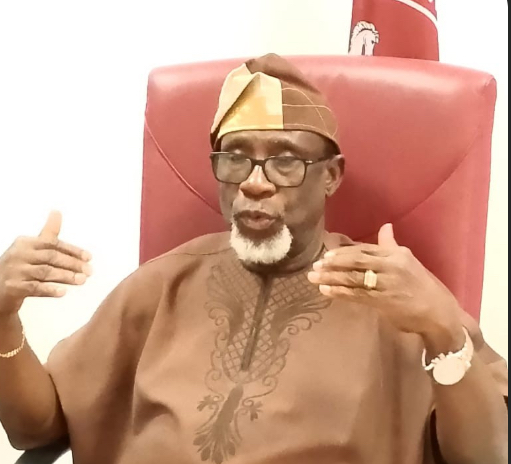
Chairman of the Senate Committee on Drugs and Narcotics, Senator Joseph Ikpea (Edo Central), has said the Senate will thoroughly examine the controversial bill proposing the death penalty for drug-related offences before making recommendations to the Federal Government, even as he pledged intensified oversight of the National Drug Law Enforcement Agency (NDLEA) and drug rehabilitation centres nationwide.
Speaking with journalists after a closed-door committee meeting at the National Assembly, Senator Ikpea said his committee would carefully review the legislation and advise the Senate based on its findings, stressing that he would not prejudge a bill that had not yet come before his committee.
Responding to questions on the fate of the proposed death penalty bill, which was earlier rejected by the Senate and returned for further legislative work, Ikpea disclosed that he was not a member of the Senate when the measure was initially debated.
“To start with, I have no idea about the current status of that bill. I was not a senator when it was debated on the floor of the Senate, although I have heard about it. My committee will look into it and advise the Senate and the Federal Government accordingly. For now, I cannot say much about the bill until we have properly examined it,” he said.
The senator explained that the committee meeting was a routine engagement aimed at discussing issues within its legislative mandate and preparing for future engagements with the leadership of the NDLEA.
“Every Senate committee holds meetings with its members to deliberate on issues within its mandate, and ours was no different. We are also expecting to engage with the Chairman of the National Drug Law Enforcement Agency (NDLEA) in due course,” he added.
On his personal position regarding capital punishment for drug traffickers, Ikpea maintained that sanctions should be proportionate to the gravity of offences, while noting that different countries adopt varying legal approaches to drug-related crimes.
“Every offence should attract punishment proportionate to its severity. Different countries have different laws regarding drug trafficking. Some impose the death penalty, while others do not. Ultimately, it is for the National Assembly and the Federal Government to decide what is appropriate for Nigeria. I will abide by whatever decision is reached through the legislative process,” he stated.
Committee to inspect rehabilitation centres
The committee chairman identified oversight of the NDLEA and drug rehabilitation facilities as one of its immediate priorities, saying lawmakers would embark on inspections to ensure rehabilitation centres comply with regulatory standards.
According to him, the committee is concerned that some rehabilitation facilities may be operating primarily for profit without meeting acceptable standards of care.
“We have oversight responsibilities over the NDLEA and rehabilitation centres across the country. We intend to visit these facilities to verify their compliance and ensure they provide quality rehabilitation services,” he said.
Drug abuse threatens Nigeria’s future
Expressing concern over rising substance abuse among young Nigerians, Ikpea described drug abuse as a major threat to national development, citing statistics indicating that about 14 million Nigerians between the ages of 15 and 64 are involved in drug abuse.
He advocated the introduction of structured drug education into school curricula from the primary level as a preventive measure.
“The youth are the leaders of tomorrow. If we fail to educate and sensitise them about the dangers of drug abuse, the nation’s future will be at risk. That is why we are exploring ways to introduce drug education into school curricula from the primary level,” he said.
‘Captured terrorists should face justice’
The Edo Central senator also reiterated his opposition to the rehabilitation and reintegration of repentant Boko Haram members into society, arguing that such a policy undermines justice and the sacrifices made by Nigerian security personnel.
Describing himself as a student of criminology, Ikpea insisted that punishment should correspond with the severity of crimes committed.
“Members of Boko Haram and ISWAP have committed grave crimes against Nigerians. Our gallant security personnel have sacrificed their lives fighting them. In my opinion, those who are captured after committing such crimes should face the full weight of the law. Reintegration sends the wrong message and may undermine efforts to end insurgency,” he said.
He urged the Federal Government to review policies aimed at rehabilitating convicted terrorists.
Kidnapping may be politically motivated
Commenting on the country’s security situation, the senator expressed the view that some recent kidnapping incidents appeared politically motivated as Nigeria gradually approaches another election cycle.
“In my opinion, some recent cases of kidnapping appear to be politically motivated, particularly as the country approaches another election cycle. There are individuals who may be trying to create insecurity in order to undermine the government. That is my personal assessment,” he stated.
Ikpea, however, distinguished kidnapping from terrorism, describing Boko Haram and the Islamic State West Africa Province (ISWAP) as enemies of all Nigerians regardless of religion or ethnicity.
“They attack Christians, Muslims, civilians and members of the armed forces alike. They do not discriminate. They are enemies of the state,” he said.
The senator concluded that decisive law enforcement remains the most effective deterrent against violent crime, noting that states which have adopted firm measures against kidnappers have recorded noticeable improvements in security.
“My belief is that when criminals face swift and appropriate punishment, it serves as a deterrent to others,” he added.