DR Congo Delegation Begins Study Tour of Nigeria’s Local Content Model
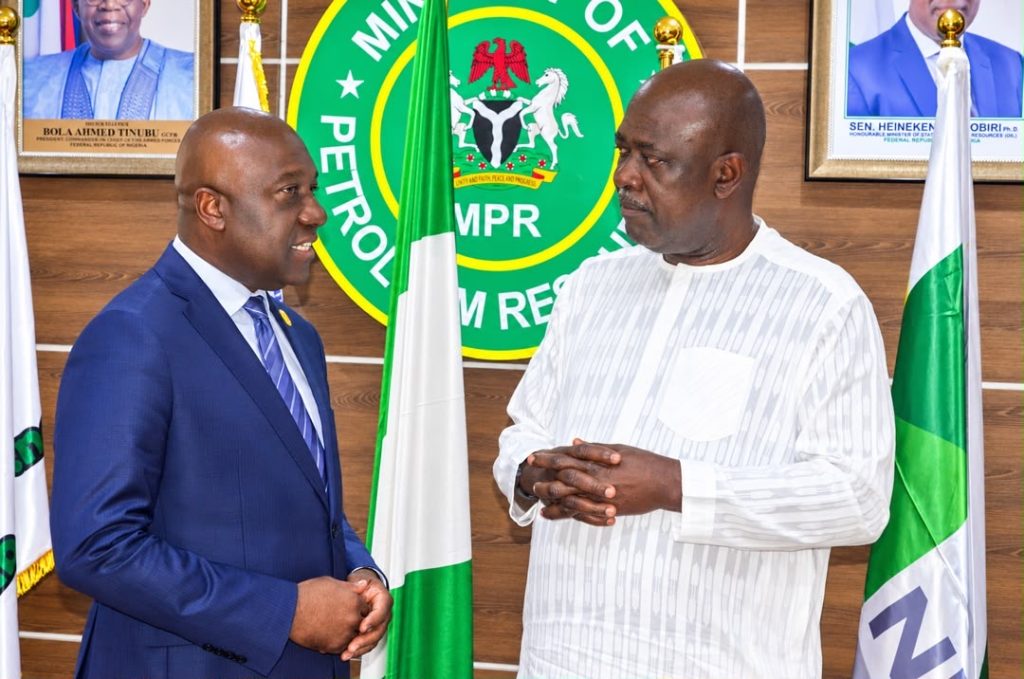
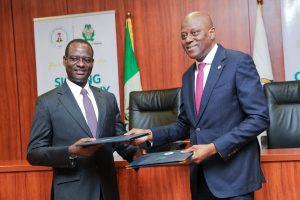
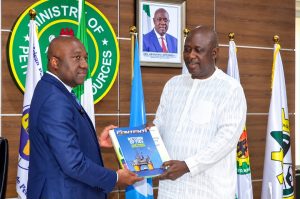
Pix4. Nigeria’s Minister of State for Petroleum Resources (Oil), Senator Heineken Lokpobiri (right) with Minister of Hydrocarbons, Democratic Republic of Congo (DRC), His Excellency, Simplice Stev Onanga, during a courtesy call to welcome the Congolese delegation that arrived in Nigeria to understudy NCDMB’s local content framework for the oil and gas industry.
By Pan Afric Reporters
A high-level delegation from the Democratic Republic of Congo (DRC), led by its Minister of Hydrocarbons, Simplice Stev Onanga, has commenced a study tour of Nigeria’s local content framework for the oil and gas industry.
The development was contained in a press release issued by the Nigerian Content Development and Monitoring Board (NCDMB), signed by its General Manager, Corporate Communications Division, Dr Obinna Ezeobi, on September 21, 2026, in Yenagoa.
The delegation was received in Abuja on Monday by Nigeria’s Minister of State for Petroleum Resources (Oil), Senator Heineken Lokpobiri, who reaffirmed Nigeria’s commitment to sharing its local content experience with other African countries, particularly through the African Petroleum Producers Organisation (APPO).
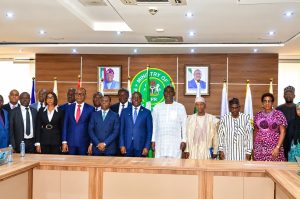
Lokpobiri said Nigeria had achieved 61 per cent local content capacity since the enactment of the Nigerian Oil and Gas Industry Content Development (NOGICD) Act 16 years ago, noting that the divestment of onshore oil and gas assets by international oil companies had created opportunities for indigenous operators.
He cited Renaissance Africa Energy Company, Seplat Energy Producing Unlimited and Oando Energy Resources Nigeria Limited among indigenous firms that have acquired divested assets and continued to expand their participation in the sector.
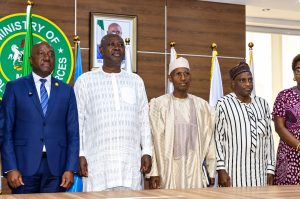
“The solution to Africa’s energy challenges lies within Africa,” Lokpobiri declared, adding that Nigeria currently produces more than 1.8 million barrels of crude oil per day.
The Minister explained that while deep offshore operations remain largely dominated by foreign companies, Nigerian operating and oilfield service firms have increasingly taken control of land and shallow-water assets, contributing to the growth of local content in the industry.
He also explained that Nigeria’s local content initiatives are funded through the one per cent Nigerian Content Development Fund levy imposed on awarded upstream oil and gas contracts, assuring the DRC delegation that Nigeria was prepared to share its experience openly.
The Executive Secretary of NCDMB, Engr. Felix Omatsola Ogbe, represented by the Director of Corporate Services, Dr Abdulmalik Halilu, said the Board was ready to support the DRC in developing a robust local content framework suited to its oil and gas industry.
Halilu highlighted Nigeria’s institutional structures, regulatory coordination and 10-year strategic roadmap targeting 70 per cent in-country value retention and the creation of more than 300,000 direct jobs by 2027.
Onanga commended Nigeria’s progress, describing the study tour as an opportunity for the DRC to gain practical knowledge from Nigeria’s experience in building local capacity within the oil and gas sector.
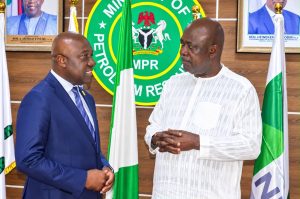
“We are proud to be in Nigeria to witness what has been accomplished,” the DRC minister said.
The study tour, which continues until Friday, will take the delegation to the NCDMB headquarters in Bayelsa State, fabrication workshops at the Onne Free Zone, an NLNG supplier engagement session and the UniPort Gas Centre.
The delegation will also visit the LADOL/Nigerdock yards and participate in other engagements designed to provide first-hand exposure to Nigeria’s institutional, regulatory and operational approaches to developing local capacity in the petroleum industry.