Ebonyi ICT Varsity Launches Third Semester For Skill Acquisition, Entrepreneurship- Nwamgbo

By Alex Odeh, Pan Afric Reporters
The Ebonyi State University of ICT, Science and Technology, Oferekpe, has introduced a skills-based third semester designed to equip students with practical competencies, entrepreneurship skills and digital capabilities beyond their conventional academic programmes.
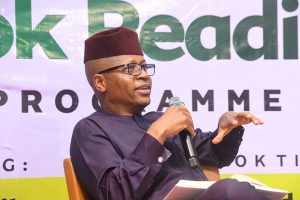
Senior Special Assistant to Ebonyi State Governor on the ICT University Project, Engr. Moses Nwamgbo Okite, disclosed this on Tuesday in Abakaliki while speaking on the development of the institution and its academic philosophy.
Okite said the third semester was deliberately incorporated into the university’s academic structure to ensure that students did not graduate with academic qualifications alone but also possessed practical skills capable of making them self-reliant.
According to him, while the first and second semesters are devoted primarily to conventional academic courses, the third semester focuses on practical skills acquisition, allowing students to select areas of interest irrespective of their principal courses of study.
He said the state government would fund the skills training as part of its broader objective of producing graduates who could create opportunities rather than depend exclusively on conventional white-collar employment.
“The third semester is to acquire skills. You choose the area you want to learn and the university will fund it; the government will fund it,” Okite said.
He explained that the arrangement was intended to make students versatile and practically oriented, stressing that the objective was for graduates to leave the institution with demonstrable capabilities that could translate into products, businesses and services.
“What we want is that you have to be doing something. You have to be practical-oriented, so that when you graduate, you can say, ‘I can produce this, I can produce that,’” he said.
Okite said the impact of the skills-based model was already becoming evident, citing the production of a machine capable of converting used sanitary pads into ash and subsequently into manure.
He said the innovation was one of several practical products being developed by students as part of the university’s emphasis on applied learning and problem-solving.
The governor’s aide added that the ICT university was structured differently from conventional institutions because its programmes were designed to integrate information and communication technology into virtually every field of study.
“All the courses in the university are ICT-driven. That is the difference,” he said, adding that students were also being trained through largely paperless academic processes, including computer-based assignments and examinations.
Okite said the institution was currently enrolling its second batch of students after the pioneer intake, adding that the first cohort comprised about 194 students who, according to him, received the state government scholarships.
He said the increasing interest in the university was attributable to its practical orientation and the opportunities it offered students to combine academic learning with technological and entrepreneurial skills.
The governor’s aide further disclosed that the university’s permanent site at Oferekpe Agbaja, Izzi Local Government Area, was undergoing extensive development, with academic structures, staff quarters and other facilities at various stages of completion.
He said the institution was being developed to meet international standards and provide an environment conducive to teaching, research, innovation and technological advancement.
On the proposed medical school, Okite said the relevant facility was still under construction but had reached an advanced stage, explaining that the delay in its accreditation was linked to the completion of the required infrastructure including the ICT University Teaching Hospital in Oferekpe Agbaja.
He expressed confidence that the medical programme would eventually benefit from the university’s ICT-driven model, particularly in the application of technology to healthcare delivery.
The development is consistent with the university’s stated mission of combining technological education, innovation, entrepreneurship and practical skills.
Governor Francis Nwifuru had earlier said the institution was conceived to produce innovators and job creators rather than graduates dependent solely on saturated employment opportunities.
Recent development at the university has also included the completion and commissioning of senior staff accommodation, while the state’s 2026 budget provides for continued construction and development of facilities at the ICT university.