CSJ Seeks More Anti-Corruption Tribunals, ICT to Speed Up Corruption Trials
By Salami Abdulrahaman | Pan Afric Reporters, Abuja
The Centre for Social Justice (CSJ) has recommended the establishment of additional Code of Conduct Tribunals across Nigeria’s six geopolitical zones and the adoption of information and communication technology (ICT) to address delays in the prosecution of high-profile corruption cases.
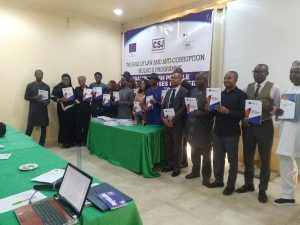
The recommendations were made at the presentation of a CSJ publication examining delays in high-profile corruption trials in Nigeria.
The event brought together representatives of the Economic and Financial Crimes Commission (EFCC), the Code of Conduct Bureau (CCB), the Code of Conduct Tribunal (CCT) and other justice-sector stakeholders.
Speaking at the event, CSJ Lead Director, Eze Onyekpere, said prolonged trials increase the cost of prosecution to taxpayers, delay asset recovery and weaken public confidence in the justice system.
He said the organisation examined the handling of corruption cases by regular courts and the Code of Conduct Tribunal, identifying institutional and procedural challenges responsible for delays.
Among the recommendations are adequate funding for investigations, electronic filing of court processes, digital case-management systems, improved documentation and easier access to certified true copies of court records.
The report also called for improved case management to ensure that proceedings are not unnecessarily delayed when judges are transferred or elevated, as well as the appointment of legal practitioners as members of the Code of Conduct Tribunal.
The CSJ director further advocated the use of non-conviction-based asset recovery mechanisms to ensure that proceeds of corruption are recovered without unnecessary delays.
Representing the Chairman of the Code of Conduct Bureau, the Director of Legal Services, Mrs Sambo Sa’adat Omotayo, said the judiciary remained critical to the fight against corruption.
She called for improved coordination among anti-corruption institutions and the justice sector to ensure the effective prosecution of corruption cases.
Also speaking, the representative of the Chairman of the Code of Conduct Tribunal, Victor Isibor, said corruption continued to undermine national development, stressing that the courts remained a critical part of efforts to address the problem.
He noted that although the Administration of Criminal Justice Act introduced important measures to improve criminal proceedings, some of its provisions were yet to be fully implemented.
Isibor said the Tribunal was reviewing its structure, processes and operational framework to improve efficiency, while also considering reforms to its practice directions.
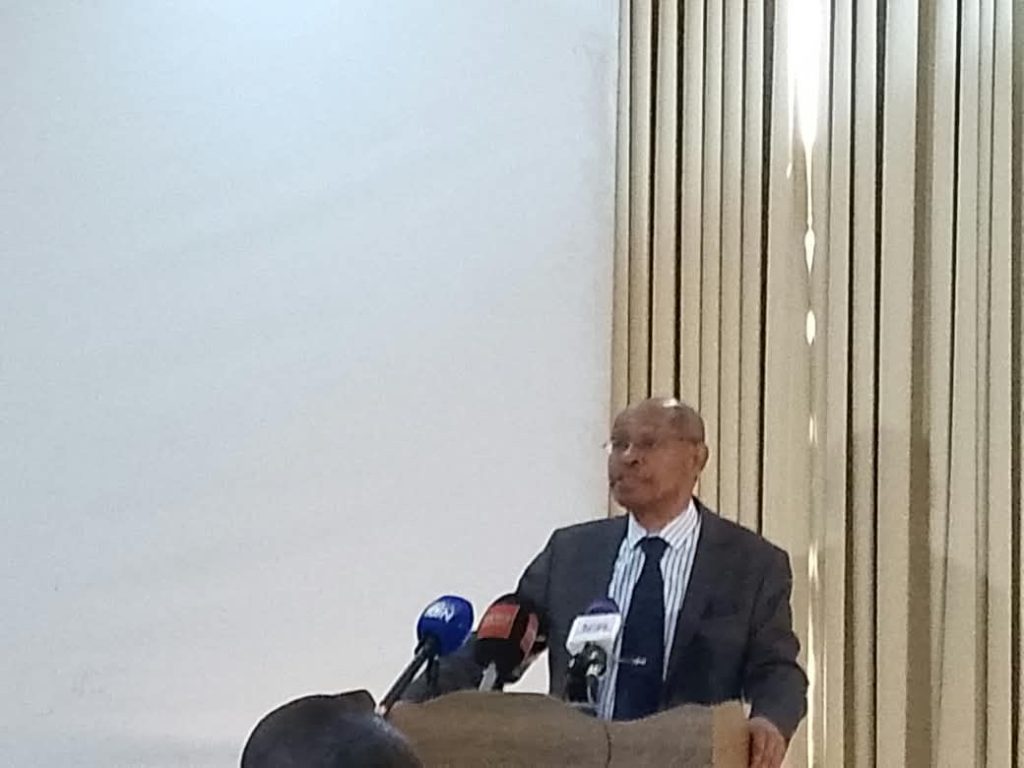
Delivering the EFCC Chairman’s keynote address, the Commission’s Chief of Staff, Michael Nzekwe, said the EFCC was responsible for investigating corruption allegations, gathering evidence and prosecuting suspects, while the courts determine cases based on the evidence presented.
He explained that high-profile corruption cases were often complex because they involved extensive financial records, corporate entities, beneficial ownership arrangements and cross-border transactions.
According to him, delays also arise from frequent adjournments, difficulties in securing witnesses and documents, court congestion and the elevation or transfer of judges handling ongoing cases.
Nzekwe cited Section 396(7) of the Administration of Criminal Justice Act 2015, which allows a High Court judge elevated to the Court of Appeal to conclude part-heard criminal matters before assuming the new position, while also performing the duties of the appellate court.
He said technology could significantly improve the speed and efficiency of corruption trials through electronic filing, digital case management, electronic recording of proceedings, digital transcripts and testimony through video links.
He also noted that the Evidence Act 2011, as amended by the Evidence (Amendment) Act 2023, provides a legal framework for the admissibility of electronic records and evidence.
The EFCC chief of staff stressed the need to strengthen the capacity of investigators and prosecutors in forensic accounting, digital evidence, cryptocurrency-related investigations and international financial crimes.
He added that the Commission had moved away from media trials towards evidence-based investigations and prosecution.
Providing an update on the Commission’s activities, Nzekwe said that between October 2023 and July 2026, the EFCC received 49,673 petitions, investigated 39,615 cases, filed 14,476 cases in court and secured 10,872 convictions.
He further disclosed that the Commission recovered approximately N1.233 trillion and $684.48 million between October 2023 and June 2026.
He called for stronger witness protection mechanisms, improved international cooperation and better coordination among institutions involved in the investigation and prosecution of corruption cases.
The stakeholders agreed on the need for sustained judicial and institutional reforms, improved use of technology and stronger collaboration to ensure the timely determination of corruption cases in Nigeria.