Senate Grills Nigeria Customs Over ₦1.1 Trillion Spending Spike Amidst Modest Revenue Growth in 2025 Budget Proposal

By Pan Afric Reporters NASS Abuja, June 23, 2025
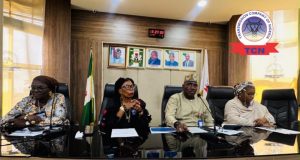
The Nigeria Customs Service (NCS) came under heavy fire on Monday as it presented its 2025 budget proposal before the Senate Committee on Customs and Excise, revealing a revenue target of ₦6.584 trillion and a sharply increased expenditure plan of ₦1.132 trillion.
While lawmakers applauded the agency for surpassing its 2024 revenue target, many raised red flags over what they described as unjustified spending increases and underwhelming revenue ambitions for the coming year.
According to the breakdown submitted by NCS, the proposed ₦6.584 trillion revenue is composed of ₦3.835 trillion from the Federation Account, ₦1.081 trillion from the Non-Federation Account, and ₦1.650 trillion from Import VAT. The ₦1.132 trillion expenditure plan is expected to be funded from 4% Free On Board (FOB) charges, 2% Nigeria Trade Summary (NTS) share, and allocations for capital projects.
However, senators expressed deep concern over the spending breakdown: ₦247.16 billion for personnel costs, ₦239.97 billion for overhead, and ₦645.42 billion for capital projects. Of particular concern was a hefty ₦169 billion labeled simply as “financial miscellaneous services.”
“What exactly does this ₦169 billion cover?” a senator queried. “You cannot expect us to approve such vague and massive expenses.”
Deputy Comptroller General Jibo Bello attempted to clarify the spending plan, stating that revenue targets are not set by Customs but assigned through the Medium-Term Revenue Framework (MTRF) by a federal committee. He also explained that the modest 7% revenue growth projection is a product of the current fiscal framework, not internal conservatism.
“The 2024 revenue target was increased by 21.2%, not the two percent figure being quoted here,” Bello said, adding that the 2025 expenditure increase was largely driven by personnel costs due to salary reviews and statutory contributions to pensions, health insurance, and employee trust funds.
Still, senators remained skeptical. “How does your personnel cost jump from ₦94 billion to ₦247 billion just for 3,927 new recruits?” a lawmaker asked, noting that the Service’s total workforce stands at just 16,245.
The overhead budget also came under scrutiny. “You’re budgeting ₦239 billion for items like vehicles, fuel, travel, and computers. Do these computers have a one-year lifespan?” another senator challenged.
Beyond budgetary questions, lawmakers urged the NCS to push for policy reforms that would reduce revenue leakages. Another senator highlighted declining imports at Lagos ports, attributing the trend to high surcharges on used vehicles.
“Importers are fleeing to Benin Republic to avoid your fees. If Customs is serious about growing revenue, you must advocate for changes to these policies,” the senator said.
A broader critique targeted the current revenue model, which sets capped targets. “Once Customs hits its quota, it stops collecting. But if you let them collect without a cap and retain their seven percent cost of collection, they’ll be more aggressive,” another lawmaker argued.
The Senate committee vowed to continue its scrutiny in the coming days, focusing on transparency, cost-efficiency, and strategic reforms.
“Customs has proven it can deliver,” a senator concluded. “But this budget must reflect ambition, not complacency.”