Nigeria’s Perennial Flood: Occurrence of Preventable Disasters

By Prof M. K. Othman
Today, I am writing as a professional water resource engineer with over twenty years of experience in irrigation water management and hydrology, as well as a professor of extension who must communicate complex information to non-professionals clearly and straightforwardly. Through my training and current role as a trainer, or even as a trainer of trainers, I am a key stakeholder in water resource management in this country. Therefore, it deeply pains me to see preventable flood-related losses occurring at the beginning or end of the rainy season in recent years.
Sometimes, I write articles with a heavy heart, reflecting on our nation’s tendency to be nonchalant about severe calamities and preventable disasters. In our lackadaisical approach as a developing nation, we often ignore impending disasters until they occur. Then, our leaders begin to shed crocodile tears, and before you say “Jack,” an investigation panel would have been formed if the disaster is significant enough. In many cases, the hidden goal of the panel is to avoid asking embarrassing questions about the preventable incident. By the time the panel or committee’s report is submitted, if it ever is, the excitement surrounding the incident has faded. The victims— the dead—have been buried, and the injured and property losers have accepted their fate as part of their destiny. The nation then moves on, waiting for another cycle of disaster to strike. These disasters include plane crashes, road accidents, fire outbreaks, and banditry activities. Sometimes, the bandits or insurgents boldly announce their plans to attack communities, and little or nothing is done until they arrive. Can we break this cycle of recurring calamities? A continual flood disaster is one such destructive event, causing devastating and unquantifiable losses of lives and property.
In the past five years, I have written four articles on the occurrence of floods in Nigeria: one in 2020, another in 2021, and two in 2022, all with strong warnings to prevent future occurrences. Yet, floods have still occurred in 2024 and this year, 2025. Some of my articles can be accessed via;
https://deepthoughtwithmkothman.blogspot.com/2022/11/nigerias-perennial-flood-happening-of_24.html
In 2024, over 300 people died, and 1.2 million were affected by floods in 31 states across Nigeria. The Nigerian Centre for Disease Control and Prevention (NCDC) reported that cholera claimed more than 350 lives, over 10,000 suspected cases recorded in Nigeria as a result of flood occurrences in many communities nationwide. From August to September 2024, severe flooding events devastated multiple communities across Borno, Adamawa, and Yobe states. The flooding overwhelmed local capacity, destroyed homes, infrastructure, and livelihoods, and left tens of thousands of people in urgent need of immediate humanitarian aid, including shelter, food, medical care, and clean water.
Maiduguri, the capital of Borno State, was severely affected by the 2024 flood, which was caused by the breach of the Alau Dam. Built in 1986, the dam was intended to supply irrigation water and manage flooding from the Ngadda River. Before 2024, the dam had failed twice, in 1994 and 2012, leading to flooding in nearby communities. The National Emergency Management Agency reported that over 70% of Maiduguri’s residents were displaced, with at least 150 people confirmed dead and many others missing from the 2024 Maiduguri flood.
This year, on May 29, 2025, a severe flood hit Mokwa in Niger State. Heavy rainfall lasting several hours caused intense flash flooding. The Niger State Emergency Management Agency (NSEMA) reported that 265 houses were affected across three communities, along with the destruction of two roads and two bridges. Official records listed 155 deaths, but eyewitness reports suggest the actual number was much higher. A few days later, the death toll rose to about 300, and more than 100 people were still unaccounted for. Around 3,018 displaced individuals lost their homes, many seeking shelter at Mokwa Central Primary School. Several others sustained various injuries. What made these floods preventable, or how could mitigation measures have reduced their impacts?
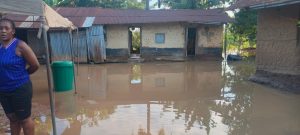
Before answering the question, let us examine the gravity of the adversity faced by the flood victims. Have you witnessed people displaced by a flood? I had a terrible experience in 2020 when I visited displaced people in Agubu, a suburb of Hadjia, three kilometres away on Kano Road. The people were in droves, packed close together, camped in an open space without any camping facilities, at a Filling Station located opposite their submerged houses. They looked remarkably disturbed and dejected. They were worried about the fate of their few belongings remaining in their half-collapsed houses, their partly submerged and partly destroyed crops along the Hadejia River, and how to survive the year, reconnect with their loved ones, and begin life all over again. Some of their houses were completely demolished, while parts of other houses collapsed; it was only the Friday Mosque that remained standing in the flood. Will the remaining structures in the village collapse? Their homes and farms were destroyed by the River Hadejia flood a week earlier. It was as if the river was angry, overflowing its banks and flooding every structure nearby. Sandbags were hurriedly lined up to prevent water from flooding a significant part of Hadejia town. The way the sandbags were made and placed was apparently part of the community efforts as a short-term measure to safeguard their village. Two days later, water was flowing underneath the sandbags, with some being washed away. It was a terrible experience that even a stonehearted person must shed tears of sympathy.
What are the causes of floods, and how have we failed to prevent their occurrence in recent years? To be discussed next week.