NASS Joint Committee Leads Critical Scrutiny as Livestock Ministry Defends Budget Amid Zero Releases for 2025

By Onwe Wisdom, Pan Afric Reporters | Abuja, February 20, 2026
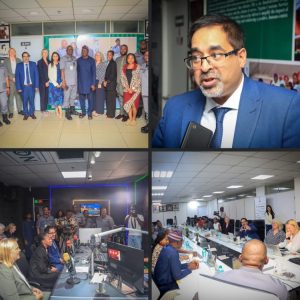
The Senate on Friday took the lead in a critical joint budget defence session for the Federal Ministry of Livestock Development, warning that the success of the newly created ministry will depend on disciplined implementation, transparency and measurable outcomes.
Chairman of the Senate Committee on Livestock Development, Senator Shehu Buba, who presided over the joint hearing with Hon. Wale Raji, Chairman of the House Committee on Livestock Development, described the session as “a constitutional responsibility and a strategic engagement that will shape the trajectory of livestock development in our country.”
The hearing, attended by the Minister of Livestock Development, Alhaji Idi Mukhtar Maiha, senior ministry officials and stakeholders, was convened pursuant to Section 80 (4) of the 1999 Constitution (as amended), which empowers the National Assembly to ensure that no public funds are withdrawn except as prescribed by law.
Senator Buba recalled that on July 9, 2024, President Bola Ahmed Tinubu established the Federal Ministry of Livestock Development under the Renewed Hope Agenda, describing the move as bold and visionary.
According to him, the creation of the ministry was not merely administrative but a structural reform aimed at repositioning the livestock sector as a driver of economic growth, food security, rural livelihoods, foreign exchange conservation and national unity.
“We must interrogate allocations, evaluate implementation capacity and ensure every appropriation aligns with measurable outcomes,” the Senate Chairman stated.
He noted that despite Nigeria’s vast livestock resources, one of the largest cattle populations in Africa alongside significant numbers of sheep, goats, poultry and other animals productivity remains low due to traditional open grazing systems, weak veterinary services, inadequate feed infrastructure and limited processing capacity.
In his presentation, Minister Maiha disclosed that although the ministry received a ₦75 billion take-off grant upon its creation in 2024, only ₦20 billion was released and fully utilized for 40 projects and institutional take-off activities.
However, he revealed that the 2025 budget allocation of ₦11.8 billion—₦10 billion for capital and ₦1.8 billion for overhead has recorded zero release to date.
“We have been surviving on a shoestring from the ₦20 billion take-off release. For 2025, there has been zero performance due to non-release of funds,” the Minister said.
He added that the ministry is still establishing its structures, including seven technical departments, five common services departments and seven agencies under its supervision.
Leading deliberations, Senator Buba stressed that livestock development is directly linked to national security, particularly recurring farmers-herders conflicts, cattle rustling and rural instability.
He emphasized the need for structural transformation of livestock production through modern ranching systems, feed and fodder development, water infrastructure, breed improvement programmes and digital animal identification systems.
Minister Maiha explained that the ministry has inventoried 417 grazing reserves and livestock service centres nationwide as part of efforts to stabilize nomadic movements and reduce conflict.
He identified feed and fodder development as a primary solution to curbing migratory pastoralism, which he described as a survival mechanism driven by scarcity of resources.
The Minister also highlighted plans to introduce cattle tagging, identification and traceability systems to combat cattle rustling and meet international export standards, particularly for access to the Gulf red meat market.
According to the ministry’s National Livestock Growth Acceleration Strategy (NLGAS), the livestock sector is valued at approximately $32 billion but remains largely informal.
The Minister said Nigeria has about 50 million cattle, 124 million goats, 70 million sheep, 9.3 million pigs, over 400,000 donkeys, one million camels and nearly half a billion poultry birds—all of which are to be mainstreamed into the formal economy.
He further noted that Nigeria currently spends an estimated $1.5 billion annually importing dairy products, stressing the need for genetic improvement programmes to increase milk yield and reduce slaughter age.
The Senate Chairman reiterated that oversight is not adversarial but collaborative, adding that lawmakers would insist on data-driven planning, equitable project distribution and strict monitoring frameworks.
“We must ensure that allocation translates into projects and projects translate into measurable improvements in productivity, peace and prosperity,” he declared.
He assured that the National Assembly would also work to strengthen the legal and regulatory framework guiding ranching systems, animal health standards, food quality control and livestock transportation protocols.
The joint committees affirmed their commitment to diligent oversight and responsible legislation to ensure that the livestock sector becomes a cornerstone of Nigeria’s diversified economy.
The hearing continues as lawmakers scrutinize the Ministry’s proposals and funding requirements amid high public expectations for improved food security, rural stability and economic resilience.