AGILA AT A CROSSROADS: How Three New Traditional Titles at the 2026 Ujor Capture the Community’s Past, Present and the Future

At the heart of the 2026 edition of Ujor, held at Akpoge Play Square in Agila, Benue State, the Agila Traditional Council did more than celebrate culture and tradition. It used the occasion to make a profound statement about the values that have sustained the community, the responsibilities confronting it today and the leadership roles required in addition to its existing leadership to further secure its future.
The conferment of three distinctive traditional honorific titles on Chief Chief Mrs. Lami Danladi Ogenyi, Deputy Speaker of the Benue State House of Assembly; Chief Gabriel Egwurube, and Chief Dr. Odatse Peter’s Kelvin was, therefore, not merely ceremonial.
It was a symbolic recognition of service, character and the enduring relationship between leadership and community.
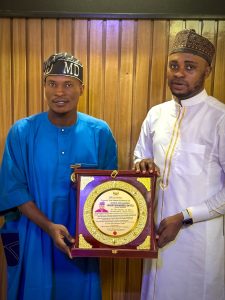
Chief Mrs. Ogenyi was honoured as “Ene Ebo Y’Agila,” meaning Mother of Peace of Agila; Chief Gabriel Egwurube received the title “Ovulaje Y’Agila,” meaning Pillar of Agila; while Chief Dr. Odatse Peter’s Kelvin was conferred with “Olaga Gbelontu Y’Agila,” meaning Custodian of Truth, Justice and Courage.
Taken together, the three titles present an interesting portrait of what Agila considers essential to its survival and advancement: peace, stability, truth, justice and courage.
Ujor and the Memory of our People
For communities such as Agila, cultural festivals are not simply occasions for entertainment. They provide opportunities for people to reconnect with their roots, transmit values across generations and examine our journey as a community.
The gathering at Akpoge Play Square brought together the traditional institution, political leadership, community stakeholders, sons and daughters of Agila and other well-wishers in an atmosphere in which culture became a bridge between generations.
It was against this backdrop that the traditional titles assumed particular significance.
Traditional titles, when properly conferred, are not ornaments. They are statements of expectations. They acknowledge what an individual has contributed while simultaneously reminding the recipient that honour carries responsibility.
The three titles bestowed at the 2026 Ujor can consequently be interpreted as a three-point social covenant for Agila’s future.
“Ene Ebo Y’Agila”: A Mother of Peace
The title Ene Ebo Y’Agila — Mother of Peace of Agila, bestowed on Chief Mrs. Lami Danladi Ogenyi, places peace at the centre of the community’s development agenda.

As Deputy Speaker of the Benue State House of Assembly, her public role extends beyond the boundaries of Agila. But the traditional recognition brings that public responsibility back to the community from which she originates (rooted).
The choice of the word “Ene” – mother is particularly significant.
In African traditional thought, motherhood represents more than biological relationship. It evokes nurturing, reconciliation, protection and the ability to bring people together.

By identifying Chief Mrs. Ogenyi as the Mother of Peace of Agila, the traditional institution appears to be underscoring the premium it places on peaceful coexistence and responsible leadership.

For Agila, peace is not an abstract virtue. It is a prerequisite for development.
No community can successfully attract investment, sustain infrastructure, educate its young people or build institutions in an atmosphere of persistent division and conflict.
The title therefore looks backwards to the traditional role of community leaders as custodians of harmony, while looking forward to a future in which Agila’s political and traditional leadership must work together to preserve love, unity and development. A call to higher communal responsibility.
“Ovulaje Y’Agila”: The Pillar of the Community
If peace is the foundation, a community also needs pillars upon which its collective aspirations can rest.

That symbolism is captured in the title given to Chief Gabriel Egwurube – Ovulaje Y’Agila, Pillar of Agila.
A pillar carries weight. It provides support. It contributes to the structural integrity of a building.
The traditional description therefore carries a powerful message about the place of dependable individuals in community development.
Agila’s future cannot be built solely around government. It requires sons and daughters who are willing to invest their resources, influence, knowledge and time in the advancement of the homeland.
The recognition of Egwurube as Ovulaje Y’Agila consequently represents the importance of stability and support when communities confront difficult moments. While this is exemplified in the life of Chief Gabriel Egwurube, it now transits from lifestyle to responsibility.
It is also a reminder that leadership is not limited to elected office.
Across generations, communities have depended on professionals, entrepreneurs, philanthropists, traditional leaders, political actors and ordinary citizens who make contributions without necessarily holding formal public positions.
Such people constitute the pillars upon which community progress is built.
“Olaga Gbelontu Y’Agila”: Truth, Justice and Courage
Perhaps the most philosophical of the three titles is that bestowed on Chief Dr. Odatse Peter’s Kelvin – Olaga Gbelontu Y’Agila, the Custodian of Truth, Justice and Courage.

Truth, justice and courage are values that become particularly important whenever a community is passing through transition.
Truth provides the moral compass.
Justice provides fairness.
Courage gives people the strength to defend what is right, even when doing so is inconvenient.
By assigning the responsibility of custodianship to an individual, the traditional institution also elevates these principles from abstract ideals into community obligations.
The title speaks to the need for Agila to preserve its moral foundations while confronting the complexities of the modern world.
Development without justice can create inequality. Leadership without truth can erode trust. Progress without courage can leave communities unable to defend their legitimate interests.
The three principles are therefore mutually reinforcing.
From the Past to the Present
The significance of the Ujor 2026 becomes clearer when viewed against Agila’s historical journey.
Agila, like many traditional communities in Nigeria, has experienced the pressures of modernisation, demographic change, political competition, economic hardship, social inequality, infrastructure deficits and the changing aspirations of younger generations.
Yet the community’s traditional institution remains an important repository of identity.
The challenge before Agila is not whether tradition should survive modernity. Rather, it is how traditional values can provide direction in a rapidly changing society.
This is where the three titles become particularly instructive.
Peace provides the environment for development.
Community pillars provide the human and material support required to drive development.
Truth, justice and courage provide the ethical framework within which development should take place.
In that sense, the three honourees represent more than themselves. Their titles collectively articulate a vision of the kind of values Agila needs to carry into the next generation.
The Future: Beyond Celebration to Development
The real test of the 2026 honours will not be the applause that accompanied their conferment.
It will be what happens after the celebration.
Can Agila convert its cultural unity into developmental cooperation?
Can its sons and daughters work together despite inherent differences?
Can the community create stronger platforms for youth development?
Can traditional leadership, elected representatives and professionals establish practical partnerships around education, healthcare, roads, electricity, security, agriculture and economic empowerment?
These questions which held my thoughts and contemplation all through my stay in the village before, during and after the Ujor are the questions that will determine whether the symbolism of Ujor 2026 becomes a lasting legacy.
The future of Agila will ultimately depend on the ability of all to transform goodwill into institutions, celebration into action and traditional wisdom into modern development strategies.
A New Social Contract for Agila
Seen from this perspective, the three traditional titles can be read as a new social contract.
Ene Ebo Y’Agila calls for peace.
Ovulaje Y’Agila calls for support and collective responsibility.
Olaga Gbelontu Y’Agila calls for truth, justice and courage.
Together, they offer a compelling framework for the community’s next chapter.
Agila’s past gives it identity. Its present gives it challenges. Its future will be determined by how effectively we mobilizes our people, institutions and resources to confront those challenges.
The 2026 Ujor celebration therefore deserves to be remembered not merely as another cultural gathering, but as an occasion when the Agila Traditional Council used the language of tradition to articulate enduring values for a changing generation.
At Akpoge Play Square, three individuals received titles.
But beyond the honours, Agila itself received a message: that its journey into the future must be anchored on peace, strengthened by dependable pillars, and guided by truth, justice and courage.
That may ultimately prove to be the most enduring legacy of Ujor, 2026 edition.
Congratulations to the honorees, the entire sons and daughters of Agila and above all, congratulations to Agila.
Onwe Wisdom writes from Osudu, Agila. Ado LGA, Benue State.