2027:Restructure APC Strategy In South-East NDI-ABAT Advises Tinubu, Seyi
By Alex Odeh, Pan Afric Reporters
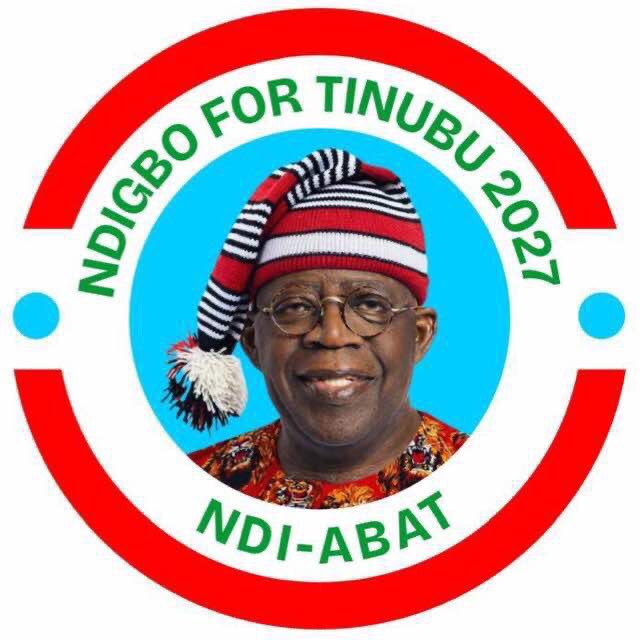
The Ndigbo for Asiwaju Bola Ahmed Tinubu 2027 Forum (NDI-ABAT) has called on President Bola Tinubu and the Convener of the City Boys Movement, Mr. Seyi Tinubu, to restructure the All Progressives Congress (APC) strategy in the South East ahead of the 2027 presidential election.
NDI-ABAT said its demand follows months of grassroots consultations, stakeholders’ engagements and political analysis across the five South East states, during which the forum examined APC’s performance in the region since 2015.
The forum stated that the figures from successive presidential elections demonstrate a persistent challenge that the APC cannot afford to ignore.
The group noted that, according to official election records, APC’s presidential performance in the South East has remained significantly below the party’s national performance.
In the 2015 presidential election, the organisation said APC received about 198,248 votes in the South East, representing approximately 7.2 percent of the votes cast in the zone.
In 2019, APC increased its South East presidential vote substantially, recording approximately 403,968 votes, its strongest performance in the region during the period under review.
However, in the 2023 presidential election, the APC presidential ticket received 127,605 votes in the South East, representing 5.83 percent of the zonal vote according to INEC’s official 2023 election report.
These figures, NDI-ABAT argued, should compel the APC leadership to reconsider the assumptions behind its South East strategy rather than merely reproduce previous campaign structures.
NDI-ABAT said its consultations have convinced the forum that the South East requires a political strategy built around grassroots ownership, permanent engagement, credible local structures, measurable delivery and direct communication between the Presidency and the people.
The forum said presidential campaigns cannot be won in the South East by relying exclusively on formal party structures, political office holders or occasional election-season mobilisation.
According to NDI-ABAT, the lesson of the last three presidential elections is that appointments alone do not automatically translate into votes.
This was contained in a statement issued on Tuesday by the National Coordinator, Okechukwu Isiguzoro and Ugwuoke N. national secretary, respectively, and made available to journalists.
The forum therefore urged President Tinubu to distinguish between political appointments and genuine electoral mobilisation.
NDI-ABAT further warned against what it described as the danger of depending on political actors whose electoral commitment to the presidential project may not always correspond with their public declarations.
It stressed that history demonstrates why presidential campaigns should be built on transparent structures, verifiable commitments and direct grassroots engagement rather than assumptions about political loyalty.
The forum argued that infrastructure delivery, particularly roads and other strategic federal projects in the South East, gives the Presidency a tangible platform for communicating its development agenda directly to communities.
NDI-ABAT therefore urged the federal government to strengthen the connection between infrastructure delivery and grassroots political communication, while ensuring that projects are objectively documented and communicated to the public
The forum stressed that electoral mobilisation should begin with sustained public engagement and not be postponed until the final months of an election cycle.
It maintained that any claim that APC has already solved its South East electoral challenges must be tested against historical voting data and measurable grassroots structures.
The forum said the South East political equation requires a new approach, based on performance, inclusion, grassroots engagement, credible leadership, accountability and continuous political communication.
It further cautioned that no presidential campaign should assume that the South East political office holders, governors or party leaders automatically possess the capacity to deliver the electorate.