FG, STATES, LGCs SHARE N2.428 TRILLION FROM A GROSS TOTAL OF N3.913 TRILLION FOR THE MONTH OF SEPTEMBER, 2026
By Pan Afric Reporters
The Federal Government, 36 state governments and local government councils have shared ₦2.428 trillion in revenue accruing to the Federation Account for September 2026, following the distribution of funds by the Federation Account Allocation Committee (FAAC).
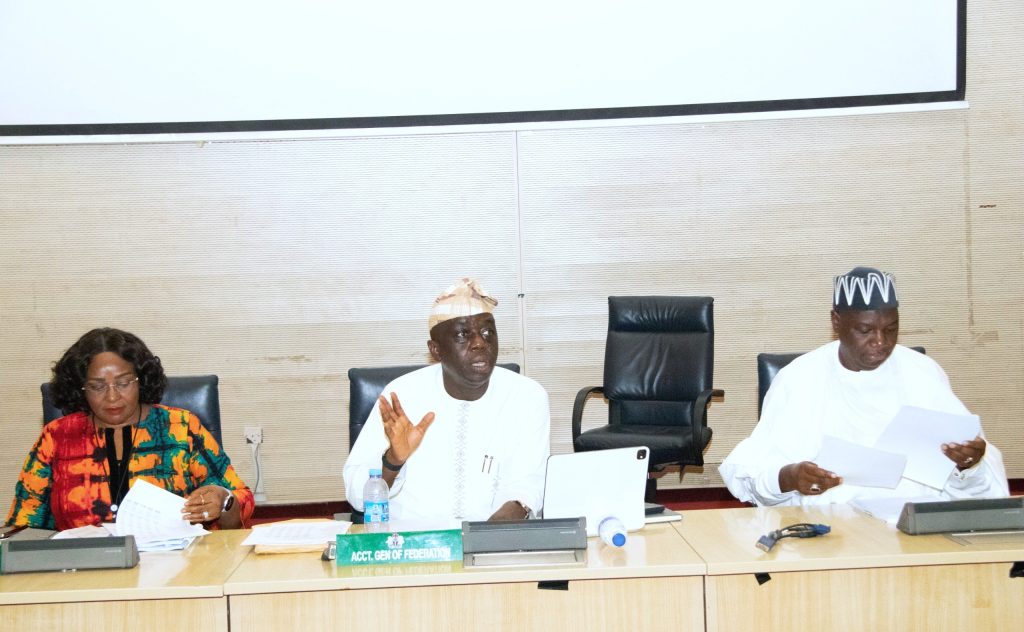
The Federal Ministry of Finance announced this in a press release signed by Francis Kusa, Chief Information Officer, Information and Public Relations, on October 15, 2026. The statement said FAAC distributed the allocation from a gross revenue pool of ₦3.913 trillion at its October meeting chaired by the Accountant-General of the Federation, Shamsudeen B. Ogunjimi.
According to the release, the Federal Government received ₦832.242 billion, while the state governments received ₦799.872 billion. Local government councils were allocated ₦560.660 billion, while oil-producing states received ₦236.049 billion as the 13 per cent derivation revenue from mineral resources.
The statement further disclosed that ₦131.758 billion was allocated for the cost of revenue collection, while ₦1.353 trillion was earmarked for transfers, refunds and savings.
VAT Revenue Declines
The communiqué issued after the FAAC meeting showed that gross Value Added Tax (VAT) revenue fell to ₦816.872 billion in September from ₦834.843 billion in August, representing a decline of approximately ₦17.972 billion.
Of the September VAT revenue, ₦23.576 billion was allocated for collection costs, while ₦36.709 billion went to transfers, refunds and savings. The remaining ₦756.587 billion was distributed among the three tiers of government.
Under the VAT allocation, the Federal Government received ₦75.659 billion, state governments got ₦416.123 billion, and local government councils received ₦264.805 billion.
Statutory Revenue Records Increase
In contrast to the decline in VAT receipts, gross statutory revenue rose to ₦3.097 trillion in September from ₦2.850 trillion in the preceding month, representing an increase of approximately ₦246.384 billion.
The release stated that ₦106.182 billion from the statutory revenue was allocated for collection costs, while ₦1.316 trillion was set aside for transfers, refunds and savings.
The remaining distributable statutory revenue of approximately ₦1.672 trillion was shared among the Federal Government, states, local governments and oil-producing states under the derivation principle.
The Federal Government received ₦756.583 billion from the statutory revenue pool, while states received ₦383.749 billion and local government councils got ₦295.855 billion. Oil-producing states received ₦236.049 billion as derivation revenue.
Mixed Revenue Performance
The Ministry attributed the revenue performance to varying trends across the different revenue streams, noting that Petroleum Profit Tax, Hydrocarbon Tax, petroleum royalties, import duty, Common External Tariff levies and excise duty recorded significant increases.
However, Companies Income Tax, Stamp Duties (SDT), VAT, mineral royalties, gas-flaring penalties, rents, gas-flaring fees and miscellaneous oil revenue recorded declines during the period.
The statement put the distributable statutory revenue at approximately ₦1.672 trillion and VAT at ₦756.587 billion, bringing the total allocation to ₦2.428 trillion.
The FAAC distribution provides funding for the three tiers of government to meet their respective expenditure obligations, including the provision of public services, infrastructure development and the payment of salaries.
The latest figures highlight the continued importance of statutory revenue and VAT to government financing, as well as the impact of changing revenue performance on the resources available for distribution among the federal, state and local governments.