With a troubled heart, I feel such deep concern for Sanwo-Olu

By Abayomi Odunowo.
In the heart of Lagos, where power plays out with a mix of tradition and modernity, the Oniru royal family stands as a symbol of deep-rooted influence. Long before the bustling metropolis of Lagos came into existence, the Oniru family owned vast stretches of land, encompassing today’s Awolowo Road, the prime area of Falomo, Tafawa Balewa Square, the Independence Building, Island Club, Yoruba Tennis Club, and even Oyinkan Abayomi, along with 18 other villages. This is the lineage of Mrs. Mojisola Lasbat Meranda, the new and controversial Speaker of the Lagos State House of Assembly. Despite her surname, she is an Oniru by blood—her brother, the reigning Oba of Iruland, cements her noble roots.
However, in the complex game of Lagos politics, mere nobility is insufficient. Her election as Speaker, though backed by a majority of her colleagues, seems to carry little weight in the grand scheme of things. In Lagos, the real power lies with a singular godfather whose influence outweighs a million votes. The godfather is the igbó’rò—the sacred grove that confers authority and breathes life into all political figures. Meranda’s struggle is just beginning; breaking into the Lagos power vault uninvited is akin to sitting on a throne of thorns. Fortunately, she is no stranger to the political game, shedding strategic tears in a bid to gain sympathy and leverage.
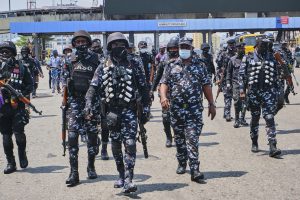
Last week’s dramatic events at the House complex added fuel to the fire. The ousted Speaker, Mudashiru Obasa, staged a sensational comeback at dawn, backed by a formidable array of armed supporters. The state’s support for Obasa was unmistakable. Watching the video, one could almost feel the fear emanating from his opponents—huddled together under a tent, peering out like terrified children in a war zone. The message was clear: the old order was not ready to relinquish control without a fight.
The unfolding chaos evokes memories of past power struggles. From 1979 until his departure to Abuja in 1994, Lateef Jakande was the godfather of Lagos politics, wielding influence with an iron grip. However, every godfather has an expiration date. When Jakande returned from Abuja, his political empire lay in ruins. Now, with Bola Tinubu in Abuja, the spellbinding hold over Lagos appears to be unraveling. Tinubu’s overt favoritism risks alienating his disciples and undermining his legacy. The lesson is clear: even the most powerful parents must respect the choices of their grown children.
There is an old proverb about a blind king riding a blind horse through a market full of blind people—the outcome is inevitable disaster. This grim metaphor captures the current trajectory of Lagos politics. The ongoing power tussle risks plunging the state into chaos, with far-reaching consequences. The cracks in the political facade are widening, and without decisive action, the entire structure could come crashing down.
The historical parallels are striking. In 1991, the Social Democratic Party (SDP) thought it owned Lagos. Internal divisions, however, led to the shock victory of Sir Michael Otedola of the National Republican Convention (NRC)—a party so unpopular that it held only two seats in the Lagos House of Assembly compared to the SDP’s 38. The lesson was stark: infighting and arrogance can hand victory to the least expected. The SDP’s overconfidence and internal strife allowed an unpopular outsider to seize power, an eerie reflection of the current situation.
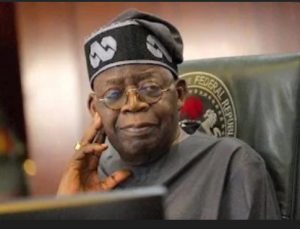
Amidst this turbulence, two figures stand out as objects of pity—though not sympathy. The first is President Bola Tinubu. A seasoned strategist, he risks becoming a victim of his own success. The Yoruba saying that a careless owner watches the oil in their lamp burn out rings ominously true. His protégés are no longer content to follow orders without question, and the mystique of invincibility is fading fast. Tinubu must reassess his strategy before his influence crumbles completely.
The second figure deserving of pity is Governor Babajide Sanwo-Olu. The sacrifices he has made for the Lagos political machine seem to go unrecognized, and the omens are not favorable. The symbolism is powerful: the offerings laid at the political crossroads have been ignored, and the sacred tree no longer dances in the wind. Sanwo-Olu’s predicament is reminiscent of Governor Siminalayi Fubara’s plight in Rivers State—caught between powerful interests and uncertain of his next move. Yet, Sanwo-Olu cannot publicly complain; he is a product of the very system that now threatens to consume him.
In their book Why Empires Fall, Peter Heather and John Rapley offer a metaphor that perfectly captures the situation in Lagos: a shattered pot. Once broken, a pot is useless, yet its shards remain to tell the tragic story of what once was. From Ikate to Iru, Marina to Alausa, the political landscape of Lagos is littered with the fragments of a once-cohesive power structure. The spell that bound the mainland to the Island is weakening, and without swift intervention, the breakages may multiply.
Lagos stands at a crossroads. The current crisis is not just a test of political strategy but of leadership and foresight. Without a course correction, the city risks descending into a power struggle that could take years to resolve. It is a sobering thought for those who understand the stakes—and for those who, with a heavy heart, can only watch and pity.
Otunba Abdulfalil Abayomi Odunowo
National Chairman AATSG
Mobile: +2349053535322
AATSG Media.
URL: www.AATSG.org.ng
WhatsApp Channel: https://whatsapp.com/channel/0029VadcNX21NCrRShw4S33A
AATSG OFFICIAL
https://play.google.com/store/apps/details?id=com.slim.aatsg
AATSGiD
https://play.google.com/store/apps/details?id=com.myid.aatsgid