FEDERAL MINISTRY OF LIVESTOCK DEVELOPMENT BREAKS GROUND FOR MODERN 500-BULL-PER-DAY ABATTOIR IN JOS
By Pan Afric Reporters
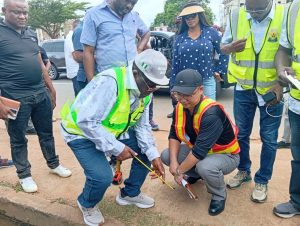
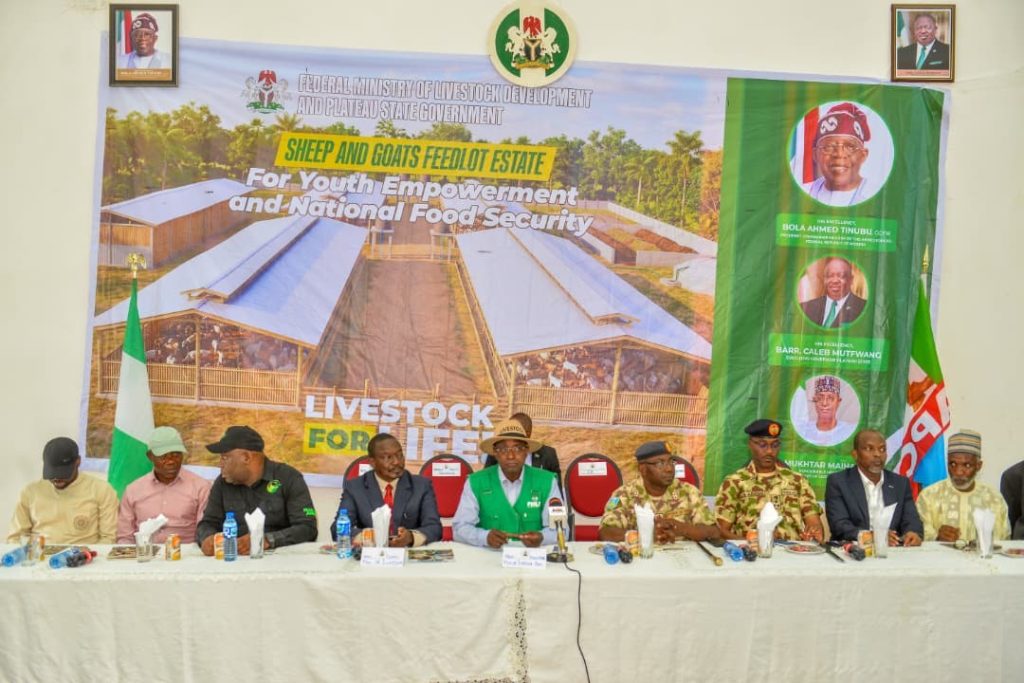
The Federal Ministry of Livestock Development has reaffirmed its commitment to transforming Nigeria’s livestock sector with the groundbreaking ceremony of a modern abattoir with a processing capacity of 500 bulls per day in Jos, Plateau State.
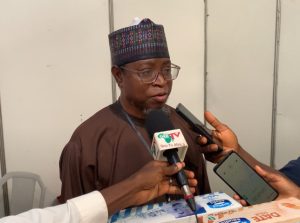
Speaking at the ceremony, the Honourable Minister of Livestock Development according to a press release e-signed by the ministry’s Deputy Director Press and Public Relations,Henrietta Okokon described the project as a landmark investment that will modernize Nigeria’s red meat value chain, strengthen food safety standards, create thousands of jobs, and position the country for greater participation in regional and international meat markets.
The Minister noted that, the project represents more than the construction of a slaughter facility. It is designed to serve as a catalyst for a new livestock economy that promotes public health, enhances productivity, encourages value addition, and supports sustainable economic growth.
“Today’s groundbreaking marks the beginning of a transformative journey for Nigeria’s livestock industry. This facility will provide a modern, hygienic, and efficient meat processing environment that meets global standards while creating opportunities across the entire livestock value chain,” the Minister stated.
Plateau State, he said, was identified as a strategic location for the investment due to its favorable climate, strong agricultural base, established livestock activities, and the presence of the National Veterinary Research Institute (NVRI), Vom. The state’s connectivity through road, rail, and air transportation further strengthens its position as a livestock and agribusiness hub, he added.
Miaha, explained that, the abattoir is expected to significantly improve food safety through modern veterinary inspection systems, hygienic slaughter processes, quality assurance measures, and effective waste management. And will also support disease surveillance and contribute to improved public health outcomes.
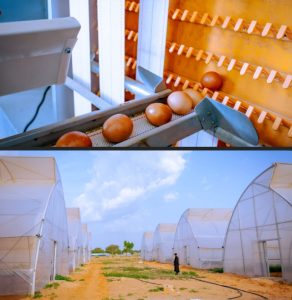
According to the Minister, the facility will operate as an integrated livestock processing center where meat, hides, skins, bones, blood, fats, and other by-products can be transformed into valuable industrial inputs, including leather products, fertilizers, animal feed ingredients, biogas, pharmaceuticals, and other commercial products.
The project he said, is also expected to generate substantial employment opportunities. At full operational capacity, it is projected to support between 7,000 and 10,000 direct and indirect jobs across livestock production, feed and fodder development, veterinary services, transportation, cold-chain logistics, meat processing, leather production, waste management, and marketing.
The Minister emphasized that,the success of the project will depend on strong partnerships among government, investors, livestock producers, processors, financial institutions, and host communities. He called on stakeholders to support the development of structured livestock supply systems, including ranches, feedlots, grazing reserves, fodder estates, veterinary networks, and livestock aggregation centers.
The Minister also highlighted the project’s role in promoting peace and security by encouraging more productive livestock systems, reducing pressure on land resources, and fostering cooperation among communities involved in agricultural and livestock activities.
Furthermore, the Minister encouraged, youth and women to take advantage of emerging opportunities within the livestock industry, noting that the sector offers promising careers in animal nutrition, veterinary medicine, meat science, cold-chain management, leather technology, quality assurance, agribusiness, and value-added processing.
The Jos Modern Abattoir project aligns with the Federal Ministry of Livestock Development’s mandate to build a productive, safe, peaceful, and globally competitive livestock industry. It also forms part of the National Livestock Growth Acceleration Strategy (NL-GAS) 2025–2035 and supports the Renewed Hope Agenda of the Federal Government.
The Minister expressed appreciation, to the Government and people of Plateau State, investors, development partners, livestock producers, veterinarians, processors, traditional institutions, and host communities for their support and collaboration.
Upon completion, the facility is expected to become a national model for modern meat processing, food safety, environmental sustainability, job creation, and export readiness.
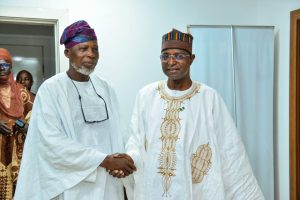
The Executive Governor of Plateau State, His Excellency, Barrister Caleb Manasseh Mutffwang , in his remarks said that ,partnership with the Federal Ministry of livestock Development is indeed a blessing to Nigeria as a whole , as Plateau State is moving from pastoral grazing to ranching, which is a game changer, that would unlock the value chain in the livestock eco system.
“Without passion Nigeria cannot drive development as the livestock hub is turning conflicts to profits in the State. Livestock sector is now a crucial value chain for food security in Nigeria.’
This is very historic moment for us not with noise but with strategic partnership with the Federal Ministry of Livestock Development geared towards boosting the economic development in the livestock sector in Nigeria.
He further stated that, the ultra-modern abattoir is conceived as a fully integrated , end- to end automated processing complex and would serve as a regional hub for livestock aggregation, processing , solid – chain , logistics storage , and distribution, delivering world class standards in food -safety , product quality, operational efficiency and environmental sustainability.
In his welcome address the Honorable Commissioner of Livestock Development, veterinary services and Fisheries, Dr Sunday Akpa, appreciated the Honorable Minister of Livestock Development for his resilience and the drive to change the narrative in the livestock sector.
He lauded the significant milestone event of the Jos Ultra-modern Livestock processing facility which represents a transformative agro industrial investment hub designed to redefine livestock processing, food systems, infrastructure and value chain development in Plateau State and across Nigeria.
In his goodwill message the Honourable Commissioner Federal Ministry of Agriculture and Rural Development, Plateau State, Honourable Samson Bugama, said that, today we move from speech to soil, as the Ultra-modern Abattoir is fully going to have the capacity to process 500 cattle per day, which stands as an engine room of livestock revolution in Nigeria.
Dr Sanusi Abubarkar,the National Project Coordinator, Livestock Productivity and Resilience Support Project (lLPRES), in his good will message said that, the Livestock Productivity and Resilience Support Project was conceived to address challenges through strategic investments aimed at improving productivity, strengthening resilience, promoting peaceful coexistence, enhancing value addition, and increasing the competitiveness of livestock value chains across Nigeria.
Today’s event he said, represents two critical pillars of this transformation agenda.
First is the construction of an ultra-modern abattoir that will meet internationally acceptable standards of hygiene, animal welfare, food safety, environmental management, and meat processing. This facility will not only improve the quality and safety of meat products available to consumers but will also create employment opportunities for youth and women, enhance revenue generation, reduce waste, and stimulate investments along the livestock value chain.
“A modern abattoir is more than just a slaughter facility; it is an economic hub. It provides opportunities for value addition, processing, packaging, cold-chain development, transportation services, veterinary inspection, and market expansion. Ultimately, it contributes to improved public health outcomes while positioning Plateau State as a key player in the livestock and meat industry” he added.
This project he said, is being funded by the World bank an Livestock Productivity and Resilience Support Project (L-PRES and would be developed by the Plateau State Government.