Health Reforms: Stakeholders Demand Stronger Accountability, Sustainable Funding
By Salami Abdulrahaman
Civil Society Organisations (CSOs) have called for stronger institutionalisation, sustainable financing, and robust accountability mechanisms to ensure that Nigeria’s ongoing health sector reforms translate into measurable improvements in healthcare delivery and financial protection for citizens.
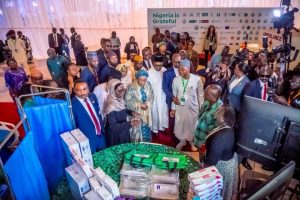
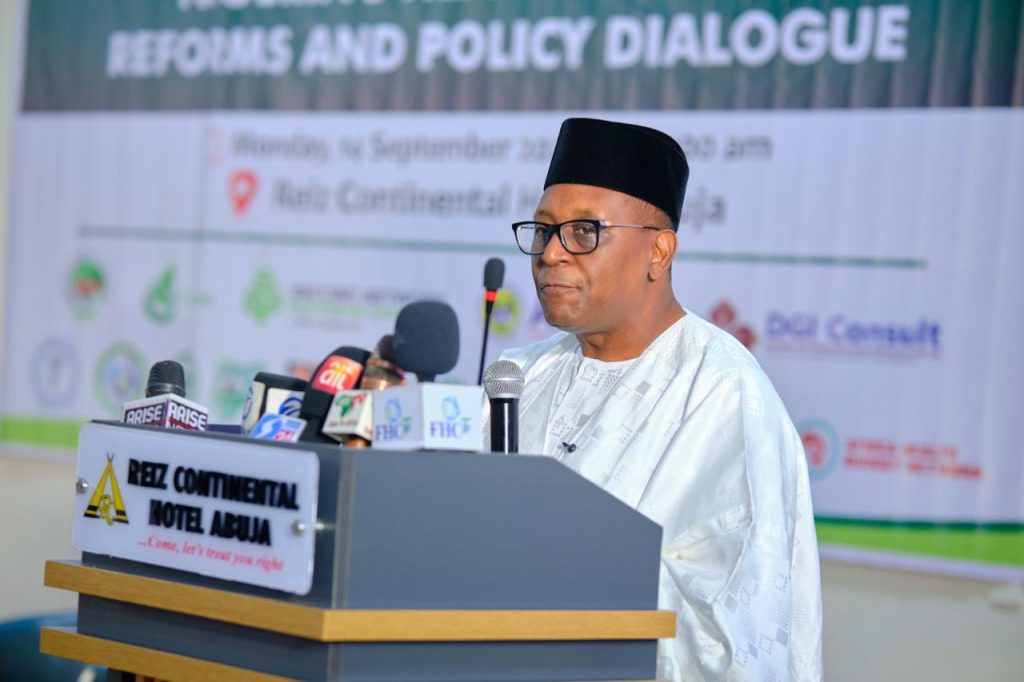
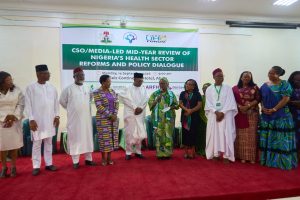
The CSOs made the call on Monday in Abuja at a high-level civil society and media engagement on the mid-term review of Nigeria’s health sector reforms, where stakeholders assessed progress under the National Health Sector Renewal Investment Initiative (NHSRII) and the Sector-Wide Approach (SWAp).
In a position presented by the Chairperson of the Health Sector Reform Coalition (HSRC), Dr. Muhammed M. Lecky, the CSOs said the direction of the reforms was right but stressed the need to protect and institutionalise the gains while ensuring tangible improvements, particularly for underserved populations.
Lecky described the reforms as one of the most significant efforts in recent decades to address longstanding fragmentation in Nigeria’s health sector.
He said the SWAp provided an opportunity to improve coordination among the Federal Government, states, Local Government Areas, development partners and communities through the principles of “one plan, one budget, one report and one conversation.”
He, however, said the success of the reforms should no longer be measured mainly by the number of healthcare facilities renovated or policies introduced, but by whether the facilities were functional and capable of delivering quality services.
“A functional PHC should have appropriate health workers, essential medicines, basic diagnostics, electricity, water, infection prevention systems, referral arrangements, maternal and child health services, and accessible feedback mechanisms,” he said.

The coalition expressed concern over persistent challenges in maternal and child health, nutrition, immunisation, family planning, and financial protection.
It cited findings from the Nigeria Demographic and Health Survey 2023–24, which showed that although 79 per cent of women received antenatal care from a skilled provider, only 43 per cent had four or more antenatal care visits.
The survey also indicated that only 50 per cent of live births were assisted by a skilled provider, while 39 per cent of children aged 12–23 months were fully vaccinated with basic antigens and 14 per cent received no vaccinations.
The coalition further highlighted that 40 per cent of children under five were stunted, including 21 per cent who were severely stunted. Modern contraceptive use among currently married women stood at 15 per cent, while 21 per cent had an unmet need for family planning.
The CSOs urged the government to deliberately target rural communities, poor households, conflict-affected populations, displaced persons, and other hard-to-reach groups, warning that national averages could conceal significant inequalities in healthcare access.
They also called for the timely release of appropriated health funds, stronger accountability for the Basic Health Care Provision Fund (BHCPF), expanded health insurance coverage, and improved financial protection for households.
On the health workforce, the coalition advocated timely payment of salaries, rural incentives, safe working conditions, training, career progression, and transparent deployment of health personnel.
The coalition recommended a National Health Act Alignment and Implementation Matrix to ensure that policies, programmes, financing mechanisms, and institutional arrangements operate within a coherent legal framework.
It said the matrix should identify gaps and overlaps, clarify institutional responsibilities, and establish timelines for implementation and public reporting.
Speaking at the engagement, the Convener and Executive Director/CEO of the Initiative for Health Accountability and Transparency, Dr. Abdullahi Jibril Mohammed described CSOs as a critical component of Nigeria’s health accountability architecture.
Mohammed said the engagement provided an opportunity for civil society to interact with government leaders and assess whether ongoing reforms were translating into better healthcare for Nigerians.
“What this meeting has done is to interact with people in government leadership and hear from them about what they are doing regarding the ongoing health sector reforms. It is also an opportunity for us to assess whether these reforms are translating into better healthcare for Nigerians,” he said.
He stressed that the lived experiences of patients and communities remained the most important measure of reform success.
“We need to know what people are actually experiencing as a result of the reforms. Are the reforms reaching them, and do they make a meaningful difference in their lives?” he asked.
Also speaking, the Special Guest of Honour and Coordinating Minister of Health and Social Welfare, Prof. Muhammad Ali Pate said tax reforms and economic growth were critical to strengthening Nigeria’s health financing.
Pate said that beyond generating additional revenue through economic growth, Nigeria needed to improve the share of its existing tax base that it actually collects.
He explained that the government’s tax reforms were not about imposing higher taxes but about improving the collection of taxes already due.
“Nigeria’s revenue-to-Gross Domestic Product (GDP) ratio remains relatively low,” he said.
“If we are collecting 7.8 per cent of GDP as revenue, that’s lower than the average of 15 per cent,” he noted.
Pate said stronger domestic resource mobilisation was essential to creating the fiscal space required to sustain investments in healthcare and ongoing reforms.
While acknowledging the contributions of CSOs and the media, the Minister said Nigeria could no longer assume that external funding would remain available at the same level.
He pointed to competing global demands, including defence, climate change, and migration, which he said were forcing wealthier countries to reassess how they deploy resources.
He therefore stressed the need for Nigeria to strengthen domestic resource mobilisation and reduce dependence on external funding to sustain health sector reforms.
The Chair and Co-convener of the Nigeria Universal Health Coverage (UHC) Forum, Chief (Mrs.) Moji Makanjuola, said the engagement represented a major shift towards citizens’ participation and evidence-based accountability in health policy.
Makanjuola said the forum, in collaboration with the HSRC and other stakeholders, would continue to advocate for health to remain on the political front burner, particularly ahead of the 2027 general elections.
She disclosed that the Nigeria UHC Forum would organise a stakeholder workshop in October with development partners, the HSRC and other stakeholders to review its citizen-led health agenda and develop an action plan for the period before, during and after the elections.
According to her, the forum had during the 2023 election cycle developed a citizen-led health agenda and engaged political parties and candidates at national and state levels, contributing to the inclusion of health priorities in the manifestos of key political parties.
Makanjuola said the current reform agenda had recorded positive shifts in some health indicators but expressed concern over uneven progress across states.
“We must ask not only what is working, but also why it is working, where it is working, whether it can be replicated, and what is required to sustain it,” she said.
The Resident Representative of the United Nations Population Fund (UNFPA) Nigeria, Muriel Mafico, commended the Federal Government for what she described as bold and courageous health reform
Mafico said the reforms were significant not only for Nigeria but also for Africa and the global health community.
“I stand here not only on behalf of the United Nations Population Fund, but also, I believe, on behalf of the United Nations agencies that are partners in this bold health reform agenda,” she said.
She commended Pate for recognising that health transformation could not be achieved by the Ministry of Health alone, stressing the importance of multisectoral and multi-partner collaboration.
According to her, the message from the World Health Organisation, UNICEF, UNFPA, and other UN agencies was clear: progress was possible, and evidence of progress was already being seen in several states.
“Partnerships are critical, and everyone gathered in this room is a testimony to the importance of working together,” she said.
The CSO position also drew lessons from the Social and Citizen Accountability for Primary Health Care Performance (SCAPP) Project implemented by BudgIT and the Health Sector Reform Coalition across the 23 Local Government Areas of Kaduna State.
The coalition said the experience demonstrated that Ward Development Committees (WDCs) could improve service utilisation, community mobilisation, facility performance, and advocacy when adequately supported.
However, it identified limited training, inadequate public awareness, political interference, and weak institutionalisation as challenges limiting WDC effectiveness.
The coalition disclosed that an analysis of 862 WDC meetings found that only 11.6 per cent discussed the BHCPF, with limited evidence of regular discussions on allocations, expenditure, procurement and retirement of funds.
It therefore recommended that BHCPF become a standing item on WDC meeting agendas and called for greater disclosure of allocations and expenditures to communities.
The coalition also urged the government to make health-sector data more accessible through disaggregated information and dashboards that would enable citizens, CSOs, media organisations, and policymakers to track financing, service delivery and outcomes.

It called for stronger grievance and feedback systems and expanded partnerships with civil society, communities, private-sector actors, professional bodies, traditional and religious institutions to address gaps in immunisation, family planning, maternal and child health.
The CSOs said the ultimate measure of Nigeria’s health reforms should be whether women could safely access maternity care, children received life-saving vaccines, families obtained healthcare without financial hardship and communities had access to functioning primary healthcare facilities.
They pledged to continue working with government and other stakeholders to strengthen accountability and ensure that the ongoing reforms deliver sustainable improvements in the health and wellbeing of Nigerians.