NIGERIA’S FIGHT AGAINST BOKO-HARAM AND INSURGENCY GROUPS: Nigeria gradually gaining ground against Boko Haram and other insurgencies since General Christopher Gwabin Musa took over Defence Ministry
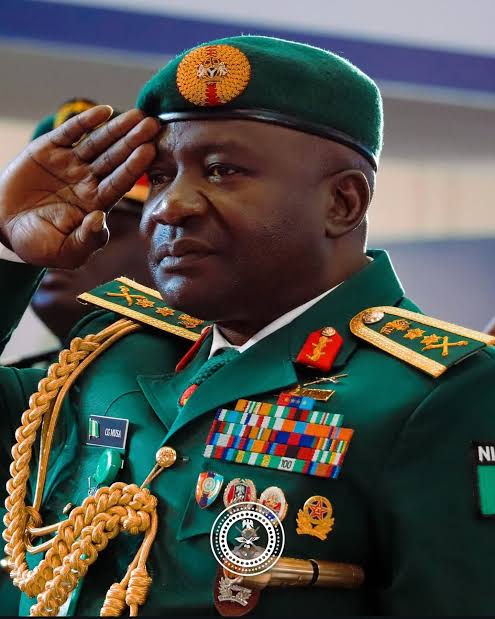
A concise essay analysing how Nigeria is gradually gaining ground against Boko Haram and other insurgencies since General Christopher Gwabin Musa was appointed Minister of Defencec (Key security milestones and shifts in the country’s counter-terrorism trajectory.)
By Onwe Wisdom | Pan Afric Reporters
Nigeria’s battle against Boko Haram and related extremist groups has spanned more than a decade, marked by intense military operations, community disruption, and regional security cooperation. The insurgency, which began in 2009, splintered into factions including Boko Haram and the Islamic State West Africa Province (ISWAP), causing widespread violence, displacement and humanitarian crisis across the North-East and beyond.
The appointment of General Christopher Gwabin Musa (Rtd.) as Minister of Defence in December 2025, following his distinguished service as Chief of Defence Staff (CDS), represents a strategic recalibration in Nigeria’s security leadership. His confirmation by the Senate came amid heightened national anxiety over insecurity and rising attacks, highlighting a broad consensus that experienced, professional military leadership is crucial in turning the tide against insurgency.
Prior to his ministerial role, Gen. Musa’s tenure as CDS was notable for operational innovation within Operation Hadin Kai, Nigeria’s long-standing counter-insurgency campaign against Boko Haram and allied groups. This period was characterised by:
å Intelligence-driven operations and the neutralisation of key terrorist commanders, weakening extremist networks.
√• Liberation of strategic territories in Borno and Yobe States, reducing the insurgents’ capacity to launch large-scale attacks.
√• The introduction of mobile strike teams capable of rapid response and night-time operations, improving the military’s ability to disrupt insurgent movements.
å Non-kinetic deradicalisation programmes, contributing to the surrender of thousands of insurgents and their families and shrinking the pool of active fighters.
These measures helped to erode Boko Haram’s territorial influence, contributed to liberation efforts, and enabled state authorities to re-establish governance in several previously contested areas.
Decline in High-Profile Attacks and Community Stabilisation
While the insurgency remains resilient, violent activity by Boko Haram has shown fluctuation rather than unchecked escalation, pointing to a war of attrition rather than a strategic victory for the extremists. Incidents such as suicide bombings and frontier raids, though still tragic, have not matched the scale of earlier years when entire towns were seized or large population displacements were routine.
Moreover, widely reported successes by Nigerian forces and allied local militias illustrate the degradation of the insurgents’ operational coherence—forcing them into splintered, reactive engagements rather than large offensive campaigns.
Holistic Security Milestones and Regional Cooperation
Under Musa’s influence, Operation Hadin Kai rekindled emphasis on community and regional security arrangements, working with neighbours in the Lake Chad Basin and the Multinational Joint Task Force to contain cross-border threats. This cooperation has helped limit the insurgency’s capacity to exploit porous borders—a key factor in its longevity.
Nigeria also pursued humanitarian and societal stabilisation tools, recognising that long-term peace requires integrating displaced persons, restoring governance, and promoting youth and community engagement—efforts historically integrated into Musa’s security philosophy.
Current Context and Challenges Ahead
Despite progress, violence persists, and in 2025 heightened activity in northeastern Nigeria continues to pose risk to civilians and security forces alike. Recent clashes involving Boko Haram and ISWAP factions demonstrate that the insurgency has adapted, and splinter operations remain a reality.
Gen. Musa’s assumption of the Defence Ministry now aims to build upon his military command experience by fostering greater inter-agency cooperation, strategic funding prioritisation, and nationwide security unity. His leadership prioritises synergy across defence, intelligence, and civil institutions, viewed by analysts as essential for sustainable security gains.
Conclusion
Nigeria’s progress against Boko Haram and insurgent violence under Gen. Christopher Musa (Rts.) reflects a shift toward professional, intelligence-based operations and systemic counter-insurgency strategies. While not a definitive end to the conflict, these efforts mark meaningful declines in insurgent influence, increased territorial recoveries, and enhanced military capabilities. The combination of tactical military success, community support initiatives and regional cooperation positions Nigeria on a more resilient footing against extremism than in prior years.
Onwe Wisdom, Publisher, Pan Afric Reporters writes from Abuja.