Promiseland Green City Estates: A New Vision for Sustainable Urban Development and Energy-Conscious Living in Abuja

…energy reliability, environmental sustainability, and smart infrastructure are central to how we design and build our estates – Amb. Oloche
Emmanuel Oduara, Pan Afric Reporters
In the rapidly expanding landscape of Nigeria’s capital city, a new real estate development is positioning itself not merely as a residential project, but as a blueprint for the future of urban living.
The groundbreaking of Promiseland Green City Estates marks a significant step toward redefining housing development in Abuja, combining modern infrastructure, sustainable planning, and energy-conscious design.
At the heart of this ambitious project is Amb. Lawrence Oloche Emmanuel, Chairman and Chief Executive Officer of Promiseland Estate, whose growing influence in Nigeria’s real estate and infrastructure sector reflects a broader vision: building communities that respond to both the housing needs and the energy realities of a rapidly urbanizing nation.
The launch of Promiseland Green City Estates comes at a critical moment for Nigeria. With the country facing one of the largest housing deficits in Africa and cities expanding at an unprecedented rate, the demand for integrated residential developments that incorporate reliable infrastructure has never been greater.
Hypenews Reports hinted that building Cities for the Future as
Nigeria’s urban population continues to grow rapidly, placing increasing pressure on housing, electricity supply, transportation networks, and basic utilities. In this context, real estate development has become more than the construction of buildings—it has become an essential component of national infrastructure planning.
Promiseland Green City Estates seeks to address this challenge by creating a master-planned community that integrates residential housing with the infrastructure required for modern urban life.
From energy systems to water supply and digital connectivity, the development reflects a growing recognition that sustainable cities must be built with long-term resilience in mind.
Speaking during the groundbreaking ceremony, Amb. Emmanuel emphasized that the project represents a commitment to forward-thinking urban development.
“Our vision is to create communities that are not only modern and comfortable but also built with the infrastructure needed for tomorrow’s cities. Energy reliability, environmental sustainability, and smart infrastructure are central to how we design and build our estates,” he said.
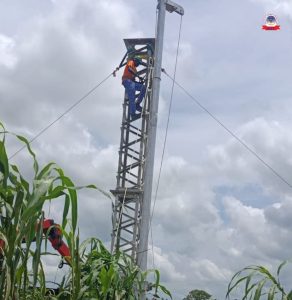
Hypenews Reports gathered that the project is designed to incorporate modern energy systems capable of supporting residential electricity needs while also enabling efficient energy management across the estate. This includes infrastructure planning that allows for alternative energy integration and energy-efficient building designs, reflecting global trends in sustainable housing development.
The Energy–Real Estate Connection
Across the world, the intersection between energy and urban development is becoming increasingly important. Cities consume more than two-thirds of global energy, making the design of residential communities a critical factor in shaping energy demand and efficiency.
For a country like Nigeria, where electricity supply remains a key challenge for many households and businesses, the integration of energy-conscious infrastructure into housing developments is particularly significant.
Projects like Promiseland Green City Estates illustrate how the real estate sector can contribute to addressing these challenges. By incorporating reliable power systems, energy-efficient designs, and smart infrastructure from the planning stage, developers can reduce long-term energy costs while improving quality of life for residents.
Urban planners increasingly argue that the future of African cities will depend on such integrated approaches, where housing developments are designed as self-sustaining ecosystems rather than isolated residential enclaves.
The driving force behind Promiseland’s expansion is Amb. Lawrence Oloche Emmanuel, a Nigerian entrepreneur whose career spans logistics, infrastructure development, telecommunications, and real estate.
Through Promiseland Estate, he has positioned the company as a growing player in Nigeria’s property development sector, focusing on delivering residential estates that combine affordability with modern infrastructure.
His approach to development reflects a broader philosophy: that real estate should serve as a platform for economic empowerment and national growth.
Under Emmanuel’s leadership, Promiseland Estate has launched multiple projects across Abuja and other parts of Nigeria, attracting investors and homeowners seeking secure and well-planned residential environments.
Beyond business, Emmanuel has also built a reputation for philanthropy and community engagement through the Promiseland Foundation, which has supported humanitarian initiatives and social empowerment programs across the country.
His contributions to national development have earned him recognition both within the real estate industry and among public institutions, further strengthening his profile as an emerging figure in Nigeria’s infrastructure and development space.
Economic Impact and Job Creation
The construction of large-scale residential developments such as Promiseland Green City Estates has broader economic implications beyond housing.
Real estate projects stimulate economic activity across multiple sectors, including construction, engineering, architecture, logistics, and financial services. Thousands of direct and indirect jobs can be created during the development process, contributing to economic growth and local employment.
In addition, the development of modern estates often attracts commercial activity, from retail centers and service providers to technology startups and small businesses that benefit from new residential communities.
Industry analysts note that Nigeria’s real estate sector is increasingly becoming a key driver of economic diversification, particularly as the country seeks to reduce its dependence on oil revenue
Toward a New Model of Urban Living
As Nigeria continues to urbanize, the need for innovative housing solutions will only grow. Experts estimate that the country requires millions of additional housing units to meet the needs of its expanding population.
Developers such as Promiseland Green City Estates represent an attempt to move beyond traditional housing models toward integrated communities designed with long-term sustainability in mind.
By combining residential development with energy-conscious planning, infrastructure investment, and modern urban design, the project seeks to create a new standard for estate development in Nigeria.
For Amb. Lawrence Oloche Emmanuel, the vision extends beyond a single project.
“Our goal is not simply to build houses,” he noted. “It is to build communities that empower people, support economic growth, and contribute to the development of modern Nigerian cities.”
A Step Toward Nigeria’s Future Cities
The groundbreaking of Promiseland Green City Estates signals the beginning of what could become a transformative project in Abuja’s real estate landscape.
As construction progresses, the development will serve as a test of how effectively modern housing, infrastructure, and energy planning can be integrated into a single urban ecosystem.
For Nigeria—a country balancing rapid urban growth with the need for sustainable development—the success of projects like this could help shape the blueprint for future cities.
And for Promiseland Estate and its founder, Amb. Lawrence Emmanuel, the groundbreaking marks the start of a new chapter in a larger ambition: building the communities that will define the next generation of Nigerian urban life.