FG Vows Full Implementation of Correctional Reform Report, Targets Overcrowding and Enhanced Accountability
By Onwe Wisdom, Pan Afric Reporters
The Federal Government has assured Nigerians that the report of the Investigative Panel on Alleged Corruption and Other Violations in the Nigerian Correctional Service (NCoS) will not be abandoned, declaring that its recommendations will drive a far-reaching transformation of correctional administration, rehabilitation programmes, and accountability mechanisms nationwide.
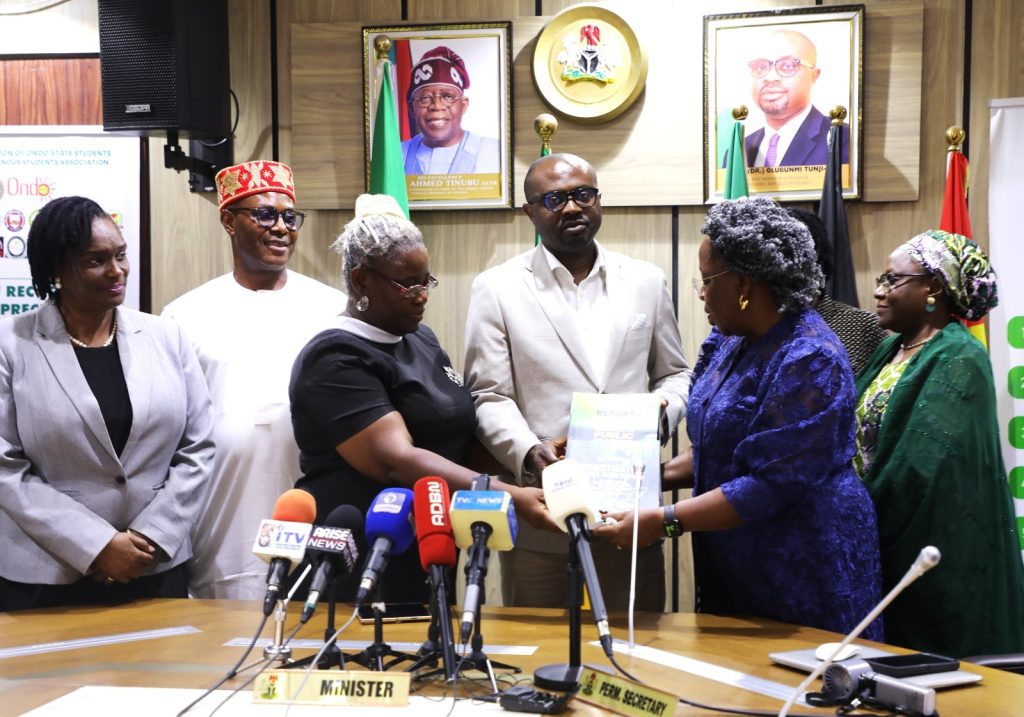
Minister of Interior, Olubunmi Tunji-Ojo, gave the assurance on Wednesday in Abuja while receiving the panel’s report, stressing that the government was determined to act decisively on its findings to build a more transparent, humane, and effective correctional system.
“This report will form the basis of a transformed correctional system. We will aggressively pursue implementation, establish a robust monitoring and evaluation framework, and ensure independent oversight to guarantee accountability and measurable results,” the minister said.
Tunji-Ojo commended members of the investigative panel for what he described as their professionalism, diligence, and commitment in uncovering realities within Nigeria’s correctional facilities through extensive consultations and facility assessments.
According to him, the report represents a critical milestone in ongoing efforts to strengthen accountability, improve operational standards, and deepen reforms within the correctional sector.
The minister emphasized that correctional facilities should not merely serve as detention centres but as institutions that contribute meaningfully to national development through rehabilitation and reintegration.
“A well-functioning correctional system benefits not only inmates but society as a whole,” he said, adding that every Nigerian, regardless of circumstance, deserves dignity, fairness, and humane treatment.
He noted that the reform initiative aligns with the vision of President Bola Ahmed Tinubu to ensure that all citizens, including those in correctional custody, benefit from government policies and reforms.
Government Moves to Address Overcrowding
Providing updates on the state of correctional facilities nationwide, the minister disclosed that Nigeria’s custodial centres currently have a capacity of about 68,496 inmates, while the actual inmate population stands at approximately 80,732.
To tackle overcrowding, he revealed that the government is constructing new correctional facilities capable of accommodating an additional 33,000 inmates, including major projects in Abuja and Kano.
Tunji-Ojo also highlighted remarkable improvements in inmate rehabilitation outcomes, particularly in reducing recidivism.
According to official figures, repeat offenders dropped significantly from 11,616 in 2023 to 3,156 in 2024 and further to 1,392 in 2025.
Expanding Education and Skills Acquisition
The minister further disclosed that correctional facilities are increasingly becoming centres of learning and empowerment.
He revealed that 62 postgraduate students and 261 undergraduate students are currently pursuing academic programmes while in custody, while more than 1,125 inmates are enrolled in various educational programmes.
Additionally, 18 study centres of the National Open University of Nigeria are operating within correctional facilities across the country.
Thousands of inmates, he added, are also undergoing vocational and skills acquisition training in areas such as carpentry, agriculture, electrical installation, welding, tailoring, hairdressing, barbering, soap production, and laundry services to prepare them for productive lives after release.
Over 1,200 Beneficiaries of Non-Custodial Measures
On alternative sentencing and rehabilitation initiatives, Tunji-Ojo disclosed that 1,227 individuals have benefited from non-custodial measures, including community service, probation, restorative justice, and related interventions.
He stressed that correctional centres must become institutions of restoration and second chances rather than symbols of hopelessness and exclusion.
Panel Urges Transparency
Earlier, the Chairman of the Investigative Panel, Magdalene Ajani, formally presented the report and expressed appreciation to the minister for supporting the panel’s assignment.
Ajani said the panel carefully examined allegations before it and engaged relevant stakeholders to ensure a comprehensive assessment of the correctional system.
She expressed confidence that implementation of the recommendations would significantly strengthen ongoing reforms within the Nigerian Correctional Service.
Also speaking, the panel’s Secretary, Uju Agomoh, called for the report to be made public.
She argued that making the findings accessible to Nigerians would enhance transparency and strengthen public confidence in the reform process.
NCoS Pledges Cooperation
In his remarks, Comptroller-General of the Nigerian Correctional Service, Sylvester Nwakuche, welcomed the report and pledged the full cooperation of the Service in implementing its recommendations.
Nwakuche commended the minister’s leadership and described the panel’s work as one of the most extensive correctional assessments conducted in recent years.
He assured that the NCoS would collaborate closely with the judiciary, police, and other criminal justice stakeholders to ensure successful implementation of the reforms.
The presentation of the report marks a significant step in the Federal Government’s broader effort to reposition Nigeria’s correctional system into a modern institution focused on rehabilitation, reintegration, accountability, and public safety.